
Is This a New Dawn for Abortion Rights in Texas?
Advocates and Democratic lawmakers are feeling something new about the future of reproductive rights and women’s health in Texas: hope.

For reproductive rights advocate Amanda Zurawski, it was akin to her team winning at the Super Bowl—tenfold. When Democrats swept all statewide races on election night in an historic Texas midterm blowout, she and her family cheered wildly, ran around the living room, and shed tears of joy. The evening felt like blissful “chaos” she said. The wins aren’t just political for Zurawski, they’re deeply personal. The Austin mother nearly lost her life from sepsis in 2022 when the state’s strict abortion ban, championed by the now-vanquished Republican leadership, blocked doctors from offering her emergency care.
She turned her trauma into activism, filing a high-profile lawsuit against the state to demand the law’s emergency exceptions be clarified, which made her into one of the leading public faces in the battle for reproductive rights, not just in Texas but nationally. When she heard the term “blue tsunami” the day after the election, the reality of the massive political shift hit her, eliciting sobs of relief.
“It was absolutely surreal and one of the most joyous moments of my life—other than my son being born,” Zurawski told the Texas Observer a few days after the election. “I have this overwhelming sense of safety and protection now because I know the people representing me—for the first time—actually care about my health. I finally feel hope in Texas.”
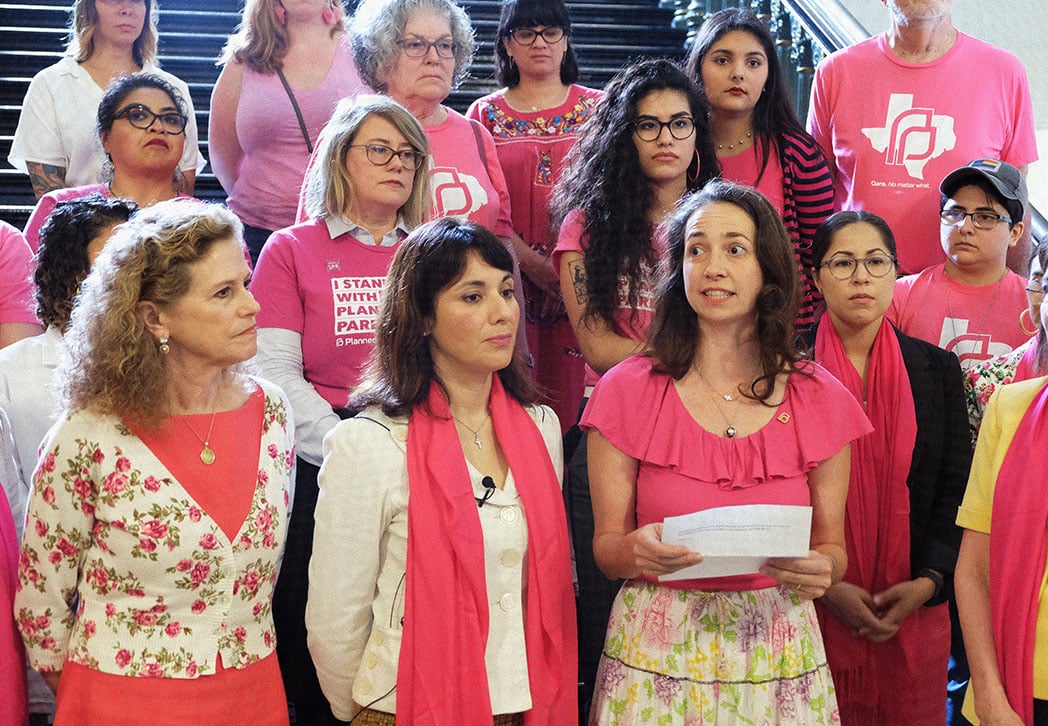
Texas enforces some of the most draconian abortion laws in the nation, including measures that could send doctors to prison for life and that hold no exceptions for rape, incest, or severe fetal defects. With aggressive Republican backers of those laws—Governor Greg Abbott, Lieutenant Governor Dan Patrick, and Paxton—now brutally defeated in one fell swoop and a Democratic majority leading the Texas House for the first time in more than 20 years, a new era to improve abortion rights, and women’s healthcare in general, may soon emerge.
“Texans have given a clear mandate to rebuke the anti-abortion extremists and policies that have been ruling our state for so long,” Kamyon Conner, executive director of the Texas Equal Access Fund, a group that assists patients with out-of-state care, told the Observer. “The fact that it will now be difficult to pass bills that put people’s lives at risk, like we’ve seen in every recent session, is huge.”
Conner, an abortion rights advocate in Texas for 20 years, said after the initial shock of the results, “We are now sitting with an immense amount of hope. For the first time in more than a decade we have at least a fighting chance at restoring reproductive rights. That is incredible.”
Abortion advocates in Texas say the possibilities feel “endless” for this upcoming legislative session. Lawmakers will gather on January 12 for a five-month-long session. And with an unprecedented trio of women at the helm of state government—Governor-elect Gina Hinojosa, the presumptive House Speaker Senfronia Thompson, and Lieutenant Governor-elect Vikki Goodwin, all of whom share in advocating for abortion rights during their time in the House–the prospects have never been more promisingBut challenges and obstacles will still remain, the most obvious being the remaining GOP-controlled Texas Senate.
On the first day of bill filing, Austin state Representative Donna Howard—a longtime champion of reproductive rights and women’s health—offered a full repeal of the state’s abortion laws, still a seeming longshot but one that won’t be as easily dismissed under new leadership. Howard’s House Bill 126 seeks to repeal the state’s criminal abortion ban, near-total ban, pre-Roe ban, and pre-abortion sonogram law, among other provisions. “Rather than start off with something like an exceptions bill, I wanted to offer a full reset. It’s like starting from scratch,” Howard told the Observer. “It would repeal all these barriers put in place over time and restore decision making to women and their health care providers.”
While a full repeal of abortion laws is the ultimate goal for reproductive rights advocates, they’ll also be focused on pushing bills that could widen access to contraception for teenagers, allow for insurance coverage of abortion care, and stymie efforts that restrict municipal funding for logistical abortion support services. They also hope to see a reduction in funding to anti-abortion crisis pregnancy centers under the Thriving Texas Families (formerly Alternatives to Abortion) Program, which sees $100 million annually, along with boosts to family planning and women’s health programs. Under Thompson, appointments of pro-abortion lawmakers to chair committees including state affairs, appropriations, and public health, could also help tip the scales.
A major barrier amid the optimism is the sustained makeup of the rem, which, despite Goodwin’s leadership (which Republicans may disempower) remains under GOP control with a 19-12 majority. Houston state Senator Carol Alvarado told the Observer Democrats are working to build a “coalition” in the upper chamber to find common ground, and despite Republicans’ retention of the upper chamber, she is feeling “unprecedented hope and encouragement” for the session ahead. “I think the election results spoke pretty loud and clear that Republicans have overreached on so many things and abortion rights is certainly one of them,” she said.
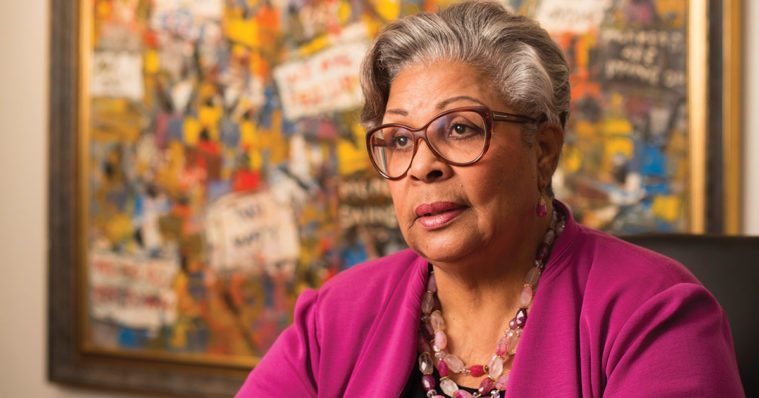
(Michael Stravato)
The senator, who chairs the Texas Senate Democratic Caucus, has filed legislation to add exceptions for sexual assault and incest to the state’s ban, a modest measure seen as unrealistic in sessions’ past that may at least have a tangible shot at moving farther this go around.
“I wish this law didn’t exist to begin with, but giving flexibility to our most vulnerable, the victims of rape and incest, is at least a starting point,” Alvarado told the Observer. “I hope we can appeal to my colleagues on the other side of the aisle, especially during testimony from survivors who have been impacted—their words may weigh on them.”
Outside the Legislature, advocates point to the ways the governorship could strengthen reproductive rights. For instance, Hinojosa can make new appointments to the Texas Medical Board, which could issue clearer guidance for doctors navigating the law’s vague exceptions. Several board terms are up for appointment next year, including the president and vice president. The governor-elect will also have the opportunity to appoint the head of the Health and Human Services Commission, whose term ends February 1, 2027, a post that could call for greater regulation and transparency around Thriving Texas Families, which is currently dominated by anti-abortion entities.
In turn, the leader of HHS could also apply pressure to the state’s Maternal Mortality and Morbidity Review Committee— tasked with analyzing maternal deaths—to review the two years of data post-Roe v. Wade that it’s thus far chosen to forgo, or at least push the committee to release reports at a quicker pace. There are signs that under new political leadership, the MMRC’s latest report –which was delayed until after the midterm election in a move criticized as “politically motivated”—could now be released earlier than the expected date of December 1.
Hinojosa, who did not make abortion rights an emphasis in her gubernatorial campaign but has said she would support ending harsh penalties for physicians under the current abortion law, also has the discretion to set legislative priorities, issue executive orders, line-item veto certain initiatives in the state budget, and—while abused by her predecessor—perhaps even issue emergency declarations that support abortion rights.

“Theoretically, between the deaths associated with the Texas abortion law, the maternal mortality, and infant mortality crisis, Hinojosa could issue a public health disaster declaration that could attempt to suspend abortion laws,” Blake Rocap, legislative counsel with reproductive rights advocacy group Avow Texas, told the Observer. “It’s just an idea, but there are so many possibilities on the table right now.”
One of the most meaningful victories for abortion rights in Texas is the defeat of Attorney General Ken Paxton. After years of weaponizing the office into a zealous anti-abortion legal machine, Paxton’s departure means abortion funds and supporters, soon without the specter of constant legal intimidation, can rest easier. AG-elect Nathan Johnson recently told the Texas Tribune he would deviate from Paxton’s prosecutorial crusade against out-of-state abortion providers who mail pills to Texans and would not entertain local so-called “sanctuary for the unborn” ordinances that ban abortion-related travel.
“I do not intend to use Texas law as a tool of persecution, intimidation and harassment,” Johnson told the Houston Chronicle. “I will uphold the law. I will enforce the law. But there’s a difference between upholding and enforcing the law on the one hand, and using it to score political points by persecuting people on the other hand.”

Advocates hope Johnson can use the office to not only reverse course on Paxton’s many attacks but proactively support abortion rights, including exercising his investigative authority.
“Paxton has aggressively reached beyond the scope of his office and what the Texas abortion law provides,” said Joanna Grossman, a law professor at Southern Methodist University. “He used the office to threaten and instill fear in doctors and pro-abortion groups. Johnson now has an opportunity to turn that all around, it’s really a new era.”
It remains to be seen whether or not Johnson will drop existing Paxton anti-abortion cases like that launched against Houston-area midwife Maria Rojas (though the local district attorney can still pursue the case), or how he’ll respond to suits lodged against AG’s office under his predecessor, like the recently filed challenge on behalf of Tierra Walker, a mother who died of preeclampsia as a result of the Texas abortion ban. Grossman said Johnson may be inclined to settle that case out of court, a stark departure from Paxton’s assuredly defiant defense. “We are reviewing these actions closely, including what it means for Texans and what the law allows,” Johnson’s campaign told the Observer via email.
Meanwhile, for the first time in years, the state’s powerful anti-abortion lobby sounded wistful—and keenly aware of their waning influence on incoming state officials. “We are very sad to see Abbott and Patrick exit, they were stalwarts for life and played a big part in leading the nation on pro-life laws,” Amy O’Donnell, executive director of Texas Alliance for Life, told the Observer.
O’Donnell said the group will advocate against any bills that add exceptions (like Alvarado’s Senate Bill 231) to abortion law and fight to maintain funding to crisis pregnancy centers. While somewhat dispirited, she called the state Senate’s GOP majority a “bright light” for the group. “We can breathe a sigh of relief knowing the Senate will be a stopping point for any attempt to weaken Texas pro-life laws,” she said.
Disappointed in the next attorney general’s pledge to forgo prosecuting out-of-state providers, O’Donnell said that anti-abortion advocates feel renewed motivation to use laws like House Bill 7, which empower private citizens to sue abortion providers and supporters and to expect more suits of this kind to pop up. (However, appeals to these cases will now be met with a much different court: The 15th Court of Appeals, a recently created court that reviews state-involved suits stocked with Abbott-appointed judges, saw all three of its Republicans ousted in the midterms.)
“Anti-abortion activists may have fewer avenues at the moment to push forward their agenda but we know they are still plotting and planning,” said Conner, the reproductive rights advocate. “And they may make some last-minute moves before the power regime shifts out of their favor.”

In a pointed decision that came just days after the blue sweep, President Donald Trump’s Department of Justice stepped in to handle a five-year-old case out of Texas that seeks to bankrupt Planned Parenthood based on dubious claims of Medicaid fraud.
Zurawski strongly contemplated moving out of state after her horrific near-death experience but now she’s never been more “proud” to call Texas home. She plans to testify at the capitol next year for bills that support mothers and pregnant Texans, knowing the road ahead isn’t going to be inherently smooth.
“With all the joy and disbelief and excitement we still need to remember to hold our elected officials accountable,” she said. “We need to celebrate this moment but also remember the work here is not done.”
You May Also Like
Abortion Laws Stand Between Pregnant Texans and the Care They Need
Doctors are left to guess at whether helping their patients will land them in prison.

State Investigators Identify ‘Serious Contractual Violations’ by the Heidi Group
A new report from the health inspector general says the Heidi Group, an anti-abortion group tapped to replace Planned Parenthood in state family planning programs, misused taxpayer funds, and calls for an expanded investigation of the group’s contracts.
‘We Got Nothing:’ Few Wins for the Christian Right in the 86th Texas Legislature
Though Christian conservatives chalked up a few narrow victories in this year’s session, they may have run up against the limits of their legislative power.