A ‘Politically Motivated Cover-Up’: Why the State’s Maternal Death Report Was Pushed Until After Midterms
Advocates and lawmakers warn the state health agency's decision to delay releasing the annual report will further harm women—and make it harder to enact necessary laws in 2027.

Already facing backlash for its decision to forgo reviewing critical post-Roe v. Wade pregnancy-related deaths, the state’s Maternal Mortality and Morbidity Review Committee (MMRC) is giving the public more reason to suspect political interference.
Originally slated to be released on September 1, as it typically has been in previous years, state health officials now say the committee’s much-anticipated biennial report that analyzes maternal deaths—and makes key legislative recommendations—won’t be released until December 1, pushing its publication past the November midterm elections and to just a month before the start of the Texas legislative session. Maternal health activists have pushed back on the ostensible reason behind the report’s lag, a new state law that health officials say gives the MMRC a three-month extension.
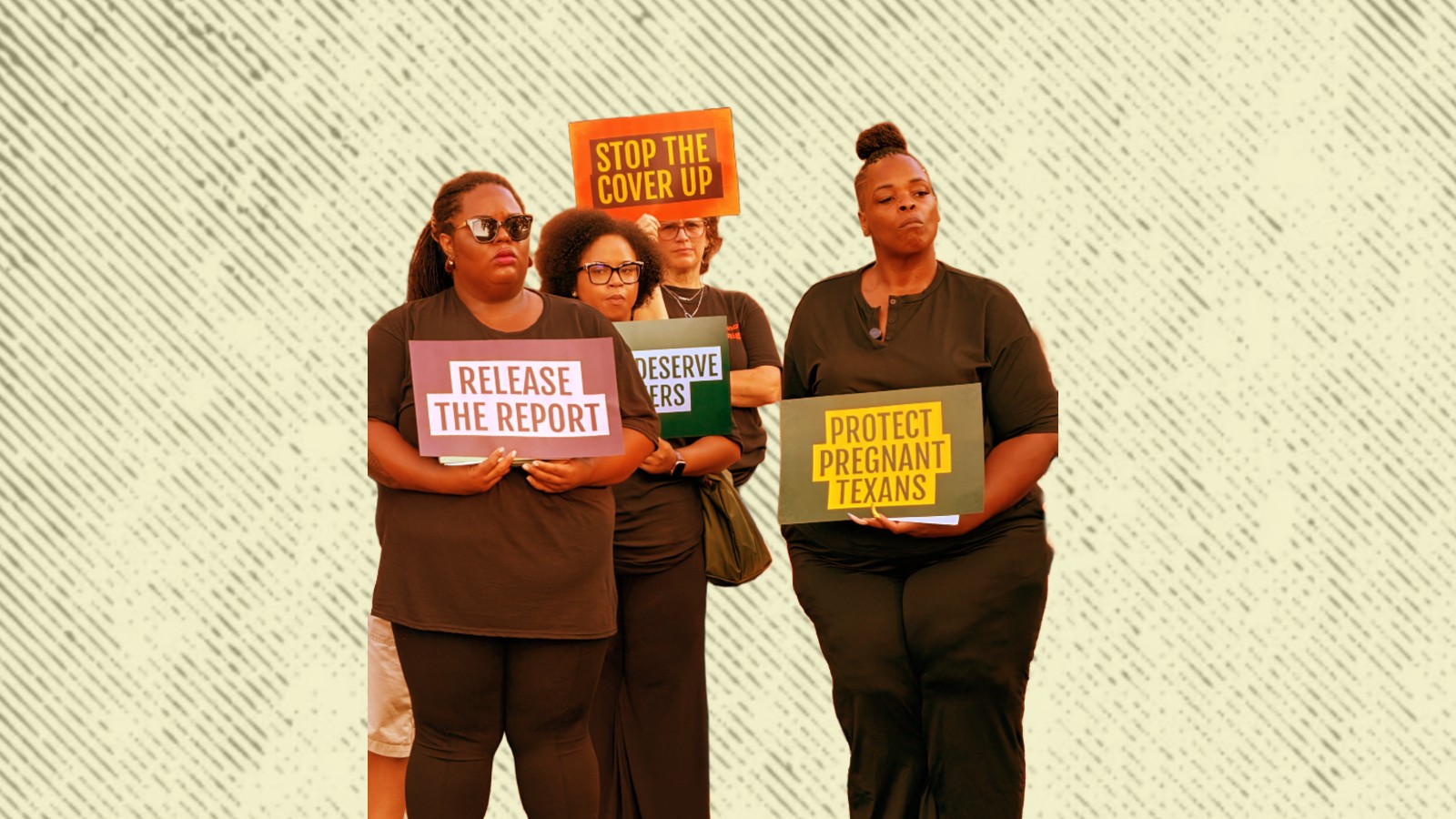
“By delaying their most recent report and refusing to release data from 2022 and 2023, [the MMRC members] are not only preventing lifesaving information from being made public, but they are also refusing to honor the lives lost,” said Serita Fontanesi with Unite for Reproductive and Gender Equity during a “People’s Hearing” outside the Department of State Health Services (DSHS) building in late September.
Speaking at a podium decorated at its foot with yellow roses, lit candles, and a photo tribute to five Texas women who died as a result of the Texas abortion ban, reproductive rights advocates and lawmakers gathered to demand transparency and the immediate release of the crucial analysis.
The committee’s most recent report, released in 2024, showed a jump in maternal deaths in 2020 and 2021, marking the highest rate since the 23-member committee started examining these cases in 2014. The upcoming report will skip the two years directly following the demise of Roe, via the Supreme Court’s Dobbs ruling, and the enactment of the state’s near-total and criminal abortion bans—pivotal years for health professionals and advocates to assess the impact of anti-abortion policies.
Chris Van Deusen, a spokesperson with DSHS, said agency leadership (a position appointed by the Health and Human Services Commission’s head, who is in turn appointed by Republican Governor Greg Abbott) requested the MMRC take more time to add details to the report.
“[T]he acting commissioner has asked the committee to strengthen the report by further describing its work around preventability, better defining the sources of its recommendations, and making clearer connections between the underlying data, findings, and recommendations,” he said.
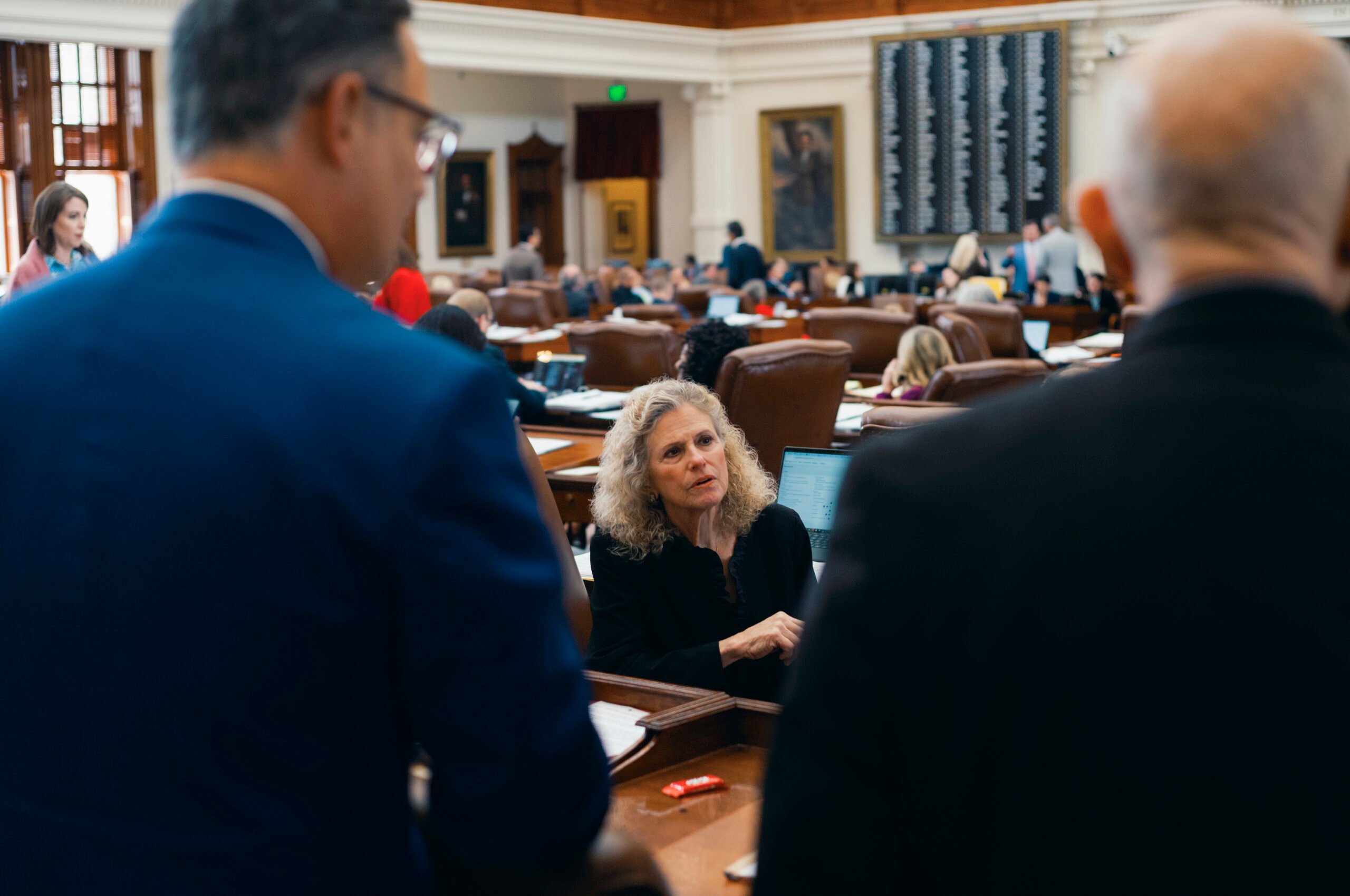
For Austin state Representative Donna Howard, who chairs the Texas Women’s Health Caucus, the purported reasons don’t add up. The MMRC claimed to be “on track” for its September 1 release during its March meeting, the last time the committee held a hearing that was open to the public. And as Howard recently told the Observer, she authored a new law specifically meant to help speed up the MMRC review process. She also noted that in the past, the committee has released preliminary recommendations early and released a full report later.
“I can’t come up with any rational, reasonable explanation that this [report] would be delayed, especially amid a midterm election, unless it was politically motivated,” Howard told the Observer.
As the Houston Chronicle first reported, the rationale stems from a provision in an obscure new law enacted in 2025. Van Deusen cites a “new provision” in the health code enacted by House Bill 4666 during the 2025 session as the reason the MMRC is now afforded three more months before releasing its report.
However, that bill was simply intended to streamline state health agency reporting to prevent duplicative reports and ensure government efficiency, not as a vehicle to delay essential maternal health data, said state Representative Christian Manuel, the Beaumont-area Democrat who authored the bill. “This bill is being misused and weaponized to withhold information to the public, which is totally going against the spirit and intention of the legislation,” he told the Observer. “I’m disappointed that my bill is being hijacked.”
He said the bill was meant to target programs at Health and Human Services overall, not DSHS specifically, which is the agency supervising the committee. Moreover, Manuel’s office noted his bill focuses on quarterly and annual reports while the MMRC publishes a biennial report.
DSHS points to an amendment by Wichita Falls Republican state Representative James Frank, tacked on at third reading with unanimous support and no meaningful debate, as the justification for delaying the MMRC analysis. It allows, but does not require, that state health agency reports be submitted as late as December 1, meaning the MMRC could have stuck to its September deadline without fault.
“The intent [of the amendment] was to align reporting deadlines,” Frank told the Observer in a message. When asked to respond to concern that his amendment is being used to delay the MMRC report, Frank responded: “The decision to release the report with the others when it is due??”
Manuel, the bill author, remains suspicious. “We can’t say if this amendment was being used as a Trojan Horse to push the maternal mortality report until after the elections all along,” said Manuel. “But it’s hard to believe this is all coincidental considering this also happened many years before this bill existed. We clearly have a governor that does not want this data to be released prior to an election.”

In 2022, the state health agency similarly punted the report until after that year’s midterm election, sparking parallel criticism at the time that the move was influenced by politics.
Especially frustrating to lawmakers like Howard is the report’s delay impeding the ability to file timely legislation to help alleviate the maternal mortality crisis, as legislators heavily rely on the committee’s recommendations to craft those bills. For instance, after the MMRC recommended extending post-partum Medicaid coverage from two months to one year, lawmakers filed bills to support this—and even that took multiple sessions to achieve.
With bill filing starting in early November—and a drafting backlog already underway at the Texas Legislative Council, according to Howard—the earlier lawmakers file, the better chance their legislation will be a priority.
“Time is of the essence in getting bills filed, so delaying this report and these legislative recommendations by a full three months is a huge setback for us,” Howard said.
Raven Freeborn, chief executive officer at reproductive rights advocacy group Avow Texas, called the health agency’s decision a “politically motivated cover-up.” Without this report, Texans are not going to be “fully informed” at the ballot box this November as Republicans will be able to evade a “full picture of accountability” for the abortion bans they’ve championed, she told the Observer.
Advocates, including the Texas Women’s Health Caucus, called on DSHS to release the report by October 1—but that call has gone unmet.
“Not only does the state not want to be held accountable for the crisis they manufactured, the non-partisan body tasked with reviewing that crisis is getting caught up in the red tape of politics,” said Freeborn.
“The new timeline does not match the urgency of this crisis. The stakes are too high to delay this report any longer.”
You May Also Like

How BlackRock Became Texas’ Comeback Kid
Once a blacklisted ESG bogeyman, the Wall Street giant has won back the Republican rulers of Texas as it pours millions into data centers and the gas plants that power them.

School Vouchers Take Center Stage in Texas’ Most Flippable State House District
On San Antonio’s South Side, a progressive Democrat faces off with an architect of the new private school voucher program.
Pregnant Texans Now Travel 10 Times Farther for an Abortion
Texas legislator Donna Howard plans to collaborate with allies in and out of state in the fight to improve access to reproductive healthcare.