
In Congress, Christian Menefee Says He’s Fighting for ‘the Least, the Last, and the Lost’
The latest politician to represent H-Town’s historic 18th Congressional District talks about his recent primary against Al Green, ICE, voting rights, and the U.S. Senate race.

In May, Christian Menefee won the Democratic primary for Texas’ historically Black 18th Congressional District after Governor Greg Abbott and Republican legislators redrew the state’s congressional map, forcing him to compete against Congressman Al Green, who represented Texas’ 9th Congressional District—another historically Black seat that was redrawn into a majority-white conservative seat—for more than 20 years. Before this, he defeated Amanda Edwards in a long-delayed special election to fill the seat following the deaths of longtime Congresswoman Sheila Jackson Lee and then, her successor, former Houston mayor Sylvester Turner.
From 2021 to 2026, Menefee served as Harris County attorney, the first Black person and the youngest, at 32 years old, to hold that post. While in county office, Menefee fought President Donald Trump’s mandates, including successfully suing Trump for withholding healthcare funds for refugees. He fended off the state’s challenges to county election results and sued companies responsible for creosote and concrete batch contamination in the low-income and predominantly Black communities in Houston.
Now that he’s firmly in Congress, the Texas Observer spoke with Menefee about how he plans to continue fighting for his community, the ideological battles within the Democratic Party, and the Immigration and Customs Enforcement (ICE) killing of Lorenzo Salgado Araujo in Houston’s East End.
TO: Can you tell our readers more about the district you represent?
Texas 18 has the largest number of SNAP recipients of any district in the state of Texas. We have a high number who are uninsured. We have communities where kids are walking in the middle of the street to go to a gas station or a Dollar General to get groceries. They’re walking in the middle of the street because there are no sidewalks. And they’re getting groceries at a gas station because there aren’t any grocery stores. We have a beautiful cultural diversity in our district. We have areas that are underserved.
People want to make enough money to be able to take care of their family. People want to be able to make enough money to have money in the bank if something happens to their health. … People want to make enough money to send their kids to do better than they did. They want to make enough money to retire with dignity at a reasonable age, and they want to make enough money to have a good time on Friday night. And so, my job in Congress has been to advocate for them.
You were forced to compete against Congressman Al Green in a primary after Governor Greg Abbott pushed to redraw congressional districts. How do you plan to fight the continued erosion of voting rights?
Having to run against an icon in Texas politics and in the national fight against corruption was something I would not have chosen. Greg Abbott forced that on our communities, and I think it’s a travesty. Both Congressman Green and I should be coming back to Congress next January. But I plan to be very active in holding the Trump administration accountable for how they’re trying to make it so that, in every state, it’s politicians picking their voters instead of the other way around. So that means trying to get comprehensive voting rights legislation passed so that we can ban partisan gerrymandering in this country, restore the Voting Rights Act so that we can stop the far right’s attacks on our voting rights. Texas was ground zero for this stealing of districts across the country. But the goal is for us to get back a majority in the House, in the Senate, and to win the White House so that we can pass real reform to our electoral processes in this country.
With incidents like the killing of Lorenzo Salgado Araujo by federal immigration agents, more and more Democrats including yourself have called to abolish ICE. What would abolishing ICE actually look like?
I think you need to rip ICE down to the studs. When you tear a house down to the studs, it’s to the frame—and build it back up in an image of immigration enforcement that is humane and reflects the dignity of the immigrant folks in our community. … I think immigration enforcement should focus on folks who have committed violent crimes, and it should focus on ensuring that our laws are upheld at our border. It should not be a get-out-of-jail-free card for agents to wear masks, to terrorize communities, to shoot at vehicles, and to murder people in broad daylight.

Rethinking the way that we do immigration enforcement in this country means taking it away from this militarized police force, and instead turning it into an enforcement agency that acts with good judgment, that has independent investigations, that wears body cameras, that adheres to warrant requirements, and that treats people with the dignity that they deserve as fellow human beings.
Right now, in Democratic primaries around the country, there’s a battle unfolding between the left and the center. Where do you fall in that spectrum? And is there room in the Democratic Party tent for both a Darializa Avila Chevalier and a Henry Cuellar?
I’m a member of the Congressional Progressive Caucus. I’m very proud of that. But I’m a person who believes in getting stuff done. If you go talk to the underserved communities in Texas 18, they don’t use words like moderate and progressive—they’re looking for someone who’s going to help them keep the lights on and be able to pay the bills and bring gas prices down.
So if you are in the Democratic Party, and you’re about making life better for the working class and underserved people in this country, then I’m here to work with you. But the only way that we’re going to continue to be successful as a party is if we accept truly being a big tent. … Being a big tent party means we have our red lines, but we also understand we’re not going to agree on every single thing. And I am perfectly fine with that because I wasn’t sent to Congress to agree with every single person from Seattle, Washington, to Miami, Florida, to upstate New York, but instead I was sent to Congress to advocate for the people of the 18th Congressional District in the Houston area, and that’s exactly what I’m going to do.
Houston has longstanding environmental justice problems, like creosote pollution in the Fifth Ward and Kashmere Gardens. Under this current Trump administration, what’s your strategy to get federal help in these areas?
Democrats will have to win the House back and then start the hearings on the [Environmental Protection Agency] EPA to hold them accountable. The Trump administration has slashed the EPA’s budget. They have eliminated the Office of Environmental Justice and [External] Civil Rights, completely zeroed out the budget for that office, and laid off every single staff member. And they are now approaching environmental regulation through the lens of what’s most helpful to industry, as opposed to what’s going to help these communities, like in Fifth Ward and Kashmere Gardens, where there’s been a legacy of contamination that has gotten people sick.
Recently, Democratic U.S. Senate nominee James Talarico had a tense town hall with Black Houstonians. Is he doing enough to earn their votes, and what do you think of Jasmine Crockett’s posture toward his campaign?
That is exactly what public servants should be doing: going to communities, asking them about their issues, and hearing from them about their issues. And there are going to be times where those conversations are collegial, and there are going to be times where those conversations are more tense. But there’s only one person in the race for United States Senate in Texas right now who is going to Black communities and asking them about their issues, and that is James Talarico, not his opponent. And in fact, neither Greg Abbott nor none of the folks on the Republican side out in Austin would ever be caught dead doing a town hall in a Black community for Black voters. It will never happen. So I think James is doing a great job. He’s continuing to work to earn the support of Black communities.
You represent a district that has experienced significant political turnover following the deaths of U.S. Representatives Sheila Jackson Lee and Sylvester Turner, along with the recent redistricting. Al Green, who you beat, also served for more than 20 years in Congress. How do you plan to build your own identity while honoring the legacies of the leaders who came before you?
I served as Harris County attorney for five years and transformed that office into a democratic fighting force that stood up for people’s rights, for voting rights to protect communities, and to make sure that they have clean air and clean water and clean land—fighting back against large corporations and pollution. So my approach and brand in this isn’t being built overnight. This is work that I’ve been doing since I first got into politics, and the throughline between all the giants who served in Texas 18 is they were fighters, and they weren’t afraid to say the truth when it needed to be said, and to advocate for the communities and put the communities above themselves. So I plan to continue in that vein and uphold their legacy by just being who I am, which is somebody who is fighting for the least, the last, and the lost, and not for myself. Not for the wealthy, not for the well-connected, but for the average person in Texas 18.
You May Also Like

Houston’s ‘Living Archive’ of Migration
At Fresh Arts, photographer Violeta Álvarez created a space where immigrant families in Houston can see their own histories reflected back to them.

A Texas Soldier’s Death Casts Doubt on Federal Whistleblower Protections
Adrian Martinez reported a sexual assault two years before he was found dead on a Hawaii Army base. The Vanessa Guillén Act is supposed to protect soldiers like him.
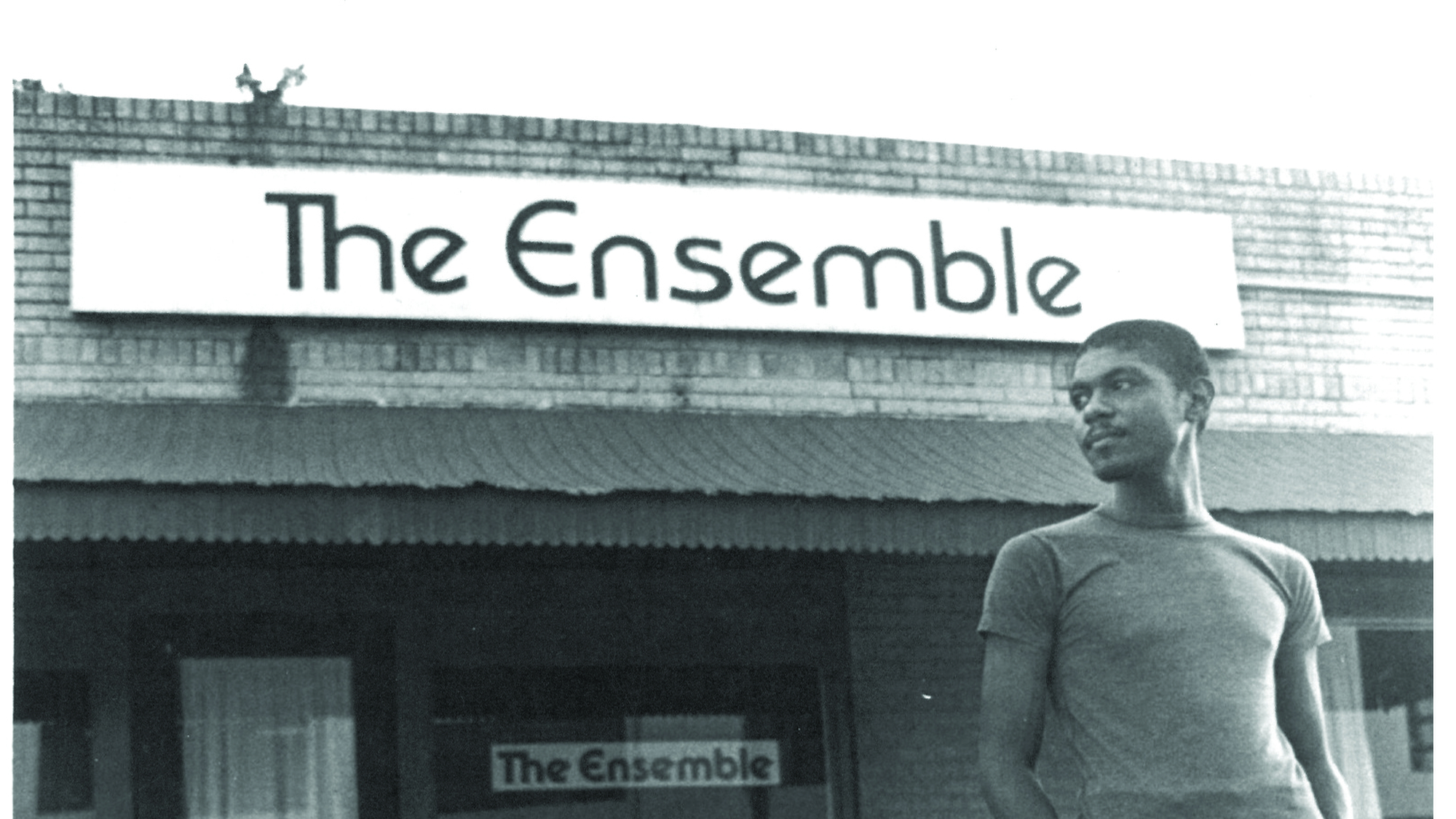
Houston’s Historic Black Theater at 50
For five decades, the Ensemble has brought Houstonians together to laugh, cry, and talk back to plays representing all aspects of African-American life.