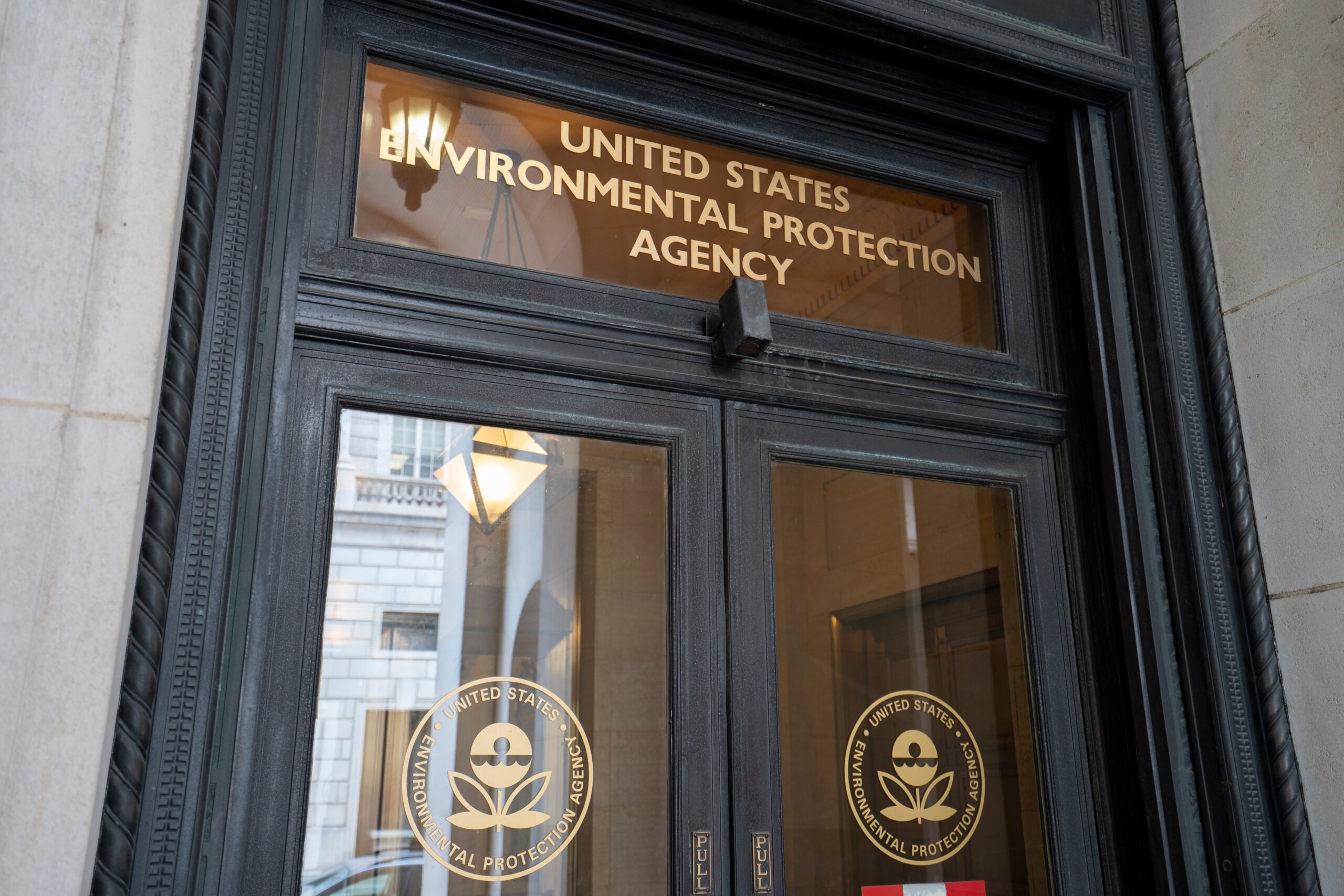
Local Environmental Groups Are Still Reeling from Trump’s DOGE Cuts
Since last year, the EPA has cut millions of dollars in grants previously awarded for environmental initiatives in Texas during the Biden administration.
Toward the end of last February, as a chilly Dallas winter began to warm into a balmy Texas spring, Caleb Roberts hopped online to transfer federal funds to a local bank account. Roberts is the executive director of Downwinders at Risk, a Dallas-based nonprofit devoted to clean air advocacy. After eight months of bureaucratic red tape, the organization finally had access to the half-a-million dollars in federal grant funding they had been awarded by the Environmental Protection Agency (EPA)—or so they thought.
When Roberts reached the federal website used to access the money, he couldn’t log in. In the coming weeks, that story would repeat over and over with no explanation until they were told late last March that their grant had been suspended. On May 1, it was officially terminated.
Downwinders wasn’t alone. Just over $118 million in environmental grants previously awarded to several Texas organizations were terminated by the EPA in the first three and a half months of Trump’s second presidential administration, according to documents obtained by the Texas Observer through an open records request with the EPA. Nonprofits that had built that funding into their budgets suddenly had to reverse course, canceling programs related to environmental education, air quality, waste contamination, and flood monitoring.
Many of the grants were initially appropriated by Congress under the Inflation Reduction Act, which was narrowly passed into law in 2022 during the Biden administration. The cancellations came at the direction of President Trump, who issued an executive order on inauguration day ordering that all federal IRA disbursements be halted. Democratic members of Congress and state attorneys general have called the action illegal. The grant cancellations are currently the subject of multiple pending lawsuits.
At Downwinders, the money was earmarked to fund air monitoring systems in nine communities across the Metroplex—including in Arlington and Fort Worth. But after the termination, the group had to cancel the expansion and even pause maintenance on its existing stations.
The air quality data they’ve previously collected “has helped change some of the policy around environmental justice, around where industry should [develop] all throughout Dallas,” Roberts said. “To have $500,000 canceled and us not receive a dime of it … it ruins a bunch of the plans that these communities had to be able to advocate for themselves.”
Roberts said that in the wake of the grant termination, fundraising efforts have been difficult to replicate, made worse by the uncertainty and lack of communication from the EPA.
“Where else do you find a large entity that will support the type of science that we’re looking to do?” Roberts said. “Without this, that information is gone, and now when people complain about things in their community, city council says they don’t have the information. They don’t have the data. They don’t know. And that’s just too convenient of a cop-out for what should have been a conversation with tons and tons of data available.”
The canceled grants range from $50,000 to $60 million and impact causes in nearly every region of the Lone Star State. A $425,000 grant given to the Children’s Environmental Literacy Foundation (CELF) was being used to fund a three-year program for a cohort of Houston-area teachers to run a civic science project, taking students to research air and water quality along the Houston Ship Channel. Just a year into the initiative, CELF had to downsize its plans and is still searching for alternative funds.
“We get a lot of really great feedback from our teachers. I mean, that’s what puts the wind in our sails. We have teachers tell us all the time, ‘This is the best professional development I’ve ever been to,’” said Tara Stafford Ocansey, executive director of CELF, a nationwide organization dedicated to environmental education with one of two home bases in Houston. “The kind of work that we’re doing, it’s not partisan, it’s not political. It’s making sure that students feel a sense of belonging.”
CELF was left high and dry, waiting months after the grant termination for the EPA to reimburse expenses CELF had already accrued and unable to pay back their partner organization, the Galveston Bay Foundation. CELF and others have appealed the cancellations in court though decisions are still pending; the EPA has cited President Trump’s executive orders as their legal justification for the grant terminations.
The EPA did not respond to requests for comment. Lee Zeldin, the EPA administrator, said in a March 2025 press release that the agency’s grant terminations targeted “wasteful spending,” including on programs “related to DEI and environmental justice.”

Earthjustice, a nationwide environmental advocacy nonprofit, is helping lead the legal fight against the grant cancellations specifically, including one case that represents Downwinders, Air Alliance Houston, and 21 other organizations from across the country with canceled funds. That case is currently being appealed in the D.C. Circuit after a district court judge dismissed the challenge.
“They didn’t like this program because it was focused on environmental justice issues and communities that were disproportionately affected by climate change, and so they decided they wanted to eliminate it,” said Hana Vizcarra, a senior attorney at Earthjustice. “We contend that they don’t have the power to do so, that Congress created and appropriated this program. You can’t just ignore the will of Congress.”
Earthjustice claims that the terminations were made based on the communities they benefit and the causes they address. “When agencies make decisions, when they take action … it cannot be arbitrary and capricious,” Vizcarra said. “They have to consider the impacts that it will have, and they have to be done based on reasoned decision-making.”
One of the plaintiffs in the case, Air Alliance Houston, had received roughly $3 million in federal grants for endeavors along the Gulf Coast. Being based in the nation’s fourth-most populated city and near one of the busiest ports in America makes the group’s work all the more critical, says its executive director Jennifer Hadayia. The region houses 49 percent of the country’s petroleum refining capacity and ranks in the top 10 worst cities for smog and particulate matter.
With those federal funds, the group’s goal was to expand an existing project called Air Mail, which currently works to engage Harris County residents in environmental permitting decisions, to nine additional counties along the Gulf through partnerships with local organizations. Now, after losing access to those federal funds, the group says those plans had to be put on hold.
“Our contract, literally, the words written to which I put signature to paper, has conditions under which we can be legally canceled,” Hadayia told the Observer. “Anti-DEI and pro-fossil fuel policies were not there. Those aren’t allowable reasons to terminate the contract.”
Still, Air Alliance has been raising funds to reinstate the program without federal support, and upon the one-year anniversary of the termination, says it will be able to fund efforts in seven of the nine counties in which it was originally planning to expand.
“We got this money legally. We passed all the hurdles. We passed the tests. We didn’t do anything to warrant a cancellation, except have a new president, to be frank,” Hadayia said. “We are going to bring this important service to the Texas Gulf Coast, with or without the EPA.”
Other groups that lost funding, however, may not be able to do the same. The City of Dallas said in an emailed statement that they had to terminate an air quality initiative when they lost $425,000. The City of Houston lost $21 million for flood control and pollution mitigation. The Big Bend Conservation Alliance, based in Presidio, was hit with $12.7 million in cuts for air quality monitoring and projects; Texas Southern University, a public historically Black university, saw cuts of $60 million that would have been distributed across hundreds of hyper-local organizations; and Mission Waco lost $18.7 million for a broad range of projects across Central Texas.
“These projects were on the ground, working to help communities be prepared for the next storm, to respond to increasing heat in their communities and to put people to work,” Vizcarra said. “It’s just amazing, when you dig into the projects that were in process, how many wonderful things were happening around the country.”
You May Also Like

Will Texas Cities Stay Silent on Gaza?
From Austin to San Antonio and Dallas to Houston, pro-Palestine advocates are pleading with recalcitrant local officials to take a stand for Gazans.
Record Summer Heat Causes Costly Damage to State Water Infrastructure
Conservationists are frustrated as cities contend with thousands of costly leaks as dry soil contracts, causing underground pipes to rupture.