Texas Has a Water Shortage and a Water Glut. They’re the Same Problem.
Every day the Permian Basin brings up more water than nearby communities use, and treats most of it as waste. The state can no longer afford to do so.
Texas does not have enough water. Texas also cannot get rid of the water it has. Both of those things are true right now, and in the dry stretch of West Texas where the two collide, they are turning into the same problem.
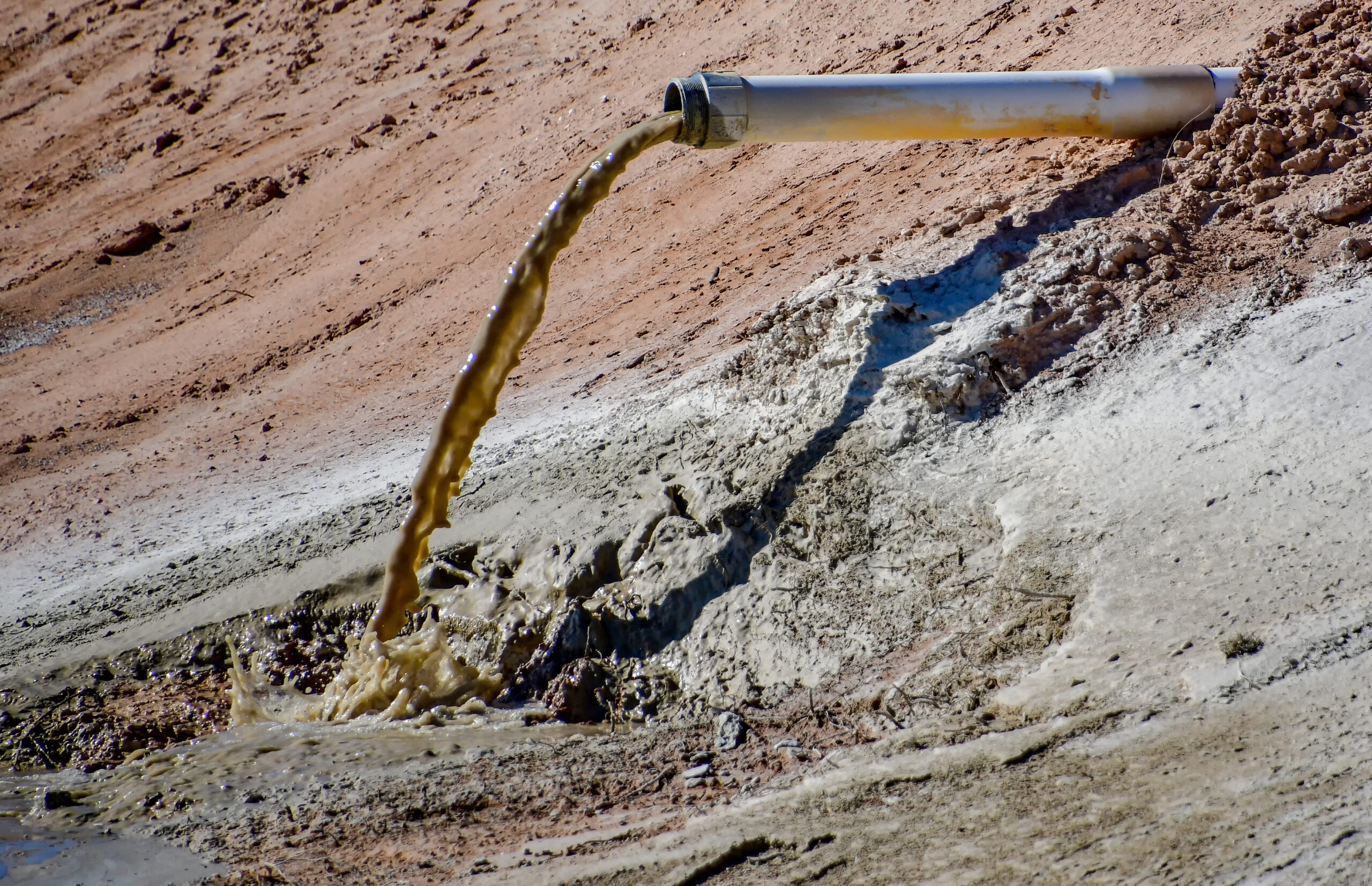
On one West Texas cattle ranch, the problem looks concrete. Old and abandoned wells have started spewing wastewater back to the surface on their own, pushed up by pressure building underground. A water well on the property tested positive for benzene and other contaminants, and the owners moved their herd and eventually sold it off. That is one version of what happens when a place runs out of room for the water its oilfields bring up.
The full scale behind that scene is hard to picture. The Permian Basin pumps roughly 6 million barrels of crude a day, which makes it the most productive oil region in the country. It also lifts up several barrels of water for every barrel of oil—around three to four on average and more as a well ages. By early 2025 that added up to about 22 million barrels of water a day across the basin, a figure that one analytics firm expects to climb another 39 percent by 2035. That is far more water than cities nearby use, surfacing every day in one of the driest corners of the state.
Hold that against the other headline. Texas is short on water and falling behind, with cities and farms competing for a supply the state openly expects to shrink. So the contradiction sits in plain sight. The basin brings up an ocean and calls it waste, while towns not far away ration what comes out of the tap.
For decades the answer was simple. Operators put the water back underground into disposal wells and kept producing, and it worked as long as the rock kept accepting it. Then the ground stopped cooperating. Forcing that much fluid into the subsurface raised the pressure on old faults, and West Texas has seen a rising frequency of earthquakes, including a magnitude-5.4 quake near Mentone in 2022, the strongest the region had recorded in decades. Regulators have since limited injection in the most active zones, which leaves a growing waste stream with fewer places to go.
This is not to put all the blame on oil or to argue against drilling. Oil is central to the Texas economy, and the Permian is its largest single engine. The water is simply what comes up alongside, and the system was built around disposal because disposal was practical and cheap. It still is. Injecting a barrel underground still costs well under a dollar. Cleaning that same barrel for use outside the oilfield runs several times more, as much as four to seven dollars a barrel at the high end. A University of Texas scientist named the deeper flaw, noting that underground space was treated as something to race to fill rather than manage. Texas got very good at making the water vanish, and never had to get good at understanding it. That is the challenge now arriving.

Here the story could turn, and the optimists have a real case. A state-commissioned consortium estimates that treated produced water could eventually yield 2 to 4 billion barrels a year for use outside the oilfield as costs come down, and it has pilot plants running in the Delaware and Midland basins. Operators already recycle a meaningful share of the water for new wells rather than send it to disposal. Texas has also started permitting treated oilfield water for release into rivers and streams, and a 2025 law handed the state authority to write the discharge rules. In a region the consortium says faces real shortfalls, turning waste into water is not only cleanup; it is strategy.
The basin brings up an ocean and calls it waste, while towns not far away ration what comes out of the tap.
The catch is that the science has to keep pace with the ambition, and the money has to pencil out. Produced water is not one thing. Researchers have catalogued more than 1,100 different chemicals in it, many at trace levels and many never studied for health effects, while the federal drinking-water framework sets limits for only about 90 contaminants and was written for treated city supplies, not brine off an oilfield. As one water law scholar pointed out to Inside Climate News, the Clean Water Act—enacted back in 1972—never imagined this water flowing into a stream. Treating it to a known standard is one task. Treating it to standards that do not yet exist, at a price that can compete with cheap disposal, is another.
That is the conversation Texas has not fully had out loud. Not whether to drill, which is settled, and not whom to blame, which misses the point. The real question is whether a state this thirsty can keep treating an ocean of difficult water as nothing but waste, and whether it can build the monitoring and the public trust before that water moves into wider use. Get it right, and the byproduct the industry always wanted gone becomes part of the state’s water future. Get it wrong, and Texas trades one water problem for another. Either way, the choice is arriving faster than the old disposal model can handle.
On the Antina Ranch where this started, the corral sits empty, the cattle moved off and sold at auction after the water turned. The plugged wells beneath it still hold enough pressure to move a needle on a gauge, a reminder that sealing a well with cement is not the same as settling what is underneath. The places sitting on top of this do not have the luxury of waiting.
You May Also Like
Did These North Texas Developers Have a Duty to Disclose Oil and Gas Waste History?
A housing development and school was built atop an old drilling waste site in Johnson County. New test results came back safe, but it’s unclear what the homebuyers had a legal right to know.
1.2 Million Oil Wells Are Buried Underneath Texas. Do You Live on Top of a Dangerous One?
Our state's homes are built above a hundred years of drilling by an industry that was never made to clean up after itself.

Who Stands Between Texas and a Fascist Railroad Commission?
This man here—and a plurality of voters if he can find them