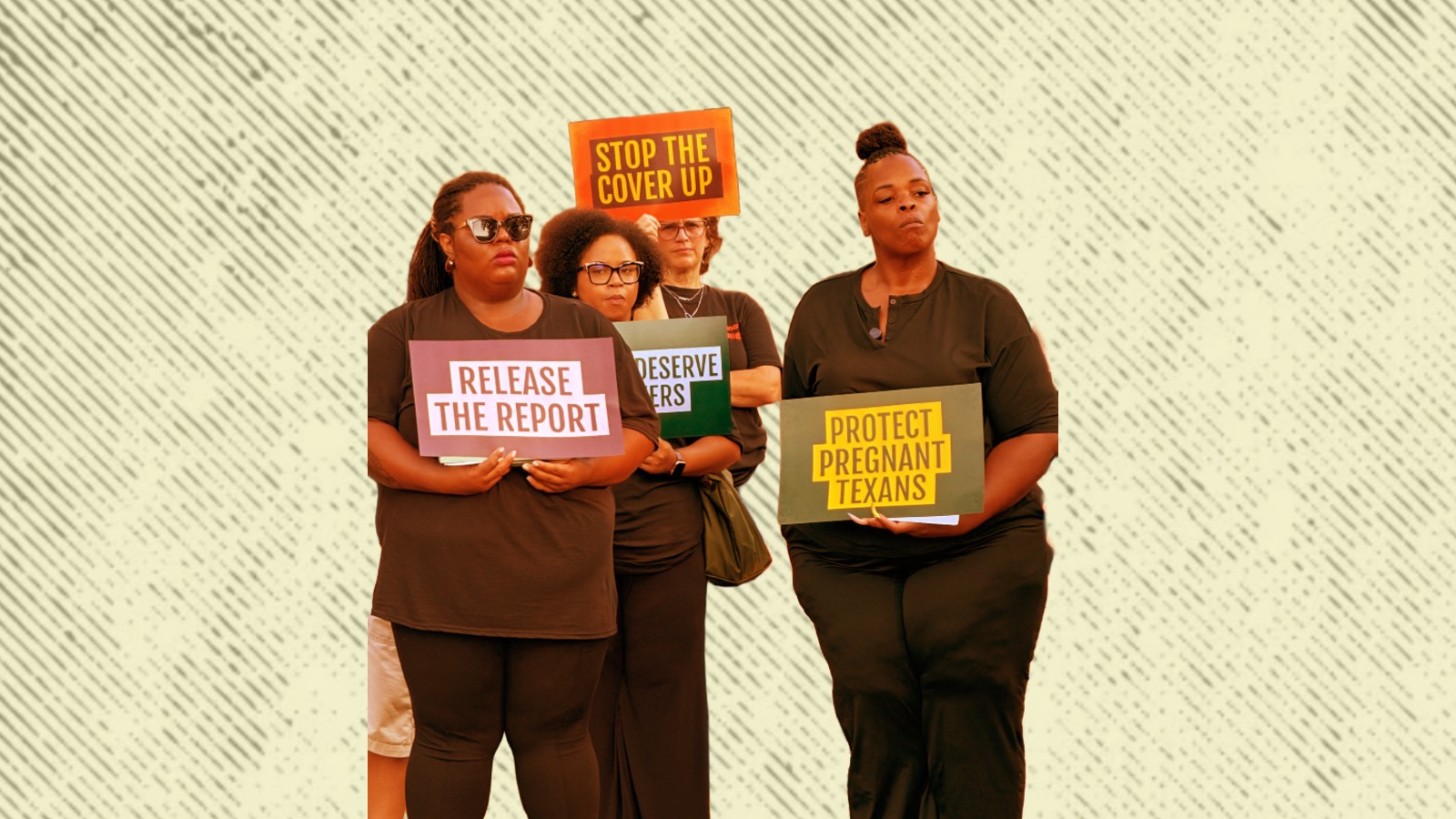
Finally Released, State Maternal Mortality Report Raises More Concerns for Advocates and Lawmakers
The committee report was released after Democrats’ swept into power in November elections, but some say it doesn't offer the “full picture” on maternal health

After delaying a highly anticipated report on the state’s maternal mortality rate amid deadly abortion bans until after the midterm elections—in a move reproductive rights supporters called “politically motivated”—the Department of State Health Services unceremoniously released the study on a late Friday afternoon, just two weeks following the Democrats’ sweep.
The state Maternal Mortality and Morbidity Committee’s (MMRC) biennial report shows Black women in Texas continue to face the greatest risk during pregnancy and that most of these overall deaths in the state are preventable. The study also signals a decline in those fatalities since 2020, however some advocates and lawmakers say the latest figures—and the continued omission of crucial data—may not offer the “full picture” on maternal health.
Originally slated for publication on September 1, the health department, citing an amendment within a new Texas law, pushed its release to December 1. But following the Democrats’ election victory, lawmakers pressured the department to release the report in early November. The analysis reviews pregnancy-related death cases in 2021 and 2024, but notably skips over the two years after the fall of Roe v. Wade, frustrating advocates who see those years as essential to assess the full impact of the state’s abortion laws.
Pregnancy-related mortality for Black women was about 2.4 times that of white women, according to the study. They experience nearly 50 deaths per 100,000 live births compared to 20.1 of their white counterparts. And while the maternal morbidity rate—short- or long-term health problems associated with pregnancy and birth—increased overall from 80.4 to 83.9, the rate for black women is about double that for white women, reaching above 146 per 100,000 births.
“It’s very disturbing that we continue to see Black women in this state die at a higher rate than other women, year after year,” state Representative Charlene Ward Johnson told the Observer. “We can’t allow this disparity to continue, we need to find real solutions to end the suffering.”
Ward Johnson, who represents part of Harris County, an area that experiences a disproportionately high maternal death rate among black patients, has filed House Bill 286 to compel the MMRC to publish a separate study specifically analyzing the maternal health of Black women. A similar bill filed by Ward Johnson passed the House last legislative session but was not heard in the Senate. “We need to go beyond statistics, we need to look at all the systemic factors at play here,” she said.
Roughly three-fourths of maternal deaths continue to be preventable, according to the study. For 2021, infection and hemorrhage were the main reasons and in 2024 mental health conditions and hemorrhage led as causes for death. While less than one-fourth of patients that suffered preventable deaths faced “additional barriers to care” in 2021, that number shot up significantly to 75 percent by 2024, with problems like delays in treatment, lack of health care access, repeated emergency room visits, and medical decisions inconsistent with best practices.
Nakeenya Wilson, a former member of the MMRC who now advocates for pregnancy safety with the Maternal Health Equity Collaborative, said those findings are unacceptable. “If someone told you there was a 76 percent chance the service at a restaurant would be bad, would you go? So why in the world are we letting this risk happen to women when they give birth?,” she told the Observer. “The state needs to sound the alarm, this is a public health crisis.”
Wilson says she’s also concerned with the way the rate was calculated. Rather than a review of every case, for the first time the new MMRC report relies on a sample set of pregnancy-related deaths. In 2024, the state saw 20.5 deaths per 100,000 live births, a similar rate as before 2020.
“This was a bit of a surprise and raised more questions for me,” said Wilson. “What might we be missing by not looking at all the pregnancy-associated deaths? Who’s being left out of the data? And who really made this decision?”
Chris Van Deusen, spokesperson with the Department of State Health Services (DSHS), points to the explanation offered in the study: DSHS and the MMRC chose to use the smaller sample to “expedite case review” time by half.

Wilson said she understands the intention is to be more up to speed but she remains skeptical of the method.
“We aren’t talking about thousands of deaths a year, it’s less than 200 a year, so why use a sample? It makes it hard to compare between years if we’re not using the same methodology, it’s not really apples to apples,” said Wilson, who has jumped into the crowded race to replace Sarah Eckhardt in the Austin-area state Senate district. “And [DSHS] said they delayed the report because they needed more time—but now that makes even less sense.”
State Representative Toni Rose, a maternal health champion who helped extend postpartum Medicaid coverage for new mothers in 2023 based on the MMRC’s recommendations, expressed disappointment with the delayed release of the study and frustrations with shortcomings in the report’s methodology.
“This delayed report does not give us the full picture of maternal mortality in the state of Texas,” Rose told the Observer in a statement. “This small sample size does not do us justice. Lawmakers, and the public, deserve an analysis of the full range of data available to the state. Maternal mortality is life or death and too important of an issue for shortcuts to be taken.”
Another ongoing concern for advocates is the committee’s decision to forgo a review of individual cases in 2022 and 2023, the two years following the collapse of Roe and the enactment of the state’s near-total abortion ban and criminal ban. Nowhere does the study make reference to Texas abortion law. “It’s worrying that we’re using a sample size for the review on top of missing these years of crucial data. It’s really important that we see the cases after the fall of Roe reviewed,” Emily Witt with Avow Texas told the Observer. “Because right now, we don’t really have the full story here.”
Among its recommendations, the MMRC suggests expanding postpartum services, improving access to mental health care, and increasing the medical workforce, including the use of midwives and doulas (an uphill battle amid a strained and fleeing OB-GYN network). Those recommendations are meant to help inform lawmakers crafting bills to alleviate the crisis, but that two-month postponement set back those efforts. State Representative Christian Manuel, who authored the legislation that included an amendment used by DSHS to justify that lag, is working to “clean up” that statute to ensure it will not be “misused to withhold or delay” future MMRC reports, his office said.
Despite the delay in recommendations, Ward Johnson and other Democratic lawmakers did their best to file bills early to address the issue, with more to come. State Representative Armando Walle’s House Bill 473 hopes to build off Rose’s work and extend postpartum Medicaid coverage for new mothers from 12 months to two years and his House Bill 538 would help doulas get reimbursed by the state. And Rose’s House Bill 1017 seeks to increase coverage for maternal depression screenings.
Through her power to appoint the head of the Health and Human Services Commission, which oversees DSHS, Governor-elect Gina Hinojosa can also help shape the committee’s work, who is appointed to the review panel, and whether or not members will retroactively analyze those two years post-Roe.
Under this new Democratic leadership, Rose said she hopes the committee will now have the freedom to offer “full and accurate data in a timely report without concern for political influence or censorship.”
You May Also Like

And Poof. There Goes Red Texas.
From the most powerful GOP state in the nation to blue, in one fell swoop.

How BlackRock Became Texas’ Comeback Kid
Once a blacklisted ESG bogeyman, the Wall Street giant has won back the Republican rulers of Texas as it pours millions into data centers and the gas plants that power them.

School Vouchers Take Center Stage in Texas’ Most Flippable State House District
On San Antonio’s South Side, a progressive Democrat faces off with an architect of the new private school voucher program.