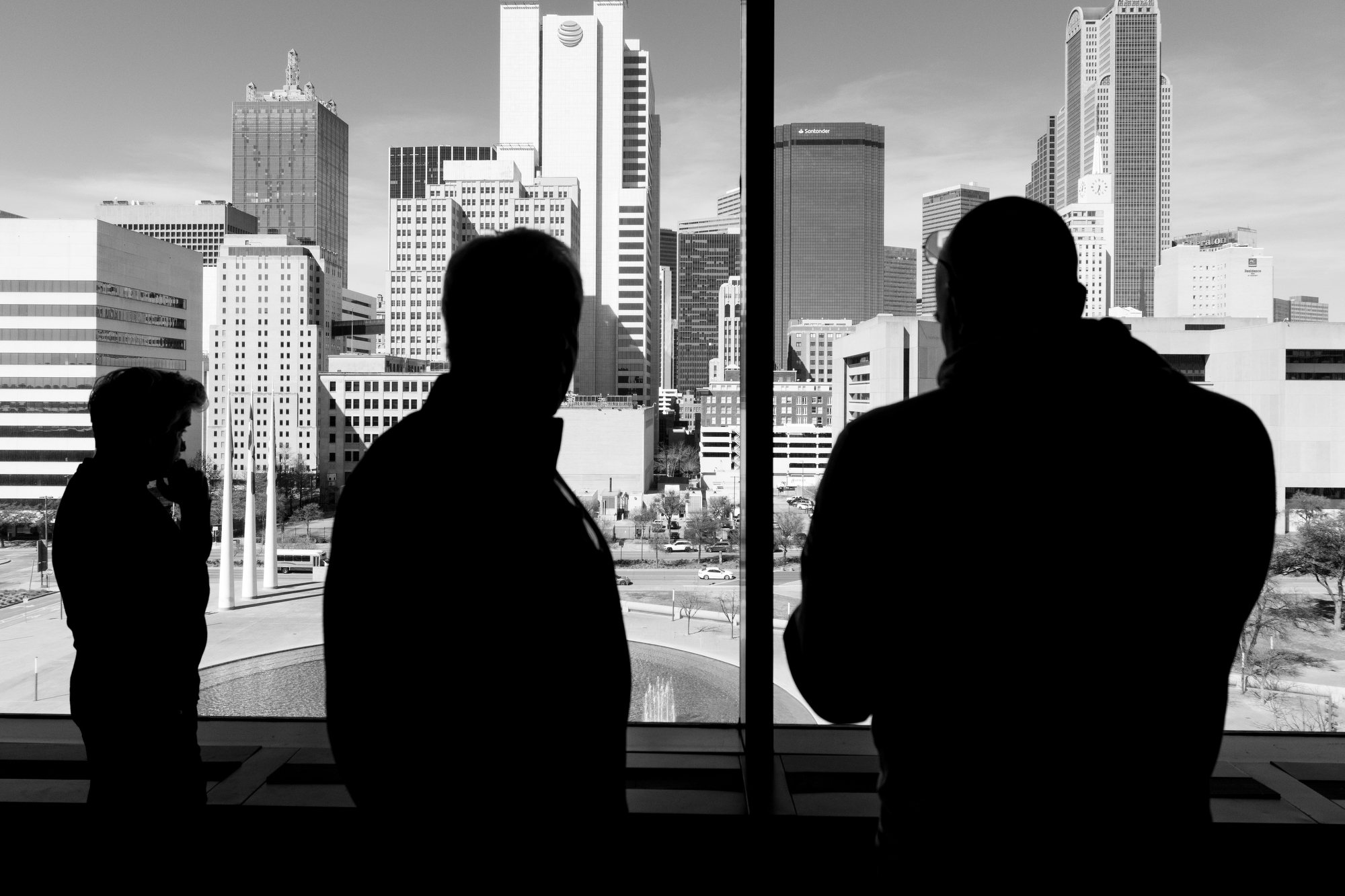
The Great Wilonsky Returns to the Newsroom
Meet the veteran Dallas newspaperman and devoted follower of “the religion of righteousness and truth-telling.”
A version of this story ran in the May / June 2026 issue.
This March marked one year since veteran Dallas journalist Robert Wilonsky returned to the Dallas Morning News as a city columnist.
He didn’t have to come back. Journalism itself has been taking a pummeling of late. Our current administration regularly vilifies news outlets that drop stories that make our Cheeto-in-Chief look bad, however accurate or factual they may be. Newspapers are generally going the way of the dodo. We live in a time when neocon mouthpiece Bari Weiss is the head of CBS News, torpedoing revealing 60 Minutes pieces, while Olivia Nuzzi writes a barely read tell-all detailing her torrid, highly unprofessional fling with—of all people—Robert F. Kennedy Jr.
But Wilonsky—whose shiny bald head, hulking physique, and salt-and-pepper goatee make him a dead ringer for pro-wrestling legend (and “fellow bar mitzvah boy,” as Wilonsky noted) Bill Goldberg—is a die-hard newspaperman. His byline has appeared in publications going all the way back to 1986, when he was still in high school. He thought he was done with reporting when he left the Morning News in 2020, eventually getting a sweet gig as communications director of Dallas-based Heritage Auctions, churning out press releases and interviewing celebs about the pop-culture memorabilia they were putting on the auction block.
But Wilonsky couldn’t stop investigating what was going on in Dallas. “I would drive around the city,” said Wilonsky, 57, during a Zoom call from a Morning News conference room. “I would see things, I would see people, I would read headlines, I would still read council agendas, I would still be very involved and active in discussions about the city, and I realized that as much fun as I had holding Star Trek props, it wasn’t the same or as meaningful to me. … The longer I was away from journalism, the more I missed my city.”
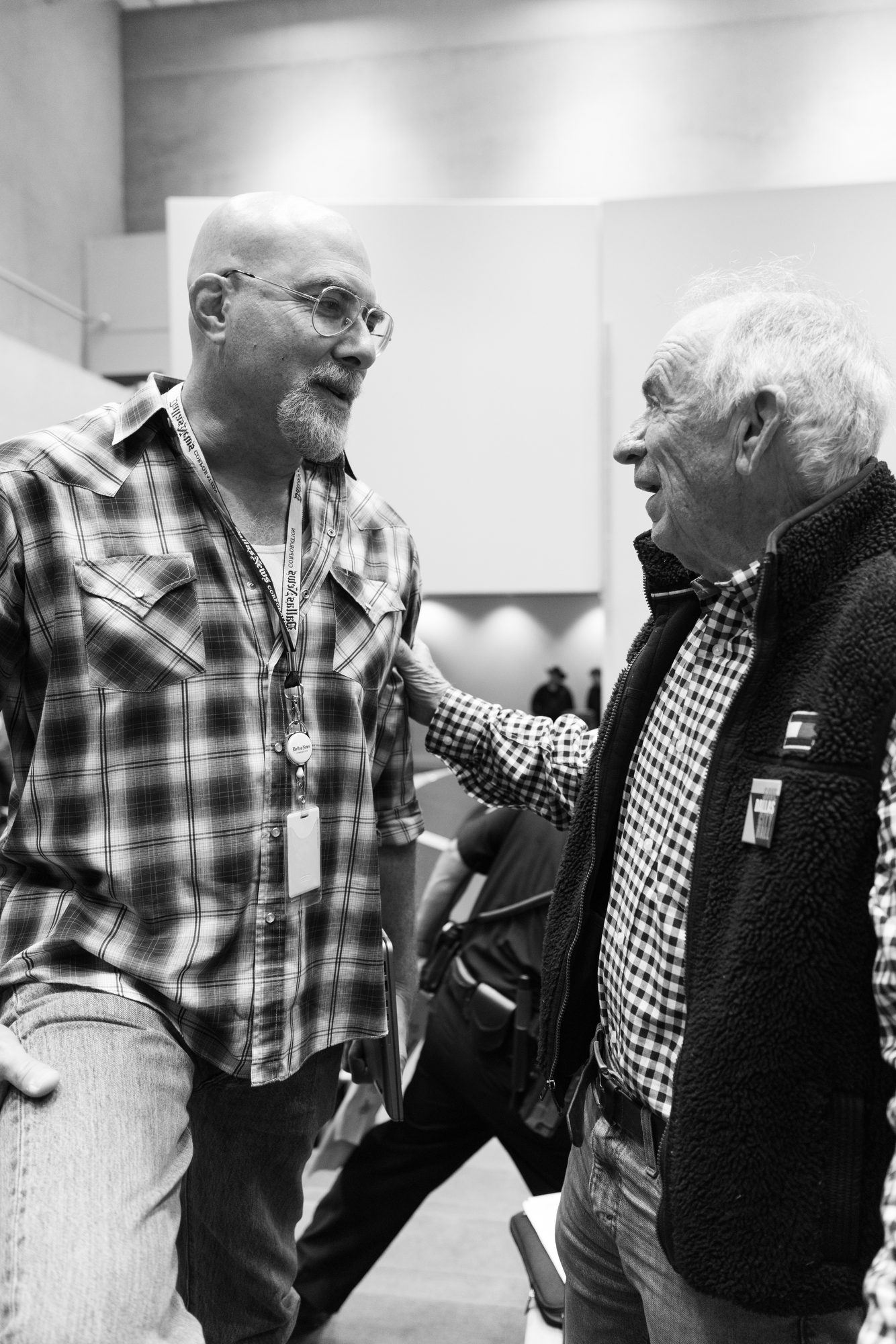
Apart from the brief time in the ’90s when he moved to Los Angeles to oversee a new alt-weekly’s music section, Wilonsky has always stuck with Dallas. The current place of residence he and his wife share is right next to his childhood home, which was built by his grandfather in 1955. “I share a backyard fence with my childhood home,” he said. “So many of my friends still live in the neighborhood we lived in. It’s like the most boring John Updike novel.”
Wilonsky has always found his hometown fascinating, something he picked up from his father, Herschel. “My dad was a great storyteller, and he loved the city, and he would tell great stories about Dallas,” he said. “I think I just inherited from him his interest in telling stories about the city … the things that had disappeared, the things that had taken their place, and the toll that it had taken on the people who had been kind of caught in between.”
A young Wilonsky read everything from comic books to works from such Dallas-Fort Worth sportswriters/men of letters as Dan Jenkins, Bud Shrake, and Blackie Sherrod. While in high school, he won a competition where several young journalism students talked to a kid who did coding for Apple. “I remember very distinctly coming back from that event and just wanting to tell his story, and I did, and it got published,” he said. “I won an Apple computer, and from that moment on, I thought, ‘Well, what an extraordinary way to make a living.’”
During his college years at the University of Texas at Austin, he edited The Daily Texan, publishing comic strips from future graphic novelist Chris Ware and a young, pre-filmmaking Robert Rodriguez. After graduating, he got the music-critic job at the Dallas Times Herald (then the Morning News’ competition), holding that position until the newspaper ceased publication, in 1991.
A year later, Wilonsky moved over to the local alt-weekly, the Dallas Observer, where he spent two decades as a music editor, film/TV critic, sports columnist, and pop-culture reporter. There was also a stint in the 2000s when he interviewed movie stars and filmmakers for Higher Definition, a talk show that aired on Mark Cuban’s HDNet channel.

As much fun as he had interviewing rock legends like Jagger and Bowie, and giving his two cents on everything from summer blockbusters to comic-book culture, Wilonsky wanted to report more on his city. “Part of me wishes I still did a little bit of that, because I do miss the comfort and the provocation of art,” he said, “but it got to the point where I just wanted to write about Dallas, for better or for worse.”
His years of editing the Dallas Observer’s Unfair Park news blog led to him getting the digital managing editor position at the Morning News, overseeing the paper’s website. He was also a city columnist and city hall reporter, preferring the former role, which allowed him some distance from the politicians.
He also got to write about battling stage IV kidney cancer, which he was diagnosed with in 2017. “I was given a year and a half to live,” he remembered. “I just wanted to see my son graduate.”
Over at UT Southwestern Medical Center, he joined a clinical immunotherapy trial that shrunk his kidney tumor to an operable size. He’s now cancer-free and has gotten to see his son, Harry, who’s now serving as a bullpen catcher for the Miami Marlins, grow up to be a young man.
But Wilonsky wasn’t just struggling with his own cancer. His father was also diagnosed with kidney cancer, unfortunately losing his battle in 2021. Wilonsky gets a bit teary-eyed talking about his old man, remembering how he and his family discovered a secret the elder Wilonsky left in a kitchen cabinet. “I see in the cabinet that my father had taped my last column inside a cabinet that only he could reach, and he wrote on it ‘Robert’s last column.’ And I just … I just didn’t know he cared about it this much.”
Wilonsky wishes his pops was still around to see him back on the beat. Ever since taking Morning News editor Rudy Bush’s invitation to come back to the newsroom, Wilonsky has been hitting the streets hard for column fodder. He’s hung out with homeless people, even devoting one column to a guy who lived in the storm tunnels underneath Harry Hines Boulevard. He’s written about buildings that have been shuttered, businesses and developments that have riled up neighborhoods, and landmarks that more locals should know about. (Did you know there’s a run-down house in South Dallas that once belonged to Ray Charles?)
“Most of the best pieces I think I’ve come up with in the last year have been a function of me driving around the city and noticing a thing that somebody might not have noticed or didn’t think to write about or didn’t know to write about,” he said.
As long as he and/or newspapers are still around, Wilonsky will continue to be a devoted follower of “the religion of righteousness and truth-telling,” as he put it. He knows his return can’t save journalism or even return his own paper to the glory days of yore—though he speaks highly of the “young, thoughtful, insightful, scrappy, dedicated truth-tellers” he now calls coworkers. Yet, even as his industry suffers, Wilonsky believes that journalism’s North Star shines bright enough to follow.
“I believe that there are still those who want the truth, need the truth, crave the truth, respect the truth, and want to hear the truth,” he said. “And I’m very honored and do not take for granted my position as being one of those people who still gets to tell them the truth.”
You May Also Like
In Ink and on Airwaves, Texas Media Grows Ever More Concentrated
Hearst's acquisition of struggling newspapers in the state may seem like welcome news. But bigger doesn't always mean better.
Editor’s Letter: Introducing Our September/October 2025 Issue
A note from the editor-in-chief

Editor’s Letter: Introducing Our July/August 2025 Issue
A note from the editor-in-chief