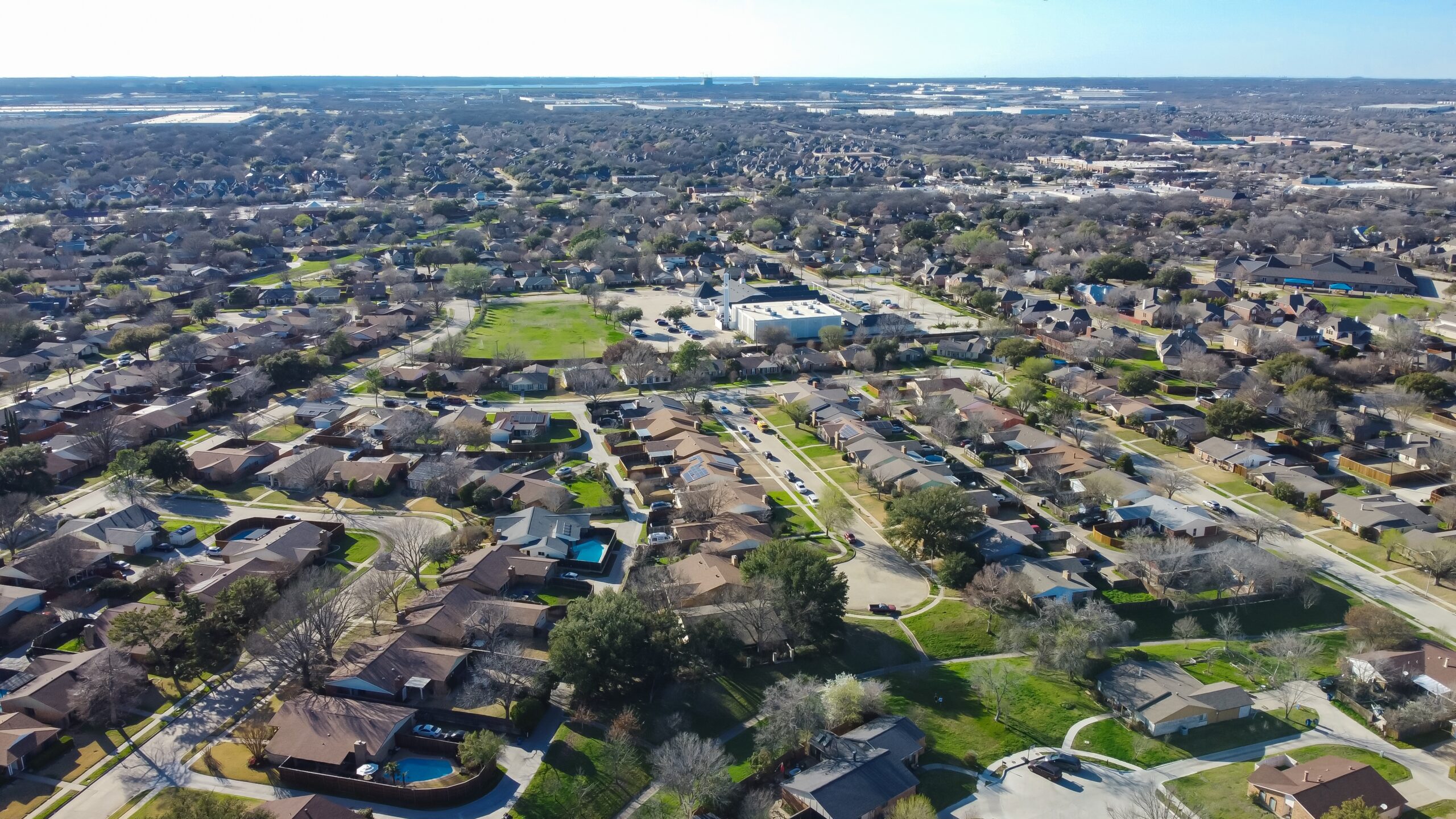
1.2 Million Oil Wells Are Buried Underneath Texas. Do You Live on Top of a Dangerous One?
Our state's homes are built above a hundred years of drilling by an industry that was never made to clean up after itself.
This spring, a Permian Basin pastor got an unpleasant surprise: a geyser of more than 1.5 million gallons of toxic brine gushing up through the parking lot of the First Baptist Church in Grandfalls. It was a “zombie well”—what happens when the plug on one of the state’s hundreds of thousands of old wells fails, releasing poisonous gas and water onto the property above.
These blowouts are dangerous in themselves. The gas that comes up can be poisonous enough to kill, as it did an oilfield worker and his wife in Odessa in 2019. The water carries benzene and xylene, which cause cancer and wreck the hormonal and reproductive systems of humans and animals. When it comes from injected wastewater, it can also carry a secretive mix of synthetic chemicals, including the “forever chemicals” known as PFAS.
But the spills are only the visible part of the problem. Every oil and gas well, once drilled, is a hazard someone has to keep sealed forever. And Texas has a lot of wells.
Earlier this year, two articles—one of them my own in the Barbed Wire and another in the Texas Observer—uncovered the story of a subdivision and elementary school south of Fort Worth built on an old landfarm, a field where drilling waste from the fracking boom had been spread across the soil. Parents at the school alleged that their children had developed strange health complaints, though after our reporting, the developer released results from testing it had commissioned that found the ground was clean.
I’ve been writing about the toll the oil and gas industry takes on its neighbors since the early days of the fracking boom, when I covered a North Texas family sickened by a shale gas well placed on their land without their consent and (for the Observer) another family on the Keystone XL route left for years with a lake of raw sewage in their front yard. That work taught me that, for many oil and gas operators, dumping their waste on their neighbors—trash that otherwise they would have to pay to prevent or clean up—is simply standard business practice.
Today, I run Future Heist, a watchdog group that focuses on threats to Texas land and water and the communities moving against them. The Fort Worth-area landfarm—which happened to be in a county with a history of grievous environmental contamination and a local government unusually committed to investigating it—looked to me like one visible trace of something much larger. During the Barnett Shale fracking boom of the 2000s and early 2010s, oil and gas exploration companies, working at a frenzied pace with minimal regulation or oversight, drilled some 21,000 wells around the Metroplex, each producing thousands of tons of solid waste. That waste had to go somewhere, and it was often spread on farmland surrounding drilling areas—the kind of areas now turning into suburbs.
Unfortunately, Texas keeps no public record of where that waste ended up. So my colleague, Greg Randall, and I looked at what the state does track: the wells themselves. And, in particular, which wells were at the greatest risk of going zombie.
Over months, we built a map that turns the state’s scattered and impenetrable records into something a normal person can actually use: a way to look up what lies beneath your own address.
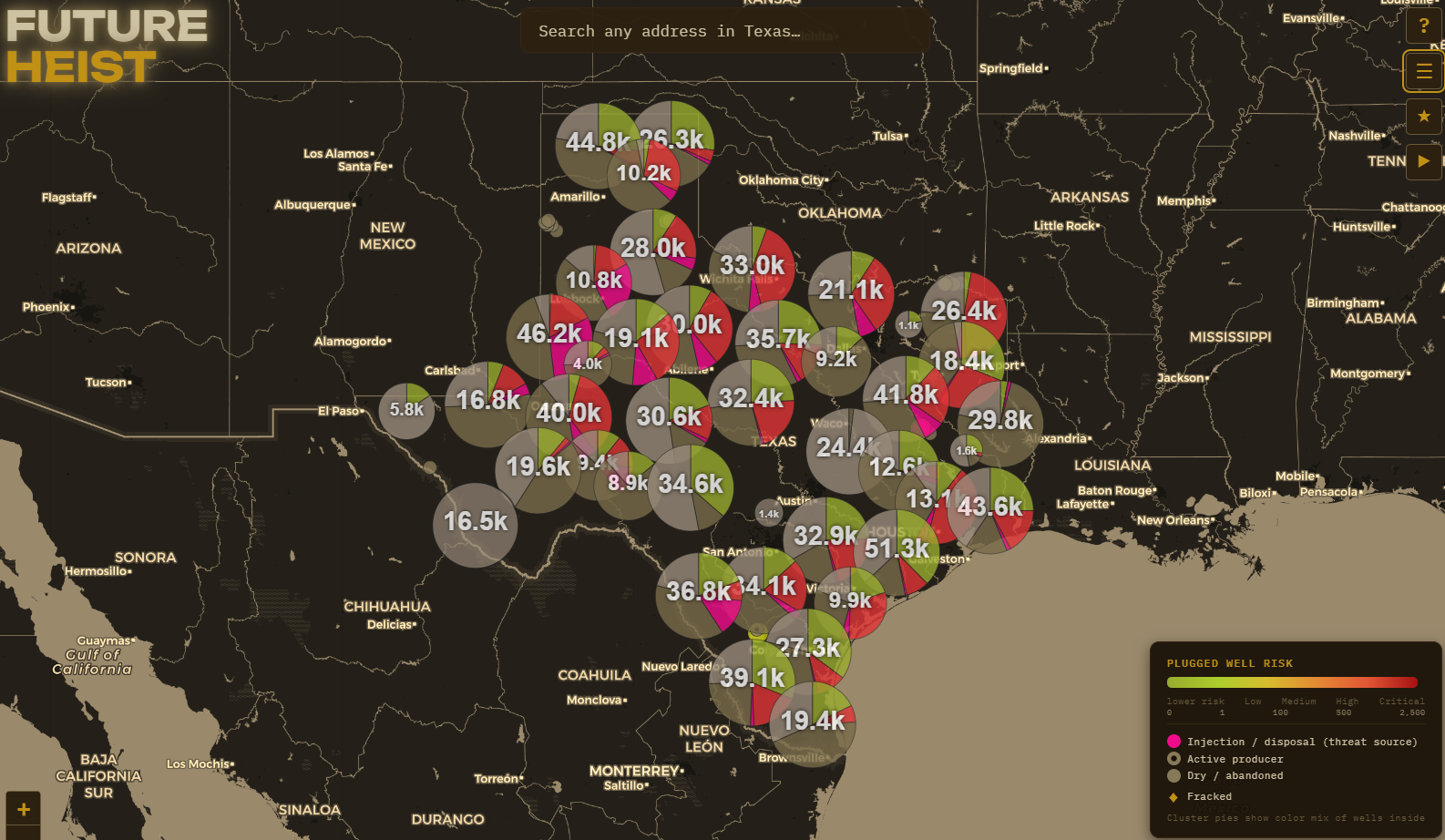
The Railroad Commission has around 1.2 million wells on its books, some 300,000 of them plugged. From those records we built a profile of the ones most likely to fail. Many things can turn a plugged well into a zombie, and the first is the plug itself.
The wells are sealed with cement, but cement does not stay sealed. Blake Scott, an oilfield-waste specialist who spent decades in the industry, told me the physics is not in doubt: Whether underground or on the surface, cement will eventually fail. “We’re betting that plug is going to last forever, when we know damn good and well it’s going to crack,” he told me.

Once a well is sealed, Scott added, the oil and gas industry, “likes to talk like it’s sealed forever. No, it’s not.” His challenge to anyone who assumes an underground plug lasts forever: Walk out to your nearest driveway and count the cracks.
But even that assumes the plug was any good to begin with. The American Petroleum Institute issued its final plugging guidance only in 2019, so the wells failing now were sealed under much older rules.
Nor is the work always done by anyone with reason to do it well. Old wells pass down to mom-and-pop operators or to the cash-poor subsidiaries that big companies spin off so they can quietly declare bankruptcy. Hawk Dunlap, a well-control specialist who ran for the Railroad Commission this year, has put the problem simply: “No one likes to pay for a funeral.”
Then, there is the pressure pushing up on those plugs from below. A fracked well produces about four times as much highly salty and chemical-laden “produced water” as it does oil, and that wastewater is typically pumped back underground.
The amounts of water pumped back underground are staggering. Katie Smye, a geoscientist at the University of Texas at Austin, has counted some 60 billion barrels injected into the Permian Basin, half of that since 2010—enough to fill Texas’ biggest lake, Toledo Bend, nearly twice over with toxic brine. So much wastewater has been pumped underground that in parts of West Texas, the ground has begun to bulge upward. All that pressurized fluid seeks a way out, and an old well is often the readiest one. In a 2024 study, researchers at SMU traced fluid that had moved roughly 12 miles underground before erupting from a plugged well—far outside the radius our own map treats as the danger zone around an injection site.
Get the newsletter

One such well caused the disaster at the Grandfalls church. How many more are inching toward their own catastrophe? Impossible to say, short of thousands of professionals walking the field and checking every one.
But our map shows which wells we calculate are at the highest risk. Our model weighs several factors, all drawn from state records. First is the age of the well and its plugs, both of which likely correlate to poor construction, plus the state’s own data on construction quality. A special bonus, so to speak, goes to injection wells with a documented history of violations or construction failures. But most significant is the number of injection wells pumping wastewater within a mile of the plugged well, into the same underground layers it connects to; the more of them there are, the higher the risk that the plug will fail and wastewater will spew above.
Put together, this analysis flagged more than 25,000 plugged wells across the state at critical risk of failure—50 times more wells at risk of going zombie than had previously been reported, as the Houston Chronicle noted when it covered our findings last month. But a failing plug does not have to cause a dramatic blowout to be dangerous. It can seep for years, and because it is buried, no one above it ever knows. A peer-reviewed Pennsylvania study found that plugged wells released benzene, a carcinogen, at rates that could not be told apart from active ones. Plugged, it turns out, is not the same as sealed.
This means health risks for anyone living above. Benzene is a known cause of leukemia; drilling waste carries naturally radioactive radium and arsenic as well. An underground leak reaches a home through the soil itself, as gas and vapor rise up through the foundation—and children, who pound for pound breathe roughly twice as much air as adults, take a double dose of whatever arrives.
Texans are living on top of a hundred years of drilling by an industry that was never made to clean up after itself. With statewide officials in Austin who rank among the largest recipients of oil and gas money in the state’s history, that is not about to change. We built the Zombie Risk map so Texans can at least see what’s under them. Look up your address.
You May Also Like

‘Drill Baby Drill’: Arlington Approves New Site for Fracking Near Daycare and Schools
Arlington has opened new land for fracking for the first time in 12 years, allowing TotalEnergies to drill 10 new gas wells near a daycare center.
Over 20 Years, Texas Allowed 1 Billion Pounds Excess Emissions
Massive pollution incidents have ballooned in Texas, with an almost total lack of enforcement in response.
Natural Gas Terminal Reopens After Massive Explosion
Regulators say the company fixed flaws at Freeport LNG which led compressed methane to burst from a pipe and catch fire.