Can We Survive Naomi Klein’s Depiction of ‘End Times Fascism’?
Klein and co-author Astra Taylor's new book is too bleak and unfocused for our shameless and sharp-edged political moment.

A version of this story ran in the September / October 2026 issue.
In the 2013 science fiction film Elysium, directed by Neill Blomkamp, the affluent orbit above the Earth’s atmosphere, enjoying a habitat free of hunger, thirst, and suffering. They have medical devices that can cure diseases with a quick scan. Below them, the planet has been depleted into an overcrowded and polluted wasteland where the poor struggle and are surveilled by droids.
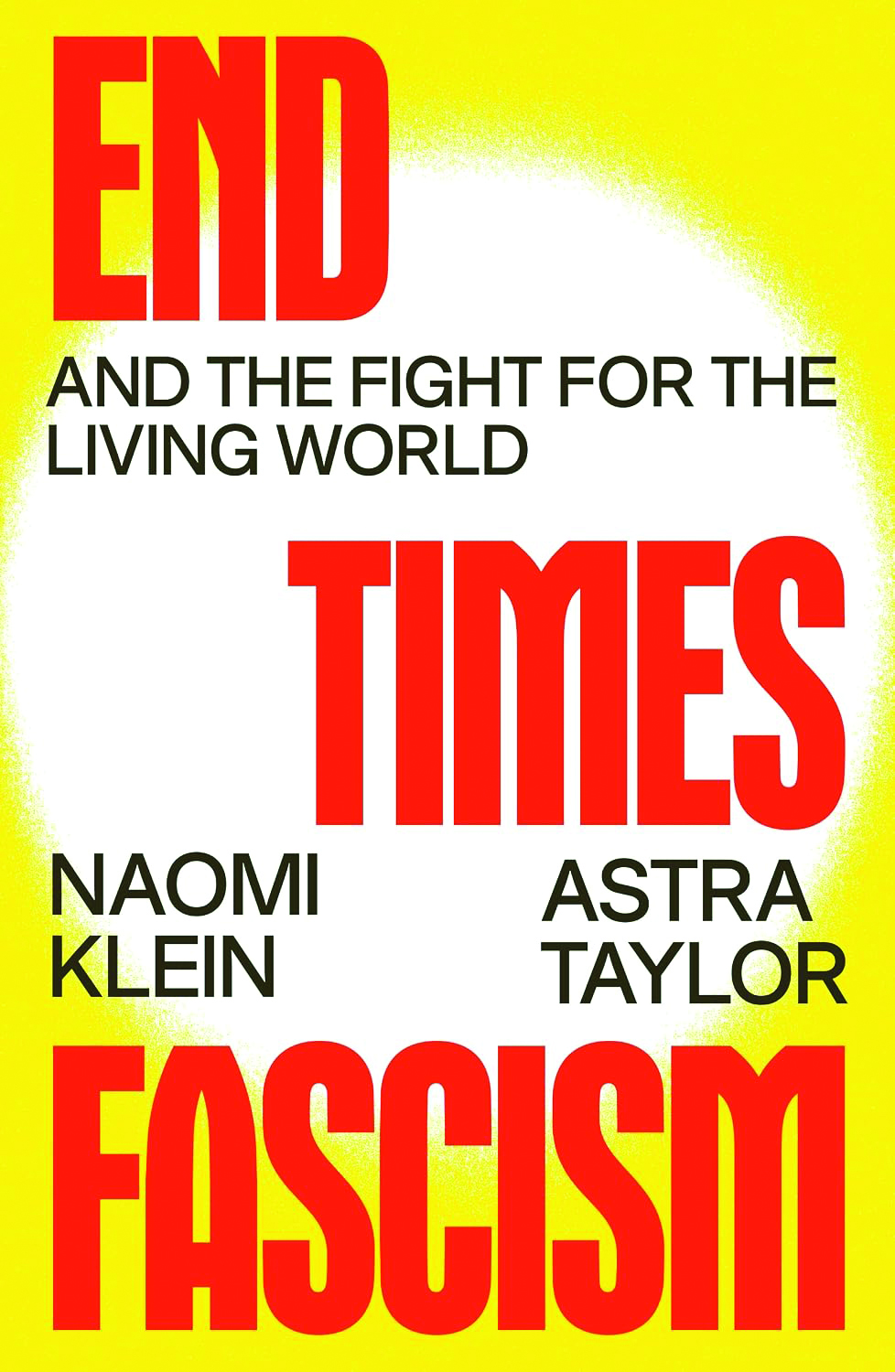
According to Naomi Klein, author previously of The Shock Doctrine and Doppelganger: A Trip into the Mirror World, along with filmmaker, writer, and activist Astra Taylor, we are closer than ever to this harrowing dystopian vision, which they reference in their new nonfiction book, End Times Fascism: And the Fight for the Living World.
For those of us suffering through the upheavals of the second Trump administration, this vision doesn’t seem so far away, and people are seeking a way to fight it. Klein and Taylor offer a way to analyze the “world of perpetual upheavals” we are experiencing today and how to combat it. But is the model of resistance that they offer enough?
In the book, the authors identify religious extremists, the tech elites, and ethno-fascists as “end time fascists.” What they have in common is that they believe they will be the “chosen ones” in the apocalypse that they are accelerating—the “few ascending to a gated paradise while the rest of us are abandoned to the floods and fires of the damned.” While everyone else deals with the pain and suffering of pandemics, wars, climate emergencies, or economic insecurity, these end-times fascists are preparing an escape hatch: whether it’s the religious extremists in heaven, tech elites in bunkers, or the ethno-fascists in a country without immigrants.
Like Hitler or Mussolini, end-times fascists tap into people’s resentments to prop up antidemocratic governments. But unlike the fascists of yore, whose goal in declaring war was to bring about a new world order with them in control, these end-times fascists don’t offer an end to the turmoil we are experiencing. As weapons become deadlier, the economy more precarious, and the world more dangerous, Klein and Taylor warn that we might miss the signs of this brand of fascism: “We were looking for a re-run but what we got was a sequel.”
Compared with Klein in her 2007 book, Shock Doctrine, which explores the way in which “shocks” like wars, terrorist attacks, coups, and natural disasters have been exploited by right-wing governments to pave the way for neoliberal policies in the aftermath, Klein and Taylor here seem to struggle to thread the needle between the different sections of the book. The section that best supports their thesis is one on how tech giants are racing to build artificial intelligence and its accompanying data centers, which will destroy countless jobs and the habitability of the world for the sake of profit. “The tech right’s willingness to eliminate our life sustaining jobs and human relationships cannot be separated from their indifference to what little remains of the planet’s fast vanishing wildlife and plant diversity,” Klein and Taylor write.
Other sections, like one describing anti-immigrant ethno-nationalist movements motivated by the “great replacement theory,” make weaker connections to the end-times agenda.
Overall, the authors fall short in tying disparate political, economic, and religious groups back to the fascist state and the highest levels of government, namely Trump. By failing to do so, it seems more daunting to hold power to account when the target of resistance is not clear.
So what is to be done about end-times fascism? Other recent books by Klein offered a clearer and more cohesive road map for resistance: from reclaiming populist politics in her No Is Not Enough: Resisting Trump’s Shock Politics and Winning the World We Need (2017) to advocating for the Green New Deal in On Fire: The (Burning) Case for a Green New Deal (2019).
EXPOSING A WOUND WITHOUT A SUBSTANTIVE CURE…
Maybe apocalyptic fascism does indeed encapsulate our current moment, but after pushing readers to the nightmarish precipice we stand on today, what do Klein and Taylor offer for those of us who have no choice but to look for a solution?
The last section of the book, titled “Let’s Stay,” is devoted to ways people have resisted, such as community calls for moratoriums on data centers, organizing against federal violence in Minnesota, and international protests against the tech giants. The authors write that we must demand strict regulation of AI, an elimination of “weapons that threaten us,” and the redistribution of billionaires’ wealth. They suggest public ownership or containment of AI—equivalent to past calls for nuclear nonproliferation.
They criticize liberals, who have recently evaded discussion of climate change, including Kamala Harris, who stayed silent on the issue and embraced crypto during her presidential run. The authors add that there’s been a “failure to translate powerful issue-based movements into a coherent broad-based political program.”
Get the newsletter

For an example of such a political program, they look to Zohran Mamdani’s democratic socialist mayoral campaign in New York City. Klein and Taylor characterize Mamdani’s campaign and other examples of resistance to data centers as reflecting a “politics of hereness,” or a commitment to community that contrasts the tech elites’ desire to escape the disaster they helped create.
Perhaps the act of staying and fighting against fascism is a revolutionary act in itself, but it’s unclear if Klein and Taylor’s politics of hereness offers a coherent vision for how to fight the influences of religious extremists, tech, and ethno-nationalist end-timers. Is End Times Fascism just exposing a wound without a substantive cure to heal?
You May Also Like

‘The Search Committee’ Is a Subtle Rebuke of the Border Literary Canon
José Skinner’s fast-paced satire delivers sharp insights gleaned from years lived in Mexico and the Rio Grande Valley.

Unmasking the Klansman
A new book reveals the untold story of a Ku Klux Klan member’s literary double life.

The Tower Sniper’s Wife
A new book from UT Press provides a troubling twist on the vow “until death do us part.”