On a sizzling Friday night in late May, Houstonians from all over the city flock to the Ensemble Theatre’s lobby. Under fluorescent lights, they greet one another before the show starts. The sound of various generations fills the lobby—a couple with season tickets, a group of millennials enjoying a girls’ night out, lovebirds on a date.
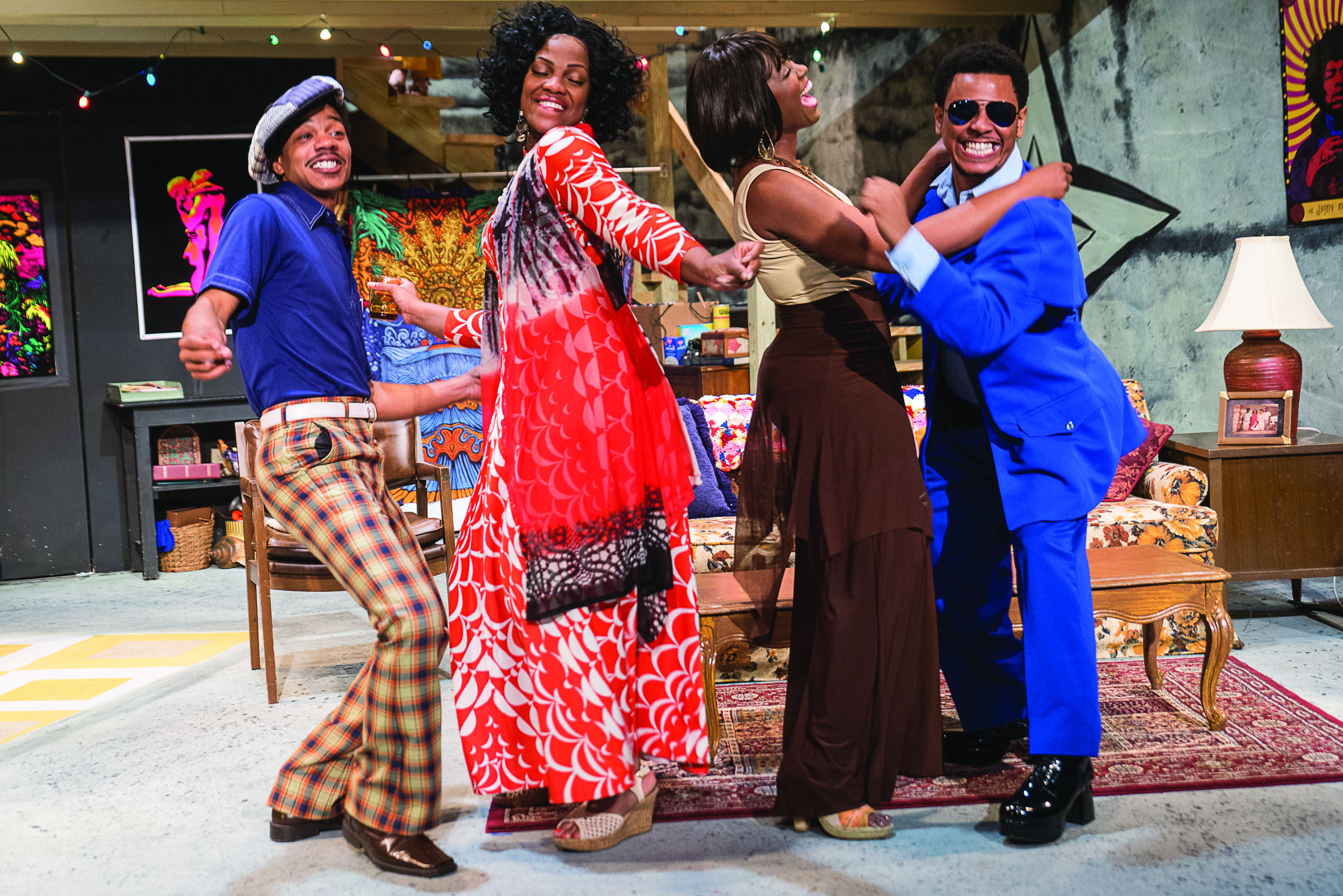
Once the curtains rise at the city’s oldest Black theater, the noise from the audience quiets as the soulful “In a Sentimental Mood” by Duke Ellington swells. The two leads of Who All Over There?, a spin on the classic Guess Who’s Coming to Dinner that explores interracial relationships, saunter onstage inside the set of an art museum.
For the past 50 years, the Ensemble Theatre has brought Houstonians together to laugh, cry, and talk back to plays representing all aspects of African-American life. Whether they’re watching August Wilson’s Pulitzer Prize-winning play The Piano Lesson or the contemporary Akeelah and the Bee come to life onstage, the familial community, the crowd participation, the colorful sets, and the talented actors are what make up the theater’s rich legacy.
“People coming together and being on the same page for just a minute is so important,” said Rachel Hemphill Dickson, an actress with the Ensemble since the ’90s and the current associate artistic director. “There are fewer and fewer spaces where that happens. Art is important because it interrogates the questions that go undiscussed and elevates the challenges that deserve room.”
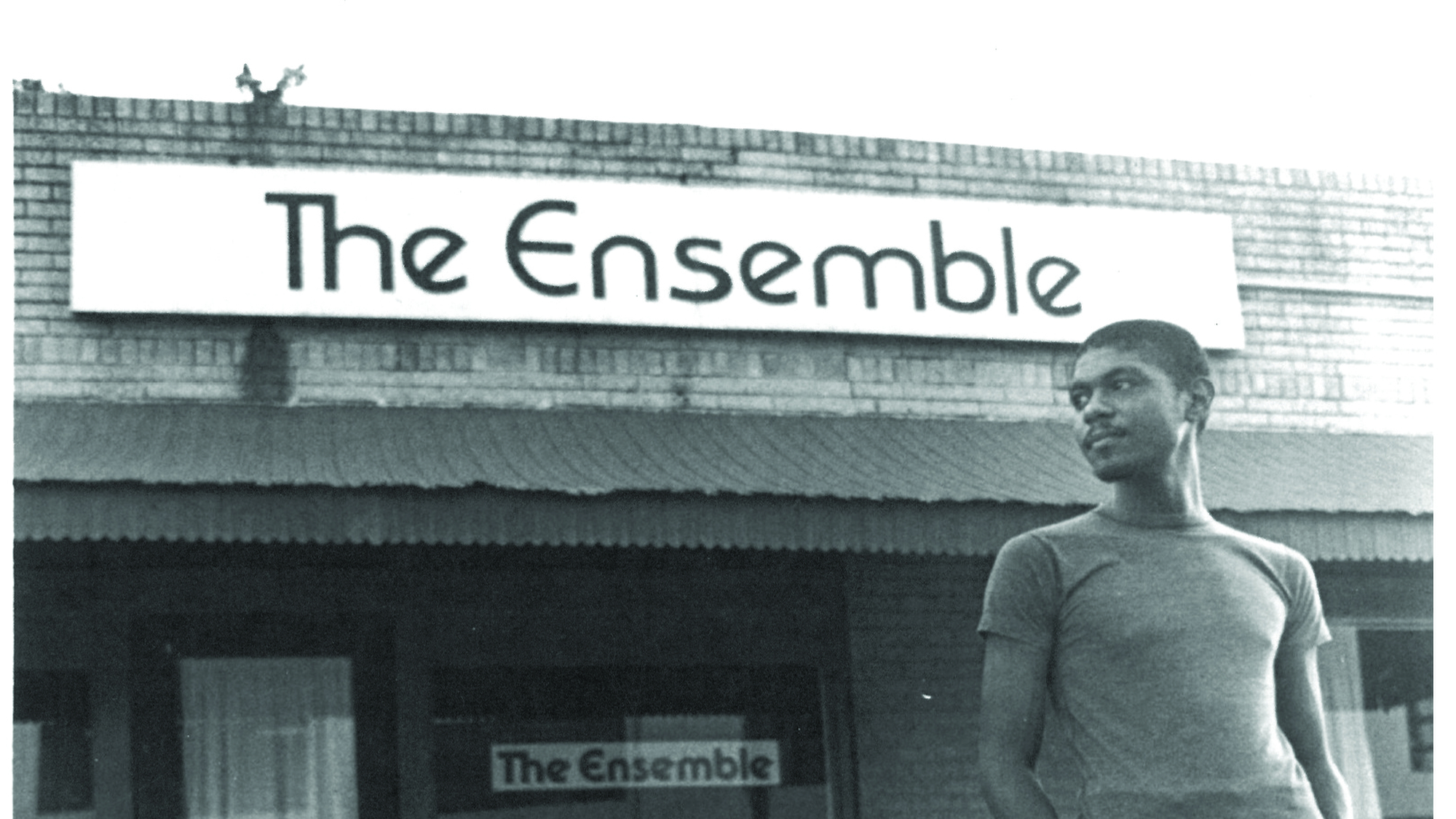
Back in the mid-1970s, the late George Hawkins, founder of the Ensemble Theatre, imagined a place where Black actors could find work and perform plays that mattered. Even after he passed away, in 1990, his legacy and that dream continue to grow as the Ensemble prepares for its 50th-anniversary season starting this fall.
“George was a driving force that kept us encouraged, understanding that we were Black and we were doing Black plays,” said Eileen J. Morris, artistic director at the theater. “These plays were speaking to the experiences that we had … and yet it was a universal story that was being told. There were stories that dealt with families, communities, human beings, and all of the dynamics that are rolled into who we are.”
More than four decades later, Morris remembers the first time she met Hawkins. A Chicago native, she’d recently graduated with a theater degree and was looking for her big break. Her sister’s husband worked across the street from the Ensemble Theatre, and her sister watched as Hawkins worked to transform an old pet store into a theater for the community. Hawkins had a dream to showcase the diverse experiences of Black life. At other theaters, he noticed that Black artists were often relegated to playing maid and butler roles.
During one of her visits to Houston, Morris stopped in and met Hawkins.
“There’s a certain charm and spirituality that oozed from him,” Morris said. “I just loved watching him walk in the room. He had such an essence and a presence.”
About a year later, in 1982, she made her big move to the Bayou City and began working as a volunteer at the Ensemble. She volunteered as the house manager, helped out in the box office, swept the floors, and made phone calls. She and Hawkins quickly became an inseparable team. Within six months, Hawkins promoted her to managing director.

The original Ensemble at 1010 Tuam was tiny. The less-than-1,000-square-foot space could seat only 60 to 75 people. The actors would do their makeup in the bathroom before going onstage. Despite the crowded space, Black Houstonians were vying to get a seat and see a show. The actors were performing plays hot off the press from New York City’s theater scene.
Inside the Ensemble, Houstonians watched plays that brought the African-American experience to life, like A Raisin in the Sun, a play originally inspired by Langston Hughes’ poem “Harlem,” and No Place to Be Somebody, which explores racial tensions in the civil rights era.
As Morris watched plays at the theater, she felt herself transforming too.
“My heart was changed. It was like something washed over me,” she said. “I just became totally affected by what I was seeing onstage because it related to me. I felt like my voice was being heard. I was seeing my family up there.”
As more and more Houstonians gathered at the Ensemble, Hawkins realized they needed to find a bigger space to hold the growing audience. He began to drive around Midtown searching for a larger home for the theater. During one of his trips around the city, he spotted an old car dealership. He persuaded the landlord to let them take over the space.
The one hiccup? The rent was $3,000.
“We could not afford $3,000 a month,” Morris said. “I was like, Are you kidding me? How are we going to do this?”
At their previous space on Tuam, the rent was only $300 per month. However, Hawkins, a tried-and-true dreamer, believed they could come up with enough money to cover the tenfold increase. So they moved to the new space on Main Street in 1985.
As the buzz around the Ensemble grew, the theater saw more support from the community. Pastor William A. Lawson and his wife, Audrey Lawson, founders of the historic Wheeler Avenue Baptist Church in Houston’s Third Ward, became huge advocates for the theater. Lawson and two other women became part of the Ensemble Theatre management team, where they worked to obtain grants, find board members, and help drum up financial support. At the larger space, they began performing in two different parts of the venue and hosting seven to eight shows per year.
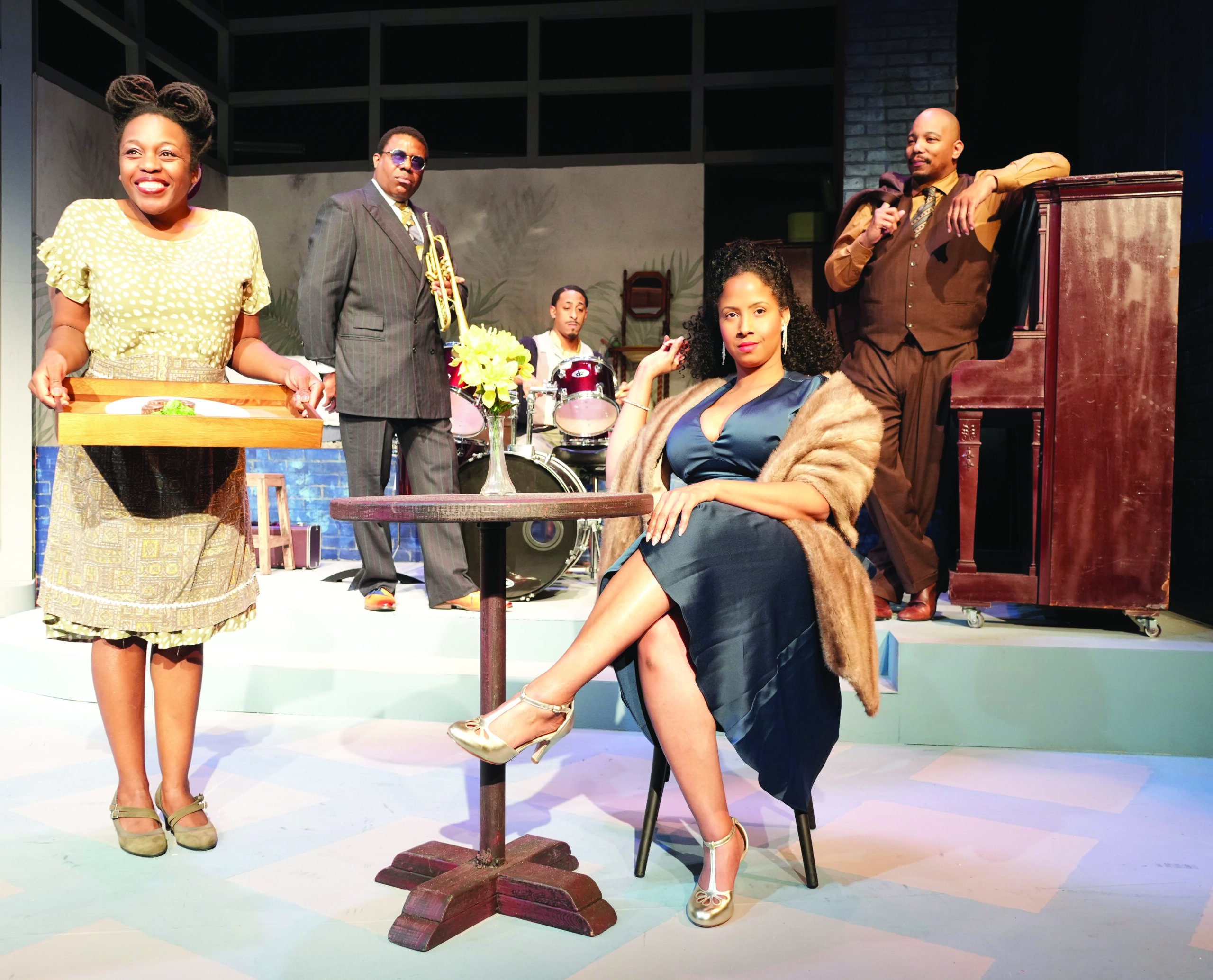
Five years later, in 1990, a monumental loss shook up the theater when Hawkins passed away at 43. The Lawsons were by his hospital bed. Later that evening, the theater planned to perform For Colored Girls to a sold-out audience. Before the show started, Morris returned to the theater to break the news to the cast. She brought along Pastor Lawson for ministerial support.
“When I told the actors, they were just hollering and screaming and crying,” Morris recalled. “They said, ‘Well we’re not going on.’”
But when Pastor Lawson walked in, a hush fell over the room. He began to speak about Martin Luther King Jr. and related his famous “I Have a Dream” speech. He shared how Hawkins also had a dream, which led to the creation of the Ensemble Theatre. By the time Lawson finished his speech, the actors were eager to get onstage.
“It was one of the most memorable performances that I remember. It came out of pain, fear, love, passion, hope, faith, and joy,” Morris said.
Visiting Houston in the 1990s was the cool thing for Steven J. Scott, a student at Prairie View A&M University, to do on the weekends. When he made a pit stop at the Ensemble Theatre for the first time, he was captivated by the play The River Niger, which follows a son returning home from the Air Force to his family in Harlem. Back in high school, Scott had performed a poem from the show.
“To see Black men in charge of producing and directing and being stars of a show, it was really cool to see that,” Scott said. “It made me want to go back to school and work harder.”
After graduating from college and doing theater elsewhere, he returned to audition for the Ensemble in 2002. He recalls taking a risk and singing a song from a Greek classic in his audition because he wanted directors to recognize him as a singer too. His bold decision paid off and he was cast in the Christmas production of They Sing Christmas Up in Harlem.
Two decades later, the Ensemble has remained home for Scott. Over the years, he’s performed plays that have transformed him as an actor and a person. He remembers auditioning in the back parking lot of the Ensemble for a play called He Man Ball, which follows three friends airing out their personal issues as they play basketball. Then, in 2014, he cut his beloved locks of 17 years to perform in a two-person show, Plenty of Time, alongside Dickson.
“My goal was to always make the Ensemble my home because the Ensemble raised me as an artist,” Scott said. “As they grew, I grew. That’s a really beautiful thing in my story.”
Dickson’s character in Plenty of Time also stays etched in her memory, as the role required acting out the same woman’s life onstage from age 18 to 68. Dickson remembers weeping every time she got offstage from a performance of The Trial of One Short Sighted Black Woman vs. Mammy Louise and Safreeta Mae, in which a woman files a lawsuit about stereotypical images depicting Black women.
“I believe every time, being onstage, it’s such a responsibility,” Dickson said. “It’s not a job. It’s a calling. It’s my responsibility to invest every time I get to engage.”
Get the newsletter

Besides acting, both Scott and Dickson have moved into other roles at the Ensemble. As the youth education and community outreach coordinator, Scott oversees the Young Performers Program that trains up the next generation. Earlier this year, he directed Who All Over There?
During the closing weekend, Scott milled around the Ensemble lobby. Still lock-free after all these years, he shook hands and smiled with those coming to see the show.
“My hope is that this institution continues to live on for another 100 years,” Scott said. “If it’s not here, then you don’t have that special place in Texas, right here in Houston, that really strives to speak to America about who Black people are, how complex we are, how diverse we are, and how a part of American culture we are.”
Morris also wants the Ensemble’s legacy to stretch for decades more in Houston. Since the pandemic, however, some Black-owned theaters in Texas have struggled to maintain consistent programming or keep a permanent performance space. For example, San Antonio’s Renaissance Guild and Dallas’ African American Repertory have not had active programming since COVID.
Still, other Black-owned theaters are continuing to persevere. Jubilee Theater in Fort Worth has remained in the same location in Sundance Square since 1993 and is now in its 45th season. Dallas’ Soul Rep Theater Company has put on productions for 30 years that celebrate African-American culture.
Morris is hopeful for the Ensemble’s future, but the theater has also endured challenges since 2020. In the pandemic’s wake, the number of Ensemble subscribers dropped from 2,500 to a little less than 1,000. Subscriber packages range in price. For example, someone interested can get four tickets to any of the season’s main-stage shows for $200. Morris hopes that the theater can reach 3,000 subscribers during its 50th season.
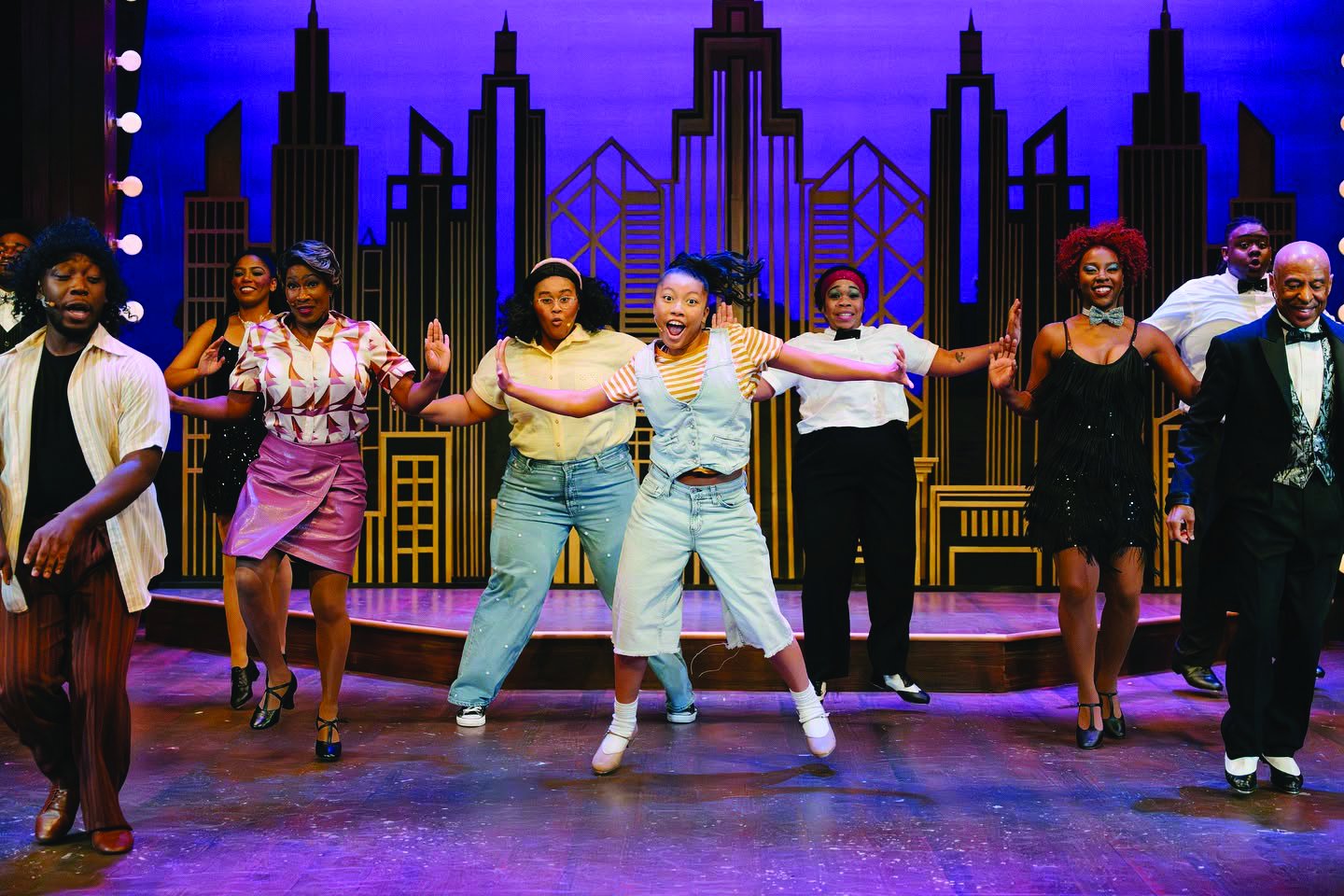
Houston’s theater scene also continues to expand rapidly, and some of these theaters have begun to embrace works popular with African-American audiences. This can be a challenge for the Ensemble because it has to compete with institutions that have larger budgets.
The theater also relies heavily on funding from donors. Morris said the Ensemble has a reliable pool of individual donors, but it’s looking for new ways for the community to invest, whether that’s through buying group tickets, becoming a subscriber, volunteering, or donating.
For the 50th season, the Ensemble plans to debut new performances and revive popular productions. Audiences can expect to see a revival of A Motown Christmas and the classic A Raisin in the Sun. At the start of 2027, the Ensemble will premiere The Wash, inspired by the historic Atlanta washerwomen strike of 1881. Meanwhile, Dickson will direct The Colored Museum, a play that explores stereotypes of Black life in America.
“I am ready for love.”
India Arie’s voice croons over the speakers in the back room of the Ensemble’s building. On a Thursday night in June, a group of actors stretch their bodies and groove to the soulful singer. The cast is preparing for an upcoming performance of Get Ready, a musical following a fictional group of African-American musicians preparing to make a comeback.
After they finish stretching, they line up on the opposite side of the room. Director Patdro Harris instructs them to evoke different emotions as they cross the floor. What makes them feel strong? What makes them feel small? What makes them feel classy? A man struts across the room and shows off his muscles in the mirror to display strength. Shortly after, a woman displays all the different emotions as she crosses the floor and dances to finish off the exercise. She wiggles her body, and the rest of the cast hypes her up from the corner, shouting and raising their arms as the music swells. Harris tells the cast that he wants the same community spirit to come across onstage during their performances.
After all these years being a part of the Ensemble, it’s the same feeling Morris also wants to stay with audiences. It’s based around a quote—“Art does not change the world; art changes people, and people change the world”—from Wilson, one of her favorite playwrights.
“I want people to have an experience like none other,” Morris said. “I want them to know that when they have that experience, it’s going to be one that they’re going to want to share with someone else. You yourself go out and do something to make the world a better place. That’s why we are here.”