Cuba’s Government Is in Trump’s Crosshairs, but Political Dissidents Find No Refuge Here
As the president has mulled invading the island and imposed harsh sanctions, old legal pathways have closed while asylum denial rates for Cubans are near 80 percent.
In 2021, tired of what she said was years of persecution in Latin American countries after being forced out of her home country of Cuba, Maria Luisa Arango Presibal and her husband Nilo Gibert Arencibia decided to come to Florida. They passed through Central America and Mexico, then crossed the border near Del Rio, where they surrendered to Border Patrol agents and requested asylum. They were released and made their way to Miami.
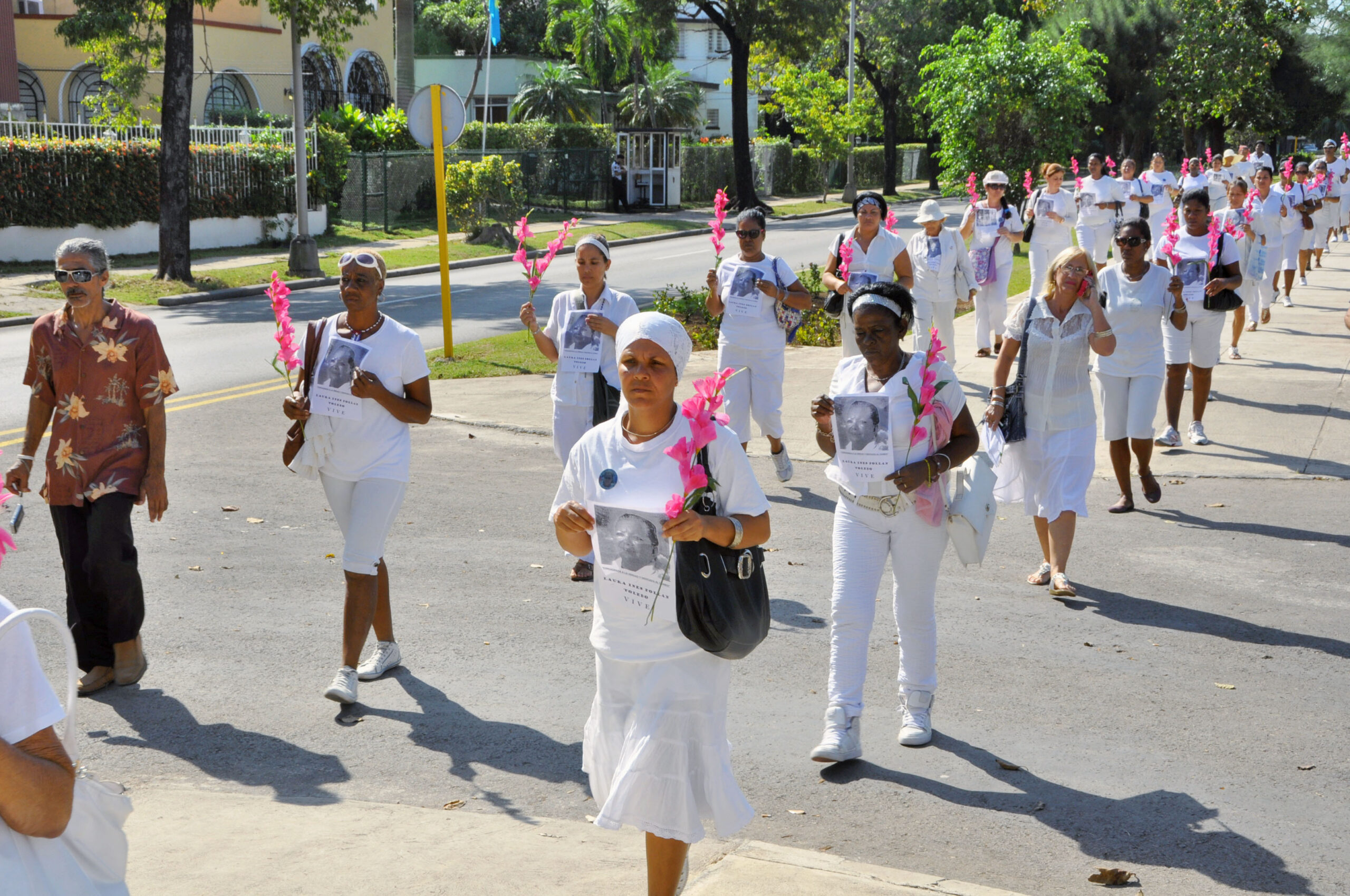
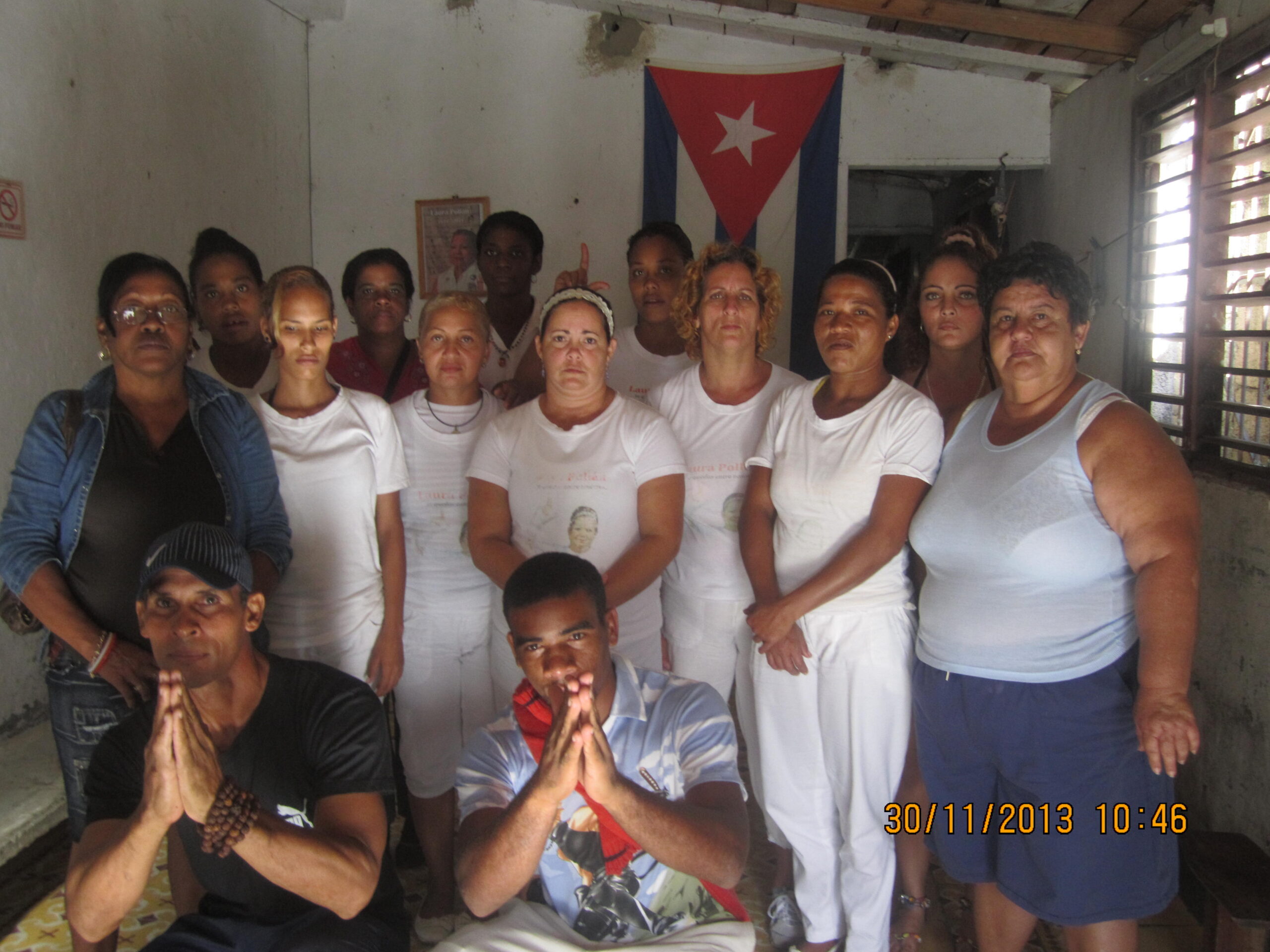
Arango said she was forced to flee Cuba because she marched with las Damas de Blanco, a protest group started by the loved ones of dissidents who have been detained or disappeared by that country’s authoritarian government. The organization is widely known even beyond the island nation; in 2020, a group of U.S. senators, including the Cuban Americans Ted Cruz and current Secretary of State Marco Rubio, introduced a resolution honoring the group and its opposition to Cuba’s communist government.
“For nearly two decades, ‘las Damas de Blanco’ have bravely marched through the streets of Cuba wearing all white to protest the injustices their loved ones have endured,” Cruz said at the time. “In the face of oppression, these women are a beacon of light for freedom-loving Cubans.”
Meanwhile, Cuba’s communist government has become a target of the second Trump administration’s regime change campaign. President Trump himself has publicly mulled invading the island and has imposed harsh sanctions, contributing to the country’s current economic and social crisis. Earlier this year, his Justice Department charged Raul Castro, Cuba’s former president and brother of longtime U.S. bogeyman Fidel Castro, in the shooting down of an exile group’s airplane. The indictment against Castro makes note of how “Cubans fled to the United States through the Florida Straits, risking their lives, and many times resulting in the death of those migrants in those waters on their journey to freedom,” as a result of government oppression. Meanwhile, the asylum denial rate for Cubans so far in fiscal year 2026—the first full fiscal year under Trump—is 78 percent, according to the Transactional Records Access Clearinghouse.

Today, Arango is back in Texas, a prisoner at the El Valle Detention Facility in Raymondville. In October, when she and Gibert showed up to a mandatory check in with Immigration and Customs Enforcement (ICE) in Syracuse, New York, where they’d moved after Florida, they were detained.
Cubans once received special treatment from U.S. immigration officials, but Arango is fighting for protection at a time when her compatriots have seen their privileges steadily erode under successive presidents and Trump has all but cut off access to asylum across the board.
“What we have now is an administration that is giving deportation orders to a lot of people that could face persecution in Cuba,” said María José Espinosa, the executive director of the Center for Engagement and Advocacy in the Americas. “All of them are at risk of being returned to harm.”
Despite fleeing an ideological enemy of the Trump administration and being a member of a group praised by at least two of the president’s allies, Arango was ordered deported by an immigration judge earlier this year. The judge never assessed whether Arango would face persecution in Cuba; he simply ruled that she had not provided a sufficient accounting of the time she spent in other countries before she reached the United States and hadn’t paid a recently implemented annual fee for asylum-seekers. She’s appealing.
“If we return, we’ll be in danger,” Arango said in Spanish during a phone interview from the Raymondville detention center. “We’ll be a target.”
Arango said she joined protest movements in 2013, advocating for the release of political prisoners. Though she doesn’t currently have a family member who’s a political prisoner, Arango’s attorney identified her as a member of Las Damas de Blanco, which translates to the Ladies in White, because of the garb they wear at demonstrations. Arango’s attorney provided the Observer pictures of her in the all-white uniform marching and being detained at a demonstration. The following year, she was severely injured during a knife attack at a gathering for an opposition political figure. The incident received international media attention. In 2015, according to newsclippings, her husband was beaten by police at a demonstration. Beatings and arrests were common, Arango said. One year, she said, she spent eight months in detention after she and other dissidents handed out toys to children on Three Kings Day.

One day, she said, an officer from the state security forces showed up at their house. “He told my husband that this order comes from above: “He has to leave the country, because if he doesn’t he’ll face the consequences,” Arango said.
They fled to Trinidad and Tobago, another Caribbean nation. They lived there in the country for four years, but they never received asylum, she said. They faced discrimination because they were Cuban. They couldn’t work and feared for their safety because of Trinidad and Tobago’s unstable security situation. Twice, Gibert was accosted by women he believed worked for the Cuban government, Arango said. After four years, they took a boat to Venezuela, made the dangerous journey north through Central America, crossed into Mexico—where Arango said they were detained and robbed by security forces—and finally entered the United States. After making their asylum request to Border Patrol agents, they were released and ordered to check in regularly with ICE, a common practice under the Biden administration and prior.
As the United States’ longest-standing foe in the Americas, and because anti-communist Cuban exiles have been a vocal voting bloc, Cuba’s citizens have long enjoyed privileges here. The Cuban Adjustment Act of 1966 gave a path to citizenship for Cubans admitted into the States under parole, a temporary status immigration officials have discretion to offer. Under former President Bill Clinton, the federal government began what became known as the “wet foot, dry foot” policy, returning to Cuba immigrants found at sea and granting parole to those who made it to United States shores or showed up at the border.
In the final years of the Obama administration, South Texas saw a flood of Cuban immigrants trying to enter the country before the end of the “wet-foot/dry-foot” policy in 2017, part of the administration’s last-minute efforts to normalize relations with Cuba. Since then, it has been no longer customary for Cubans to automatically receive parole when they show up in the United States. Former President Joe Biden launched a new parole program for Cubans, Haitians, Nicaraguans, and Venezuelans, an effort to slow the post-COVID migration of people from destabilized Latin American countries by having them apply from abroad rather than show up at the border, but Trump halted that program shortly after returning to office, leaving about 100,000 Cubans in the States vulnerable to deportation, Espinosa said.
Espinosa’s organization estimates there are more than 600,000 Cubans here who don’t have a viable pathway to citizenship. As the parole-to-citizenship pathway has largely closed, the number of Cubans instead seeking asylum has spiked—but court statistics show their chances of success are slim.
Arango and Gibert’s cases, begun in 2021, dragged on for years, so in October they were caught up in the Trump administration’s practice of detaining previously released asylum-seekers when they go to their check-ins. Arango said she was first taken to a detention center in Louisiana, then to Texas.
“For 13 days I couldn’t eat or sleep, because they locked me up in a prison with bars, and I had all those memories of Cuba when they tortured me, when they beat me,” she said.
Gibert was also sent to a detention center in Louisiana, then to Mississippi. In detention, their immigration court cases were sped up. On January 6, an immigration judge granted ICE’s request to dismiss Gibert’s asylum case and deport him to Ecuador, said Diana Albite, a Florida attorney representing Arango and Gibert. This is part of Trump’s practice of sending deportees to “third countries,” where they may have no connections whatsoever, sometimes without assessing their eligibility for asylum.
Two days later, another immigration judge granted ICE’s request to dismiss Arango’s case, Albite said. The judge ruled that Arango had failed to pay a $102 annual assessment and hadn’t listed the exact dates she’d spent in each country through which she passed on her way to the United States. “I have never heard this before in my life,” Albite told the Observer.
In a statement, ICE said Arango and Gibert will remain in custody until their appeals are resolved.
Arango’s case was dismissed under a complicated attack on the asylum process: Last year, the Board of Immigration Appeals (BIA) gave immigration judges wide latitude to dismiss asylum claims if they deem the initial application incomplete. Since that decision, some immigration judges have been dismissing asylum claims for omissions on their applications that in the past had been considered inconsequential, said Robin Nice, a Massachusetts attorney who sits on the American Immigration Lawyers Association’s asylum committee. Last year’s “One Big Beautiful Bill” permitted immigration courts to charge an annual fee for each year an asylum case is pending, but Nice said the courts have been inconsistent about how people are notified and how much time they have to pay. The administration is “signalling to the judges who want to screw over immigrants that it’s OK,” Nice said.
Though the Cuban Adjustment Act remains technically in place, immigrants who entered without visas are finding it almost impossible to get parole status. And since Trump banned Cubans from entering the U.S. on visas, their decades of privileged status are now a thing of the past.
The United States is conducting deportation flights to Cuba, but the island’s government has refused to accept some deportees. If Cuba refuses to accept Arango, she could be sent to another country. Between January 2025 and March 2026, the federal government deported 13,000 people who are not citizens of Mexico to that country, including more than 4,000 Cubans—more than any other nationality—according to a recent report from Human Rights Watch. In Mexico, “the almost complete absence of government support means that many find themselves without access to shelter or food, and vulnerable to high levels of violence,” the report states.
You May Also Like

Is a Strong Latino Candidate Texas Democrats’ Only Hope?
The party is long-overdue for such a leader at the top of the ballot.


Trump’s Texas Tycoons
Meet the Lone Star megadonors, think tankers, and politicians poised to play big roles in Trump’s comeback tour.