Did Texas Republicans’ Restive Runoffs Imperil Their November Ballot?
In almost all cases, the most problematic, extremist, unqualified, and Trumpian candidate won the day.

A version of this story ran in the July / August 2026 issue.
Heading into what is expected to be one of the most favorable cycles for Democrats in Texas in nearly a decade, the statewide Republican ticket retains two key anchors, Governor Greg Abbott and Lieutenant Governor Dan Patrick, both of whom faced no real primary opposition this year.
But the Republican primary electorate had plenty of work to do to fill out the balance of statewide (and downballot) nominations, determining the overall milieu of the Texas Grand Ol’ Party.
In broad strokes, the Republican intraparty dynamic was basically old-guard establishment hands trying to hold on or ascend, versus a batch of ambitious and uniquely hardline insurgents. The typical story, with the now-longstanding wild card of Trump’s kingmaking powers. In many cases, it took a bruising round of runoffs to determine the final lineup—and in almost all cases, the most problematic, extremist, unqualified, and Trumpian candidate won the day.
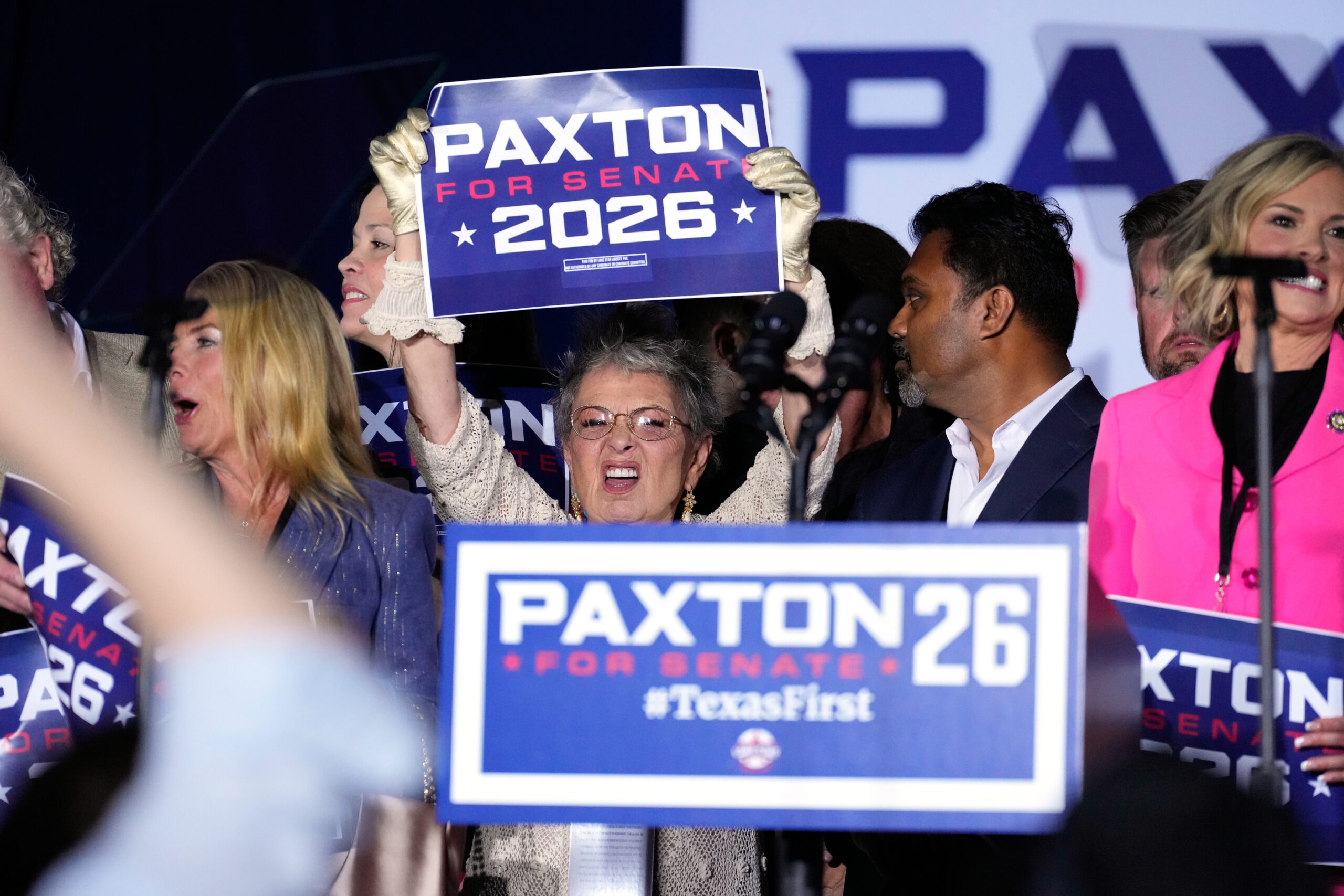
Let’s start from the top. First, Texas Attorney General Ken Paxton utterly demolished longtime U.S. Senator John Cornyn by nearly 30 points in their May runoff. Along the way, the Republican establishment lit over $120 million of pro-Cornyn campaign cash on fire, and the remnants of an old-line Texas Republican lineage were put to rest. Questions of morality, ethics, and political principles were sidelined by more important matters like hunting RINOs and suckling at Trump’s teat. This was a theme.
In the race to replace Paxton as AG, there was the runoff showdown between Congressman Chip Roy, a pugnacious budget hawk and tea party veteran, and state Senator Mayes Middleton, a silver-spoon oil heir-turned-right-wing political striver. On the issues, both talked about stopping the so-called “Islamification” of Texas and dismantling the radical left. But the real differences came down to experience and to Trump. On the matter of legal pedigree, there was Roy, a former federal prosecutor who was once Paxton’s first deputy and who served as chief of staff to Senator Ted Cruz. Then there was Middleton, who just happens to have a law degree—and lots of money, which he used to purchase goodwill and political support over the years. On the other hand, Roy had come to blows with the Trump admin in Congress over various spending matters through the years, while Middleton used his wealth to dub himself “MAGA Mayes” and spend a ton of money casting Roy as anti-Trump. Despite a last-minute funding surge from an Amarillo megadonor to try and get Roy over the hump, Middleton’s self-funded wallet whippin’ ultimately carried the day, as the state senator won by about 10 points.
Then there was the battle for the Texas Railroad Commission, which was previously just a parochial den of oil industry-captured government regulation but was made, by former Tarrant County GOP chairman (also, an oil heir) Bo French, into a battleground fought for through opinions on Sharia law and various other matters of concern to past and present fascists. Oil and gas? Well, clearly a lot of that is Muslim—and therefore must be deported. Despite some rather meager attempts by Governor Greg and Lieutenant Dan to save the incumbent Jim Wright, French eked out a victory—an outcome that should give a moment’s pause to any Texan who values the U.S. Constitution or democracy.
That fills out the statewide ballot. Paxton at the top, Abbott and Patrick perhaps providing some electoral buoyancy, MAGA Mayes for AG, the self-styled DOGE cutter Don Huffines for comptroller, a fascist-y French man for Railroad Commission, and the incumbent Land Commish Dawn Buckingham.
It’s a ticket filled with moral pockmarks and festering ethical boils, plus idolatry politics and unrepentant bigotry, and it’s a ticket made up of candidates backed by voters who were not so quietly divided—the sort that one could imagine leading to, dare I speak it, the first statewide Democratic win in the state in over 30 years.
Further down the ballot, the trend continued with Texas Republicans putting their Trumpiest foot forward. In the president’s bespoke congressional districts created last year, a bunch of Trump-annointed newbies with seemingly no prevailing principles other than loyalty to him won out. Ironically, that came at the expense of the Republican state reps who’d dutifully helped deliver those new districts—only to be snubbed by the president when they tried to run themselves. This list includes small government crusader and Deer Park state Representative Briscoe Cain, who was blown out by Alex Mealer in a runoff for outer Harris County’s new 9th Congressional District, and state Representative John Lujan, who lost to Carlos De La Cruz in the 35th, which includes part of Bexar County and surrounding red counties. (His sister is the Republican congresswoman in a neighboring district.)

These candidates now join a current class of congressional candidates in Texas that includes right-wing “gunfluencer” Brandon Herrera, who prevailed with the scandal-driven resignation of more-moderate incumbent Tony Gonzales in the 23rd; a longtime GOP operative and Elon Musk lawyer Chris Gober, who won the primary to replace outgoing Republican Michael McCaul in the 10th; and Jon Bonck, a Trump-backed mortgage banker who will replace Wesley Hunt in the 38th.
Most of these candidates will easily win their general elections in deeply Republican districts. Others, namely Herrera and De La Cruz, could face tough fights against Democratic candidates in somewhat less surefire districts.
The question for those who care about the fate and future of this state is, will these flawed and sundry characters on the ballot accumulate into a net electoral backlash? Are these Republicans, in reality, less electable than the average replacement?
At the top of the ballot, Paxton will face off against the latest Democratic darling in James Talarico, whose platform of religious morality and basic decency, plus massive campaign coffers, seems to make for a lab-created foil for the ethically impaired state AG.
There were several hundred thousand Republican voters who cast their votes for Cornyn in the primary and runoff. Most of those are diehard Republicans who will ultimately come home and cast votes for Paxton, even if with pinched noses. But a certain proportion of those will refuse to do so—and will either not vote or pull the lever for Talarico. If more of those do the latter than the former, then that is a clear formula for victory. It’s the formula that helped fuel Beto O’Rourke’s near-win back in 2018, when hundreds of thousands split their tickets between him and Abbott.
The same dynamic could hold true down the ballot in less high-profile races, like that for railroad commissioner, wherein voters will be forced to choose between French and Democratic nominee Jon Rosenthal, an oil engineer and state representative from Houston who is decidedly more level-headed. And for comptroller, in which Huffines, who might just blow up the Texas state budget in the name of accelerationist austerity politics given the chance, will face experienced state Senator Sarah Eckhardt. Or in the once-swingy 23rd, which stretches from San Antonio to El Paso, where people will decide between Herrera, an extremely online meme and gun enthusiast, and Katy Padilla Stout, an attorney and former teacher.
The stakes are high. If the Texas electorate acts like it has in the past few cycles, it will elect Republicans up and down the ballot—in every statewide office and in every feasible legislative district. But if they do so again this time, it will be a new, especially pernicious breed of Republican pols who will be taking hold of power.
You May Also Like
From San Diego to Plano, Islamophobia Has Consequences
In Texas and beyond, Republican leaders continue to peddle dangerous lies trying to falsely cast Muslims as the “other.”
Trump’s Texas Tycoons
Meet the Lone Star megadonors, think tankers, and politicians poised to play big roles in Trump’s comeback tour.