Indigenous Group Sues to Stop Big Bend Border Wall on Religious Grounds
The lawsuit seeks an immediate injunction, arguing that CBP construction and surveying activities in Big Bend violates the Religious Freedom Restoration Act.

The People of La Junta for Preservation, a nonprofit founded in 2024 that works to preserve Indigenous sites, and two Indigenous worshippers of Lipan Apache lineage are suing the federal government to stop the highly contentious border barrier construction and surveying activities in Big Bend, the Texas Observer has learned.
The plaintiffs argue that ongoing U.S. Customs and Border Protection (CBP) construction and surveying activities in Big Bend National Park and across far West Texas have cut them off both from specific sacred sites and ecosystems fundamental to their spiritual practices in violation of Religious Freedom Restoration Act and American Indian Religious Freedom Act protections. The lawsuit, filed in the U.S. District Court in San Antonio, not only seeks an immediate halt to construction activity in Big Bend National Park but across CBP’s Big Bend Sector.
The lawsuit argues that “the threatened areas include places used by [plaintiff Christina Hernandez] or members of her community for religious observance, ceremony, prayer, gathering, or other traditional religious practices” and “the challenged construction also threatens to substantially burden the exercise of religion by physically altering, restricting access to, or destroying the places at which those practices occur.”
Democratic Texas state Senator Roland Gutierrez, who is also a San Antonio-based lawyer, is representing the plaintiffs in the case. His state Senate district includes a portion of Big Bend National Park and Brewster County. The prominent Houston lawyer Dick DeGuerin is also on the case.
The lawsuit names the Department of Homeland Security (DHS), CBP, DHS Secretary Markwayne Mullin, CBP Commissioner Rodney Scott, and Big Bend Sector Border Patrol Chief Patrol Agent Lloyd M. Easterling among the defendants.
Hernandez is director of People of La Junta and is also a member of the Lipan Apache Tribe of Texas, which is not currently a federally recognized tribe but has been recognized by the state, and a lead plaintiff in the suit. “We use the river for coming-of-age ceremonies that we are reintroducing into the community, and then we also harvest sacred plant material—willows, cattail pollen—and that all we get specifically from the banks of the river, versus sourcing elsewhere, because we feel like that’s the the closest to our creator,” Hernandez told the Observer. “That water is used in a multitude of ways within ceremony, whether it’s opening up a ceremony at large, or being put in the water to be close to our Creator.”
Moreover, harvested willow is used in the construction of sweat lodges fundamental to Indigenous ceremonies held all along the river, Hernandez told the Observer. Another plaintiff, Andrew Austin, also of Lipan Apache lineage, participates in religious observances in the Big Bend region including traditional Indigenous song, dance, and prayer, according to the lawsuit.
But it’s not just that the plaintiffs incorporate the land and river into their spiritual ceremonies—they consider the land and river to be living beings and relatives in their own right, and that acknowledgment is at the center of how they worship and recognize divinity. These sacred spaces’ specific histories and remains—including human burial sites—also tie the plaintiffs back to their ancestors, the ceremonial recognition of which is commonly another key pillar in Indigenous spiritual practice. New construction of border barriers threatens to cut them off from religious funeral practices and gravesite visitation and prayer.
Among the sacred and historic cultural sites People of La Junta are seeking to protect include the group’s 31-acre, riverfront parcel of land that it owns in Redford, a tiny outpost in Presidio County. A 4-acre portion of that land was designated as a State Archeological Landmark by the Texas Historical Commission in 1984, according to documents reviewed by the Observer.
The Polvo archeological site features ancient burn pits, surface-level pottery shards and fragments of adobe buildings—the remains of 800-year-old Indigenous villages of La Junta de los Rios along the Rio Grande. It also includes the cornerstones and foundation of the 16th-century San Pedro de Alcántara de los Tapacolmes Spanish mission. The Polvo site was listed on the National Register of Historic Places in 1976.
“Presidio is one of the oldest continuously cultivated lands in North America. So Indigenous people have been there pre-contact for thousands of years, and I have DNA matched to ancestors that we have repatriated from museums and private collections and educational institutions that date back to the 12th century,” Hernandez told the Observer.
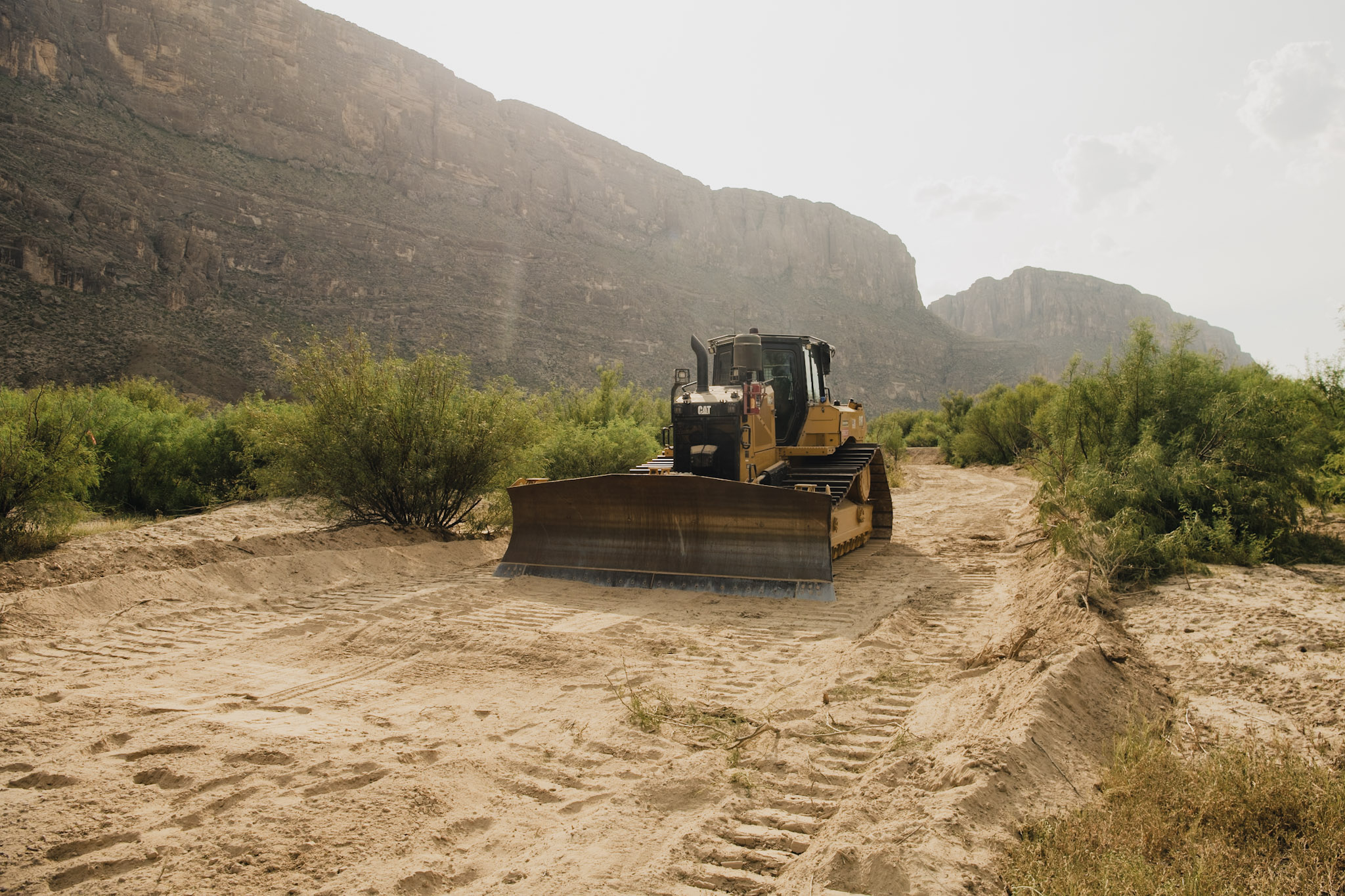
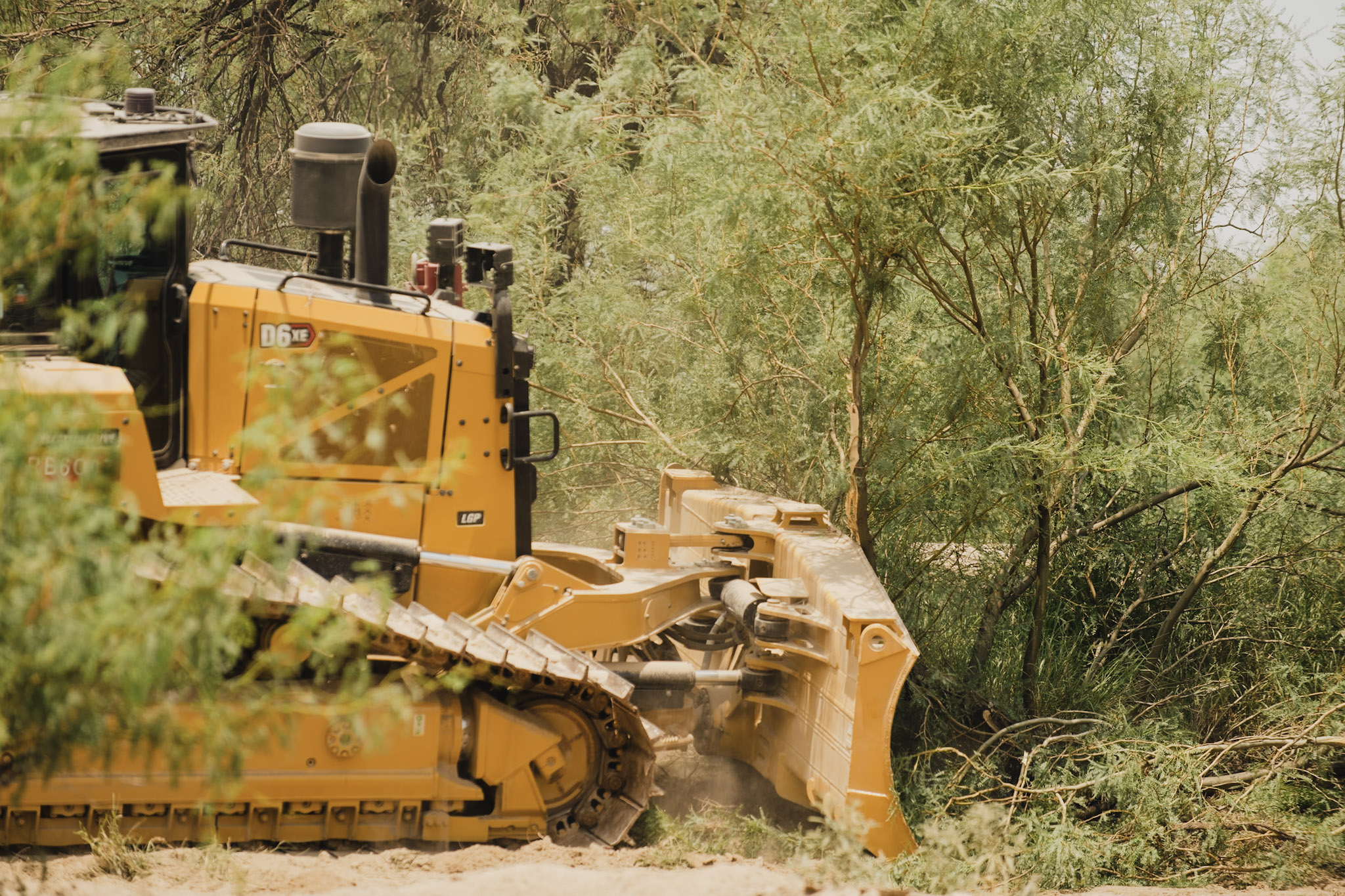
The legal challenge comes as Southwest Valley Constructors, awarded a $1.7 billion CBP contract, began bulldozing sensitive ecological areas near Santa Elena Canyon August 6 to clear the way for a series of border barriers, surveillance systems, and patrol roads—part of a new $46.5 billion package of new wall funding appropriated by Congress under the “One Big Beautiful Bill.”

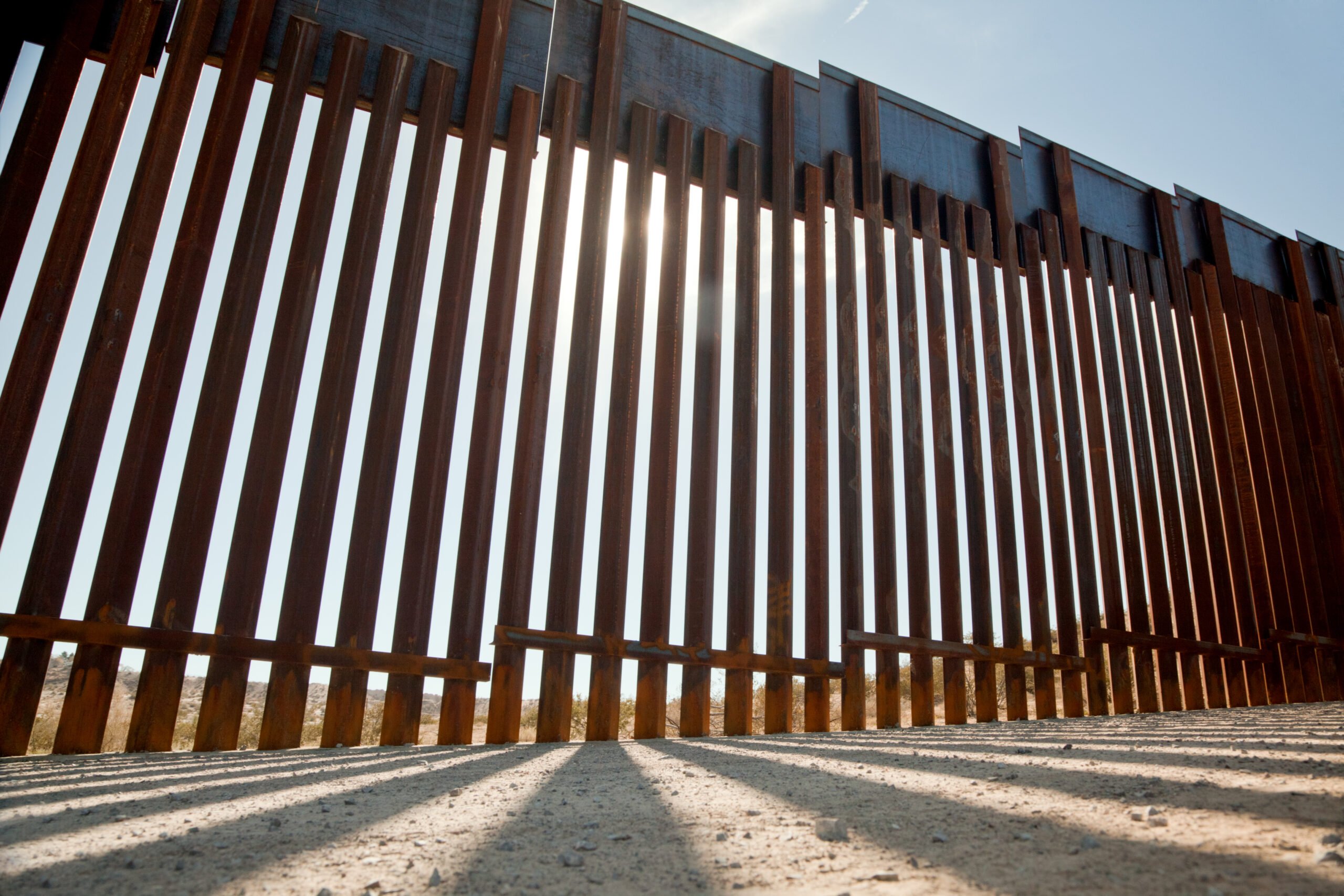
CBP has publicly denied the agency is planning to construct 30-foot-high steel bollards in Big Bend National Park, saying it intends to clear areas for surveillance towers and patrol roads instead. Southwest Valley bulldozers have nevertheless moved into an area near the park’s Cottonwood Campground and have begun clearing vegetation, according to on-the-ground reports. Initially telling Marfa Public Radio that contractors were grading storm-damaged roads, CBP has since told SFGate that they are taking soil samples to inform engineering plans.
“What people are seeing right now is survey and design work—NOT construction of a wall through the park,” CBP Commissioner Rodney Scott said in a statement issued to the Observer. “We are working to preserve the landscape and protect the access visitors and local businesses depend on.”
The plaintiffs are undertaking the novel religious freedom legal strategy to both ensure the continuation of First Amendment-protected religious practices tied to the land and their ancestral histories and to get around the DHS’ waiving of at least 28 federal environmental and cultural heritage protection laws, including the National Environmental Policy Act, the Antiquities Act, and the 1990 Native American Graves and Repatriation Act.
Moreover, the suit directly challenges the DHS waivers within the bounds of Big Bend National Park, arguing that DHS did not waive the statutory provision that establishes the administration of national park land by the Department of Interior. Thus, it argues DHS doesn’t have the jurisdiction to construct on, or issue waivers for, national park land.
“We haven’t seen the [religious freedom] argument used to date in another case,” state Senator Gutierrez told the Observer. “We are faced with a situation that not only [is DHS] waiving every law under the sun, but they’re waiving the things that are actually sacred to the religion in and of itself. For instance, if you’re waiving the Clean Air Act, or the Clean Water Act, or the Antiquities Act, you’re actually going after … what this religion and its artifacts, and its antiquities, and its church are truly about.”
Another plaintiff named in the suit, the Far Flung Outdoor Center in Terlingua, argues that its business providing parkgoers with guided river trips and other outdoor recreational services will be irrevocably harmed by the construction of border barriers.
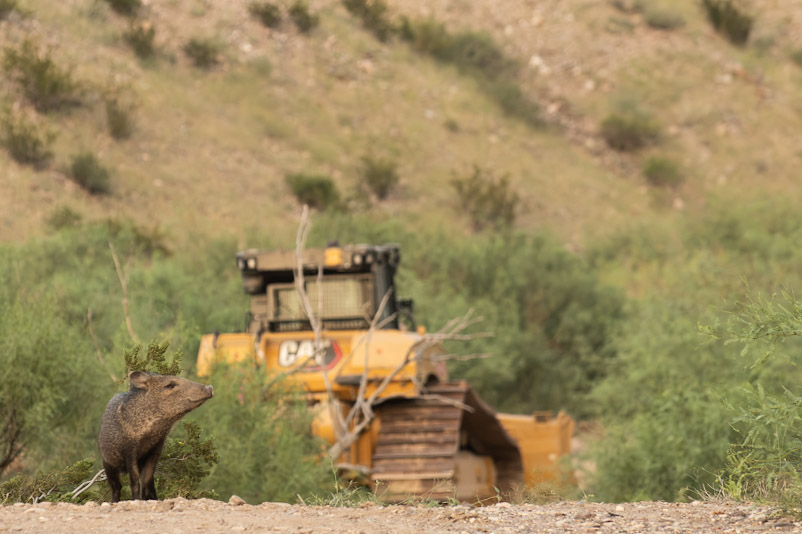
This is just the latest in a string of legal actions seeking to prevent the federal government’s aims to disrupt the pristine wilderness of the Big Bend for border security projects, and it comes amid growing bipartisan backlash to the plans.
In April, the Center for Biological Diversity filed suit against the Trump administration over the DHS waivers. The suit, filed in federal court in El Paso, argues DHS must get Congress’ approval to waive federal environmental and cultural heritage protections due to the enormous political and economic impacts border barrier construction will have on the region. The Center also filed a separate April suit against CBP for withholding public records related to border barrier construction.
In June, the Tohono O’odham tribe in Arizona filed for a federal injunction in Washington, D.C., against a portion of proposed border wall that would cut through their reservation, arguing that the Trump administration is undercutting the tribal nation’s sovereignty. That case remains ongoing, and a final judgement from a Bush-appointee Judge Richard Leon is expected in a few weeks, according to the New Republic.
Still, a federal judge sided with the Trump administration early this month in another West Texas case, ruling that DHS could construct steel bollards across the far West Texas town of Presidio’s levee system. A coalition of landowners in that area is planning to sue as well.
You May Also Like
Biden Administration Waives 26 Laws to Accelerate Border Wall Construction
On the campaign trail, the president once promised there would “not be another foot” constructed under his watch.
Back to the Wall
A border wall is headed for Laredo—unless opponents can run out the clock.
2020: The Year Trump’s Wall Rises or Falls
The president may be incompetent and behind schedule, but he’s done damage already. And a lot more could be on the way.