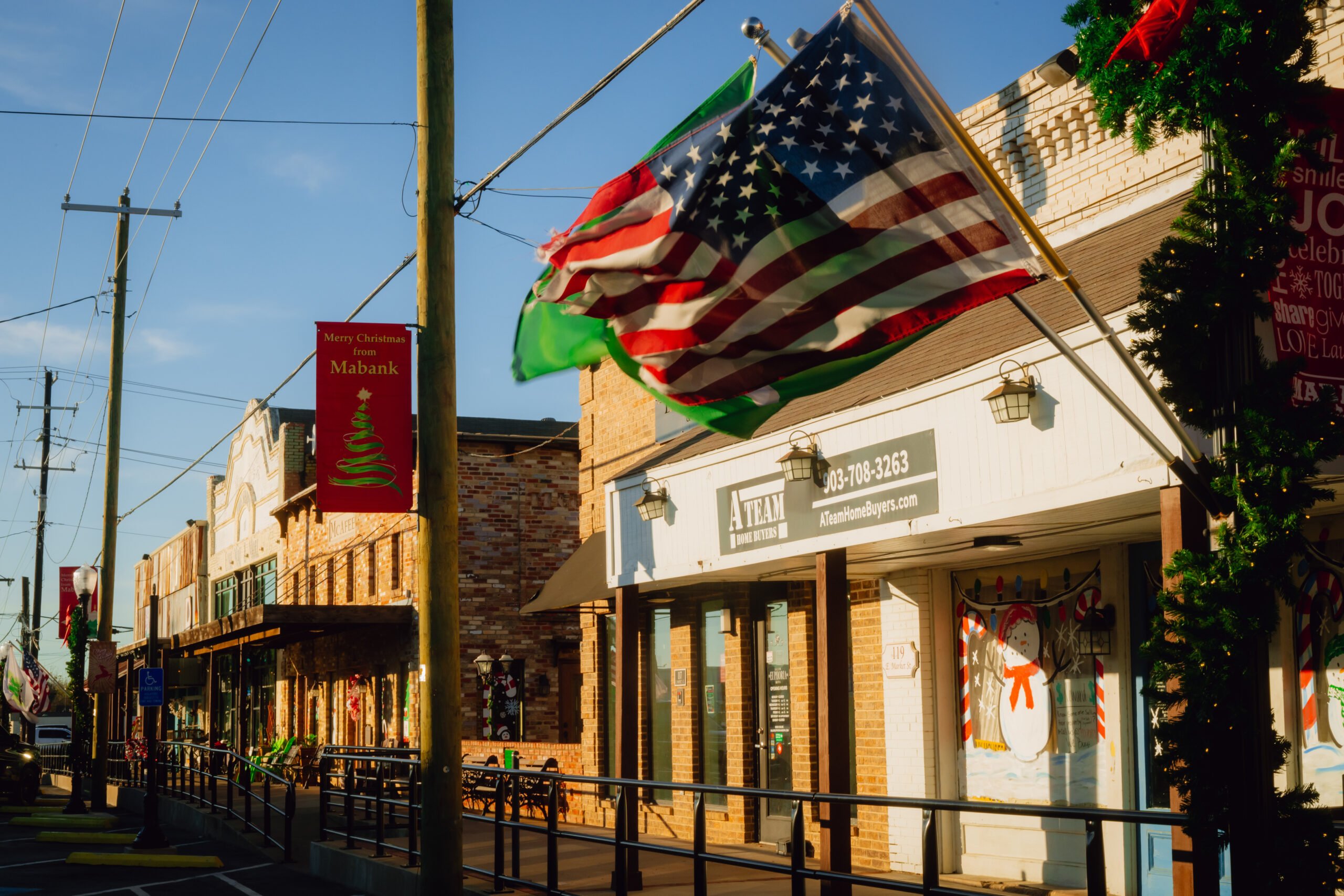
Snow on Market Street
The man on the Mabank bench first taught me that history isn’t past.
A version of this story ran in the January / February 2026 issue.
The year I turned 7 has blurred in my mind the way old photographs fade and fray at the edges.
We had just moved to Mabank in the thick of “white flight,” though I wouldn’t understand that phrase until much later. Life here, an hour southeast of Dallas, felt small-town simple: penny candy at Hughey’s Department Store, matinees at the Matex Theatre, teachers leading us down the sidewalk in our “tennie” shoes to whatever film they decided was worth a lesson. On special days, we clutched nickels and headed to Hughey’s counter, overwhelmed by glass jars of jelly beans and chocolate balls.
But it wasn’t the candy or the matinee that stuck with me. It was the sight of Snow.
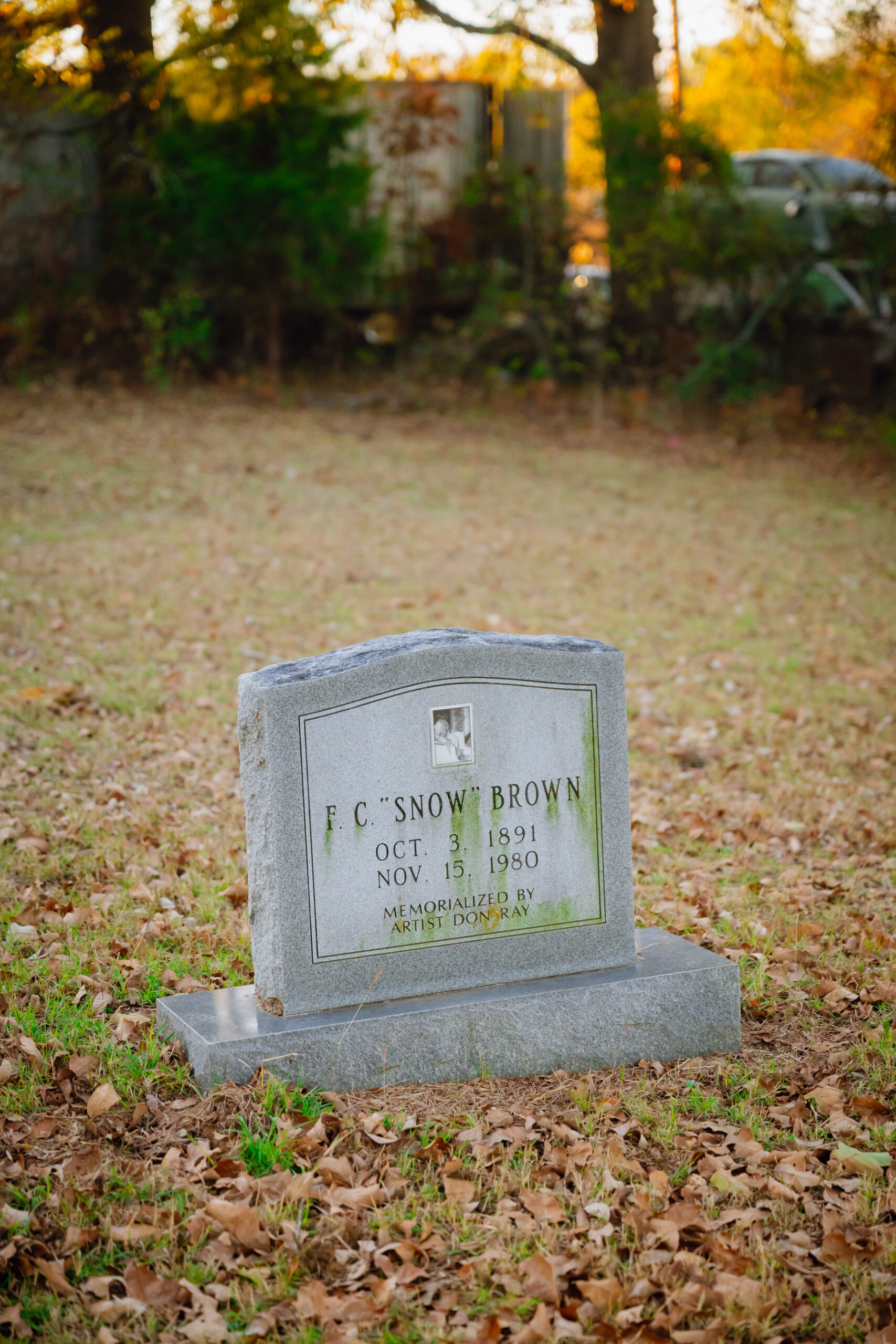
I knew him only as Snow, though I can’t rightly recall if he introduced himself that way. Turns out his real name was F.C. Brown. I saw it in the library record, scribbled in somebody’s hand: born in 1891 in Henderson, left behind as a child, raised up by his grandparents. Later, he was reunited with his mother here in Mabank.
He worked where the dead were—digging graves, clearing cemeteries—and when he wasn’t working, he was parked on a wooden bench or a windowsill along Market Street, water jug beside him, boots set firm as though they’d never move.
When I was 7, he was ancient. He didn’t seem tied to a house or a family.
What I know for certain is this: The first time I ever heard the word “slavery,” it came from Snow. It had never been taught in school, never been spoken of in my house. I didn’t know what it meant, only that it was serious and true. And it stamped itself on me.
One afternoon, he told us the story of Juneteenth. I had never heard the word before; my brow furrowed. He said it was the day his grandparents were freed. “Free from what?” He looked at me a long beat, then said it plain.
In my memory, he spoke in a low, deliberate way, so all us kids would gather round a little closer. He wore striped overalls, his legs crossed at the knee, hands balanced easily on his walking stick. I’m told he always had a newspaper in his hand, but I don’t remember that.
Back then, almost no one talked about Juneteenth. Not teachers. Not preachers. Not even the history books we held in our hands. Today, thanks to Texas’ own Opal Lee, Juneteenth is carved into the calendar, a federal holiday with parades and proclamations. But in 1970s Mabank, the only reason I knew the word at all was because Snow spoke it into the open air.
The world tilted for me then. My parents had salted every meal with the N-word, casual and cruel. While I was too young to understand the weight of that term, I knew even then that it was wrong.
Yet, here was a man the whole town gathered around, teaching truth to children. Snow was the first person who ever tickled my conscience, the first voice that told me what I’d been taught at home wasn’t the whole story.
Years later, when I was writing for the Texas Observer and other publications, my mind could still see Snow sitting there. I wasn’t reporting from some Austin newsroom; I was writing from the kitchen table, or pulling over on the shoulder of some two-lane road to scribble notes before they got away from me. I drove all over East Texas chasing stories nobody else wanted.
I wrote about Annie Ray Dixon, an 84-year-old Black woman shot dead in her own bed when a drug task force botched a raid in Tyler (they meant to hit the house next door). I covered the day Dallas bulldozed the makeshift homes of the homeless under the I-45 bridge so the Cotton Bowl would look prettier for the World Cup. I traced the story of Bobby Frank Cherry, the Mabank man the FBI arrested and convicted of bombing the 16th Street Baptist Church in Montgomery, where four little girls died in Sunday dresses. And I met Lee, who carried Juneteenth into the national light.
Every time I filed one of those stories, I thought of Snow. He was the first to show me that history wasn’t past at all. It lived in the choices people made in front of me, the injustices that carried the same old smell no matter how they tried to perfume them. I carried those lessons into courtrooms thick with lies, shotgun shacks sagging under poverty, city halls that reeked of power and mildew.
One day, Snow was gone.
No announcement, no obituary that I ever saw. His pew sat empty. I suppose it wasn’t his fault. I grew up; he grew old. And we both moved on.
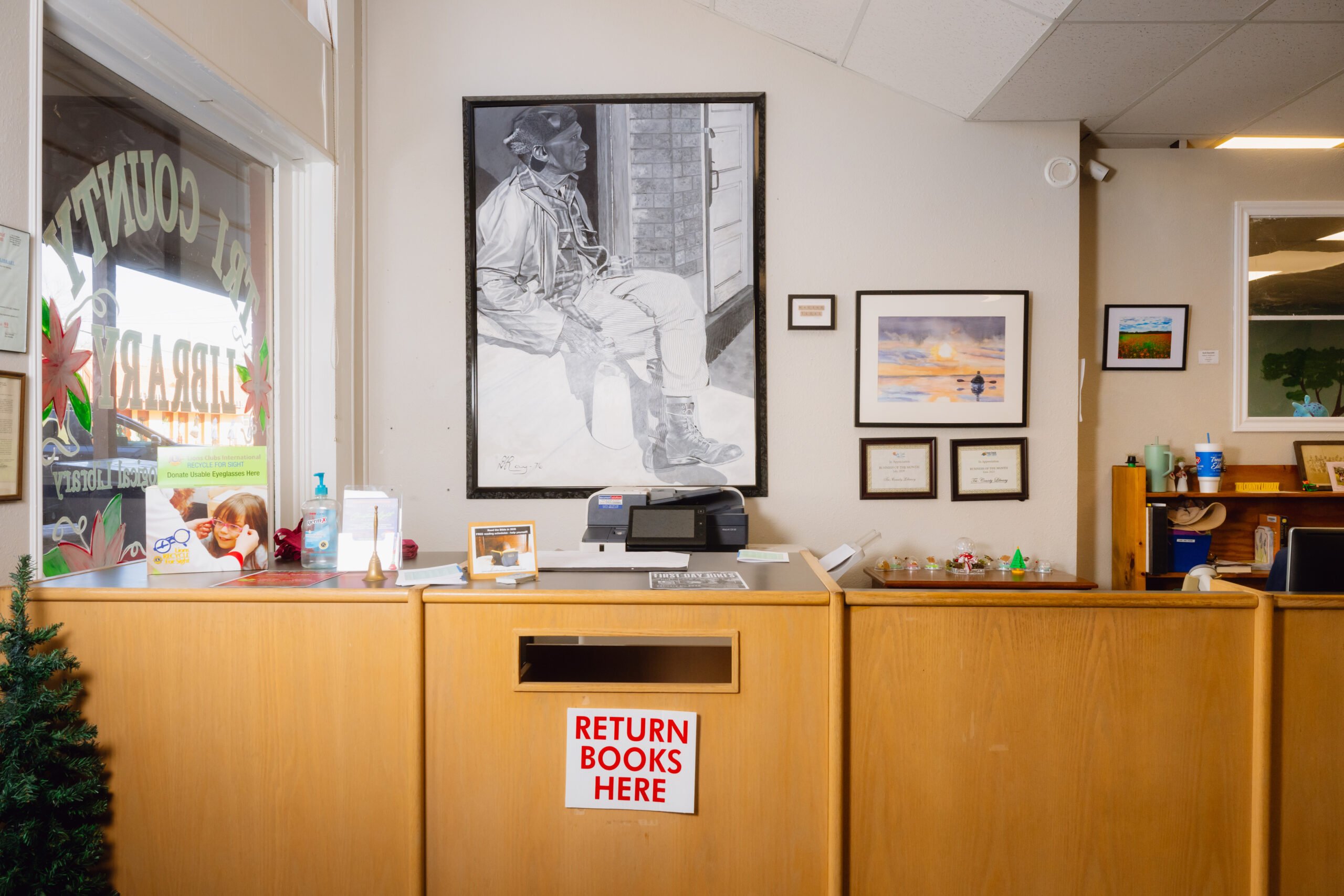
But his memory lingers yet, quietly threaded into the fabric of Mabank. What’s left now is a painting Don Ray did back when he was still a lawyer in town. Later, he’d be known as a successful artist in New York. He finished the portrait in 1976, just as Juneteenth was gathering steam in Texas again. That can’t be a coincidence. It feels more like a nod—setting Snow down on Market Street as part of the state’s story.
Today, the painting hangs in the town’s library. Children drift past it without knowing his name. Adults nod at it without remembering his voice.
Sometimes, I stand before the painting, listening for his echo.
You May Also Like
‘Don’t Be Afraid to Break Some Eggs,’ Austin Mayor Tells New Anti-Racist Task Force
Steve Adler said the task force will focus on institutional racism, rather than individual attitudes.
The Texas Miracle #13: Would Jesus Say Black Lives Matter?
This week on the podcast: Our resident theologian unpacks the Beatitudes for the 'Blue Lives Matter' crowd, while Prairie View remembers Sandra Bland on the anniversary of her death.