Blogs

Drawing Blood

The pesky U.S. Supreme Court has once again disappointed the Texas legal system.

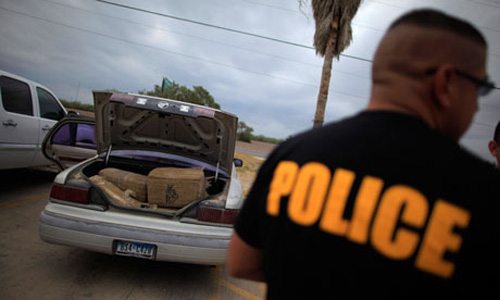
In 2009, when the Texas Legislature passed a bill requiring police officers to take blood samples from some suspected drunk drivers even without warrants, prosecutors were ecstatic. Blood tests showing illegal blood-alcohol levels in DWI cases can be as powerful as matching DNA samples in sexual assault cases. But before 2009, an officer in Texas could take a warrantless blood sample only if the suspected drunk driver had just seriously injured or killed someone. Otherwise, the driver could refuse a Breathalyzer test and sit around metabolizing alcohol while the officer worked to get a warrant. To cops and prosecutors, that’s destruction of valuable evidence.

Under the 2009 law, a police officer was required to get a blood sample if a suspected drunk driver refused a breath test and either had a child in the car, had two previous DWI convictions, had a prior conviction for intoxication manslaughter or intoxication assault, or had been in an accident in which anyone but the suspected drunk driver was hurt. Having guaranteed blood samples in the most serious cases didn’t just mean more successful prosecutions; it meant fewer DWI cases going to trial. As Shannon Edmonds, director of governmental relations for the Texas District and County Attorneys Association, put it, “If it bleeds, it pleads.”

Predictably, some naysayers thought that letting officers decide without judicial oversight whether to forcibly take blood samples from people in custody was creepy and weird—if not unconstitutional. If the Fourth Amendment protection against unreasonable search and seizure applies to your house, shouldn’t it also apply to your veins?

Clay Abbott, the Texas District and County Attorneys Association’s DWI Resource Prosecutor in Austin, had some pretty smug words for those people. In the September-October 2009 issue of the group’s magazine, The Prosecutor, Abbott wrote, “The initial media coverage of this new law was full of ‘concerned’ criminal defense lawyers and civil rights experts ‘wondering about its constitutionality.’ Real lawyers need not worry: The U.S. Supreme Court and Court of Criminal Appeals have both found that DWI cases present very clear exigent circumstances allowing warrantless draws.”

Alas, now even real lawyers need worry. In April, the Supreme Court turned out to be packed with those experts “wondering about” the law’s “constitutionality.” In an 8-1 ruling in Missouri v. McNeely, the Court determined that the mere fact that alcohol dissipates over time does not, by itself, create an exigent (urgent) circumstance overriding the whole Fourth Amendment thing.

But the justices also stopped short of requiring warrants for all blood draws. Exigent circumstances may occur, they said, but will have to be determined case by case and based on the totality of circumstances.

That left Texas prosecutors a bit freaked out. “The following attachment is my attempt to answer the dozens of questions you’ve sent me by email, phone calls, and texts,” wrote Clay Abbott in a letter to association members titled, “Don’t panic… thoughts on adapting to SCOTUS’s McNeely decision.”

“I am sure many defense counsel will cite McNeely as the end of everything related to blood evidence in DWI cases,” Abbott wrote, “but this is just not so.” The question isn’t whether warrantless draws will continue—Austin and San Antonio stopped the practice immediately, and the prosecutor association advised members to educate their local law-enforcement officers on the new necessity of at least trying to get a warrant—but whether the ruling will endanger prosecutions or convictions from after 2009.

The same day that the court decided Missouri v. McNeely, defense attorneys in San Antonio filed a motion to suppress the blood evidence in their client’s murder trial.

Christopher Hughes Lamar had multiple drugs in his system and a blood alcohol level nearly three times the legal limit when he caused a wreck that killed a woman and her 10-year-old daughter.

But this is still Texas. The motion was denied.

The U.S. government deported 387,790 people in 2009, one of them a frightened 22-year-old victim of domestic abuse known, in a lawsuit filed Wednesday, as “Laura S.” Despite having a U.S. visa and a restraining order against her abusive ex-boyfriend in Mexico—she warned immigration agents he’d kill her if she returned—Laura S. was deported without ever seeing an immigration judge.

Within days of being deported the young mother of three was abducted in the Mexican border city of Reynosa, by her ex-boyfriend, a member of a notorious drug cartel. On June 14, 2009, her body was found in a burning car in downtown Reynosa.

Texas RioGrande Legal Aid and the South Texas Civil Rights Project filed the civil lawsuit on behalf of Laura S.’s three young children, against the U.S. immigration agents who deported their mother. According to the lawsuit, a despondent Laura S. begged ICE and U.S. Customs and Border Protection officials not to send her to Mexico, telling them her ex-boyfriend would kill her if she returned.

Laura S. told the agents that she had a protective order from the U.S. court against her abuser and that she had three small children at home in Texas, according to the lawsuit. Despite her pleas, within hours of being stopped for a minor traffic violation in Pharr, Texas, Laura S. was sent back to Mexico.

Lawyers representing her children say she was denied due process and ultimately sent to her death. “She was clearly eligible for relief from removal under several different standards,” says Jennifer Harbury, an attorney with Texas RioGrande Legal Aid who is representing the family. “This woman was a victim of violence and someone who had gone to court for a U visa and helped with the prosecution of a dangerous person. If she would have had a hearing in front of an immigration judge—as she had the right to have—she would have never been removed from this country and she would not have had to die.”

The family are not releasing their last name in the lawsuit because Laura S.’s killer is still at large, living just across the border in Mexico.

Harbury says she’s seen a recurring problem in South Texas with people being wrongfully deported. She represented another family whose son, a legal permanent resident with a mental disability, was deported without due process. “He was sent to Mexico with no change of clothes, no documents and no medication for his illness,” says Harbury. “He tried to swim back across the river to Texas and drowned.”

Harbury says the problem of wrongful deportations has become more dire with the rapid increase of deportations by the U.S. government and the ongoing cartel wars in Mexico. “Deporting people without the full due process of law and without fully listening to what their situation is can have lethal consequences.”

In Laura’s case, her deportation had tragic consequences. Harbury and a legal team spent several months interviewing witnesses and gathering documents regarding Laura’s deportation and violent death. Harbury says that Laura’s attacker nearly bit her ear off during a vicious attack on a Reynosa street, then abducted her and strangled her in a hotel room. Laura’s mother pressed charges in Mexico but Laura’s attacker escaped from prison. Eventually, Laura’s mother found Texas RioGrande Legal Aid and asked for help. “She literally came into our office weeping and said ‘Is there nothing that can be done for my daughter?’ Harbury says. “The case was so egregious. Of course we wanted to help any way we could.”

In the lawsuit filed Wednesday, attorneys are asking for the names of the six immigration agents who deported Laura despite her repeated pleas that she would be killed if she was sent back to Mexico. Laura’s mother, who is now raising her daughter’s three young children on her own, is also seeking damages in the lawsuit for pain and anguish.

“It’s an incredibly sad case,” Harbury says. “Laura didn’t have to die.”

3699643839_f230c7dd67_b

There’s undoubtedly something romantic about driving a taxi: working your own hours in your own way, cruising the city streets instead of being anchored to a desk, picking up total strangers and never knowing where you might take them. And then there’s the economic reality. In Austin, cab drivers earn, on average, just $2.75 an hour after deductions for insurance, taxes and paying one of the city’s three cab companies for the privilege of driving their cars. Austin cabbies have brutally long hours—many work 12- to 14-hour shifts, seven days a week, 50-plus weeks a year—and as independent contractors, they have little job security, no unemployment benefits and no employer-provided retirement or health insurance.

For the three taxi franchises in Austin—Austin Cab, Lone Star Cab and Yellow Cab—the economics are much sweeter. The city has granted the three companies a total of 744 permits. In turn, they pay the city $400 a year per taxi. The companies then lease the permits to the drivers for $250 to $295 a week, or between $13,000 and $15,340 a year (a 3,000-percent markup). For Yellow Cab, which controls more than 60 percent of the market, that works out to nearly $6.8 million a year in revenue from permits alone.

“And nobody sees the discrepancy between those numbers?” asks David Passmore, president of the Taxi Drivers Association of Austin. “We’ve been going to City Council for years saying these things and they say, ‘We hear you.’ But they always vote in favor of the franchise.”

Passmore has been driving for Yellow Cab for five years. He likes the flexibility of the work but thinks the city has allowed the drivers to be exploited.

“I’m struggling right now, man,” he said. “It’s that uncertainty you have to work with each day—each day we start off in the negative.”

That’s where the Taxi Drivers Association of Austin comes in. Formed in 2009, the association is a formal vehicle for representing drivers’ interests. In late April, the association went one step further and formally affiliated with the AFL-CIO, making Austin the third city in the U.S. to see its taxi drivers unionize. But the catch is that with a membership of independent contractors, the association isn’t covered by most U.S. labor laws. Still, Passmore said, the affiliation is an important step in securing better pay, improved conditions and bargaining power.

“I do believe that it will give us some leverage,” he said. “It will better our position, speaking with one voice rather than being individual drivers.”

For the AFL-CIO, the affiliation represents a new tack in labor organizing. “How many workers are filing for union recognition and bargaining for a first contract?” asked Aaron Chappell, an Austin-based labor organizer with the AFL-CIO. The traditional methods of growing new unions are “broken,” he said. “People are going to use nontraditional means to make economic gains.”

The taxi drivers plan to ask City Council to cap the fees that cab companies charge their drivers, create a fairer insurance system that doesn’t leave drivers in the hole after an accident, and impose anti-retaliation clauses to protect union members from being punished or fired for their activities.


Philippauthorph-210
Philipp Meyer, whose story “You Are Right Here” appeared in the Observer’s 2011 books issue, is on a roll lately. His second novel, The Son, is garnering rave reviews, with the Daily Beast going so far as to call it “the next great western.” He’s coming back to Austin—where he graduated from UT’s Michener Center—to read at Book People on Thursday at 7 PM.

The Son—Part II of a planned trilogy that began with 2009′s American Rust—spans the 20th century in surveying the fortunes of a Texas oil and cattle family. It’s a tale of abduction, survival, power, and race shot through with the complexities Meyer has proven so adept at teasing out of his characters.

Look for a full review of The Son in the July issue of the Observer.

Midnight In Mexico
Midnight In Mexico
Alfredo Corchado, Mexico City bureau chief for The Dallas Morning News, will be at Austin’s Book People on Wednesday at 7 PM to discuss his new book Midnight in Mexico. Debbie Nathan reviews the book in the Observer’s June issue, admiring how Corchado goes beyond the usual blood and gore suffusing books chronicling Mexico’s drug war.

While there’s plenty of violence in Midnight, which starts with a death threat against Corchado, the book’s real hook is the author’s exploration of his relationship with his native country. His reporting on Mexico’s complex and treacherous networks of cartels and corruption give the book authority, but Corchado’s intimate narrative provides a deeply personal context.

Other reviewers have also been impressed. The Washington Post called the book “electrifying,” noting its skillful parsing of the relationship between the United States and Mexico. The Austin American-Statesman and Dallas Morning News have published similarly enthusiastic reviews, and Texas Monthly has an interview with Corchado you can find here.