Skip to Content

Previous posts for “Dollars and Sense”

Another Laffer from the Texas Public Policy Foundation

April 7th, 2009 by Forrest Wilder

Remember Arthur Laffer? He’s the supply-side economist who came up with the much-discredited idea that tax cuts pay for themselves. Until recently Laffer was running around saying the economy was in great shape. In 2006 he went so far as to make a bet on television that there would be no recession.

Far from chastised, Laffer is the genius behind a new study from the ideologically-ironclad Texas Public Policy Foundation that audaciously claims that the stimulus package will actually increase unemployment. Forget everything you’ve heard from mainstream economists; forget history; forget common sense, Laffer and TPPF have a theory:

Every dollar the government spends must first be removed from the pocket of the private sector—through higher taxes today, or higher borrowing today implying higher taxes tomorrow. Either way, government spending crowds out private sector spending, diminishing the private economy’s rate of growth. In other words, increased government spending makes citizens poorer because it takes their money now while reducing their future income. This fact is at the heart of the debate about whether or not Texas should accept federal stimulus money.

Using Lord knows what algorithm, Laffer concludes that Texas could lose between 131,400 and 171,900 jobs because of federally-induced spending in the state.

Ed Sills, the spokesman for the AFL-CIO, nailed the weirdness of Laffer lecturing the rest of us on economics: “Citing Laffer for advice on how to run the Texas economy is like relying on candy manufacturers to set dental policy.” (DMN)

The New Erle of UTIMCO

February 13th, 2009 by Dave Mann

Erle Nye, the controversial former head of energy company TXU, today was appointed the new chair of UTIMCO — the investment arm of the University of Texas.

Nye replaces multi-millionaire Robert Rowling, who abruptly resigned last week in the middle of a contentious hearing in the Senate Finance Committee. The state senators were berating Rowling about bonuses UTIMCO had doled out despite a down year. You can read our report on that hearing here.

Nye is a former CEO and board chairman at TXU Corp., a giant Dallas-based company that was bought out in 2007. Nye’s tenure as CEO at TXU ended in 2004 following a financial crisis at the company that collapsed the stock price and nearly knocked the firm into bankruptcy. Some shareholders lost their life savings when the stock tanked.

In 2004, the Observer reported on a whistle-blower lawsuit in which a former TXU insider claimed that Nye and other TXU executives knew about the company’s impending financial problems and intentionally misled investors and Wall Street analysts. Several executives, including Nye, sold TXU shares not long before the stock price tumbled in late 2002.

Before taking over the top job at UTIMCO, Nye had led its ethics committee.

Molly and Dingell Had it Right

September 29th, 2008 by Saul Elbein

As the Senate’s proposed $700 billion bailout bill goes thudding down to ignominious defeat—an hour after John McCain rushed to claim credit for its success—it’s worth remembering another vote, in another time, that just may have helped get us where we are today.

On September 23, Jay Bookman from the Atlanta Journal Constitution reprinted a Molly Ivins column on the 10th anniversary of its original publication. In it, Ivins argues that proposed deregulation of the banking industry is going to lead to “financial disaster.”

Watching Washington Mutual and Wachovia’s catastrophic collapses, it’s easy to forget that way back, oh, about 10 years ago, things seemed pretty good. The economy was going through one of the biggest booms in our history. People had savings accounts. Students could get loans. Major banks weren’t failing. And the Senate met to vote on the Gramm-Leach-Bliley Act, a proposal to, in Ivins’ synopsis, “eliminate barriers between banks, brokerage firms, and insurance companies.”

Her critique is worth quoting at some length. “This sets up financial holding companies that offer all three types of services simultaneously. The most obvious risk is that a blunder in the insurance or brokerage end of the business could bring down a bank, putting insured deposits at risk. The taxpayers, of course, then wind up with the tab, as we did with the savings-and-loan mess.

“So what we have here is (1) increasing likelihood of a recession dead ahead, (2) banks already looking at serious trouble because of stupid lending policies, and (3) a bill that effectively further deregulates the banks and hurts consumers, making it even more likely that banks will get themselves into serious trouble . . . Veto, veto, veto.”

Almost a year after that column, as the bill went to a vote in the House, U.S. Representative John Dingell (D-Michigan, and now chairman of the Commerce Committee) stood before the House to warn that the act would create “a group of institutions which are too big to fail.

“Not only are they going to be big banks, they are going to be big everything, because the are going to be in securities and insurance, in issuance of stocks and bonds and underwriting, and they are also going to be in banks . . . Taxpayers are going to be called upon to cure the failures we are creating tonight, and it is going to cost a lot of money, and it is coming. Just be prepared for those events.”

Nine days later, on November 12, 1999, President Clinton signed the Gramm-Leach-Bliley Act into law. Phil Gramm (R-Texas), co-sponsor of the act, was there to claim credit.

“The world changes,” he said, “and Congress and the laws have to change with it. We have learned that government in not the answer. We have learned that we promote economic growth and we promote stability by having competition and freedom.”

He added, “I believe that this is the wave of the future, and I am awfully proud to have been part of making it a reality.”

Powering Down

June 5th, 2008 by Forrest Wilder

We’re now up to three power companies in a month that have bitten the dust in Texas’ Wild West deregulated electricity industry. Over 26,000 customers have been transferred to “providers of last resort,” a desperate-sounding regulatory term for companies that provide power to consumers left in the lurch. Last-resort companies charge rates as high as 30 cents per kilowatt-hour, more than triple the rates consumers pay in Austin and San Antonio, where the utilities are city-owned.

The most recent casualty is Decatur-based E-tricity (aka HWY 3 MPH LLC), which had been in business only a little more than a year. In the face of spiking energy prices, the retailer failed to maintain its financial obligations and the state had to pull the plug. The Internet is now awash with former E-tricity customers looking for answers.

Businesses come and go all the time, but the Public Utility Commission has set the bar very low for entry into the already-crowded retail electric market. Basically, all you need is $100,000 in the bank and an office somewhere. Apparently, HWY 3 struggled to even achieve that threshold. In 2007, the PUC rejected the company’s application because the financial requirements posted by HWY 3 were personal in nature and “primarily invested in retirement and educational savings accounts.” (Using your retirement kitty and kid’s college fund as collateral to start a business – now that’s some brass balls!)

The PUC gave HWY 3 more time to scrounge in the couch, eventually approving the company’s application in March 2007.

According to state filings, the company’s principles include one Marla J. Hanley. Incidentally, Hanley was also involved in another tainted outfit operating in another deregulated industry, this time telecommunications. Houston-based Choctaw Communications, d/b/a Smoke Signal Communications, sold local phone services around the nation, including Texas.

In Georgia, Choctaw – along with 13 other companies – lost its license in 2003 after an investigation found that the company had not set aside required refund accounts. In Oklahoma, the attorney general filed suit against Choctaw for not turning state-mandated 911 fees over to the state. In California, a consumer group accused Choctaw of “gouging” low-income customers and failing to offer assistance to deaf and disabled customers. In 2001, former CHiPS actor Erik Estrada sued Choctaw for $1.5 million, claiming the company continued to use his likeness after an endorsement deal had been terminated. Choctaw went out of business in Texas in 2003.

The Observer left a message for Hanley at her office. We will post a response when she returns the call.

Build Levees, Not Walls

March 18th, 2008 by Melissa del Bosque

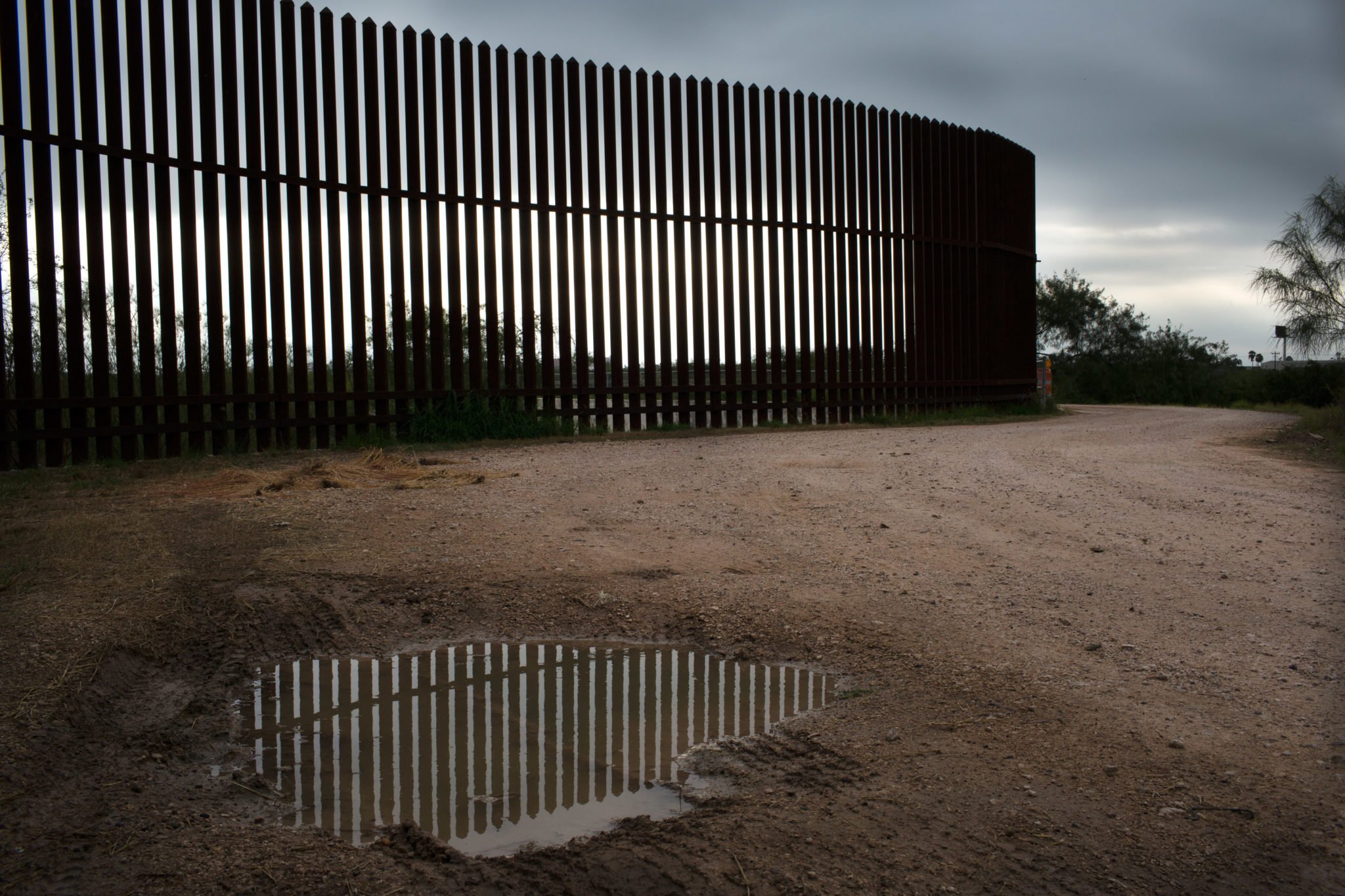
After the terrible devastation of New Orleans by Hurricane Katrina, it boggles the mind that the federal government will pay billions to construct a border wall and not pay to repair the levees in the Rio Grande Valley. A study released this week by the University of Texas-Pan American and authored by economist Dr. Daniel Sutter finds that a levee failure could cause about $1.76 billion in economic damage not to mention the loss of life.

The study, mentioned in the Rio Grande Guardian yesterday, says that approximately 57,000 homes and 2,800 businesses would be affected. The Rio Grande Valley is part of one of the fastest growing regions in the nation. It also has more than 70 miles of levees and a 100-year floodplain that ranges from Brownsville to Starr County.

The last big hurricane to blow through the region in 1967 — Hurricane Beulah – devastated the area.

Over the years, the levees have deteriorated to the point where FEMA wants to change the flood map to include much wider swathes of the Texas border region. This means many residents would need to purchase flood insurance and pay an additional $500 to $600 a year for it.

Since the feds won’t pay for the federal floodplain and levee system, Hidalgo County voters approved a $100 million bond referendum to pay for the levee repairs.

Caught in a tough spot, Hidalgo County Judge JD Salinas negotiated with Homeland Security Secretary MIchael Chertoff to create a combination border wall and levee. This would save several homes in Hidalgo County from being demolished to build the border wall. It would also draw down some federal dollars to help offset the price of repairing the levees for county taxpayers. It seemed like it was a win-win when the deal was announced February 8.

Now the International Boundary and Water Commission, IBWC, who regulates the levee system, wants Judge Salinas to sign a form that says the county will pay for the levee repairs if the feds don’t come through.

In a Guardian story yesterday, Judge Salinas says he and county commissioners will continue to fight for federal funding for the levee repairs. They have sent several letters to the Rio Grande Valley’s congressional delegation, President George W. Bush and Governor Rick Perry.

“These levees are a federal responsibility,” Salinas said in the article. “But it’s a responsibility our lawmakers have shrugged off, failing to appropriate the necessary money to the IBWC, We know this is a very complicated situation, but it becomes very simple and clear to me when faced with the unsettling numbers in this study.”

Also on Monday, Homeland Security took 25 landowners in Hidalgo and Starr counties to court to proceed with condemnation proceedings to build the border wall. Some of these landowners include the Rio Grande City independent school district.

Here I’ll quote Chad Foster, Mayor of Eagle Pass, when he sums up the federal government and its border wall. “It’s never a good time for a bad idea.”

Gas Tax? Tolls? How About Both?

January 27th, 2008 by Cody Garrett

The National Surface Transportation Policy and Revenue Commission recently delivered another of those tone-deaf, asinine, typical-of-a-commission recommendations that have no respect for what is politically tenable in the real world.

Created by the GOP Congress in 2005, the NSTPRC concluded that the federal government should raise the gas tax by 40 cents over five years (and then tie it to inflation), and it suggested states like Texas should ramp up their own state gas taxes even higher, in order to invest in transportation infrastructure.

Mary E. Peters, Bush’s Secretary of Transportation and a member of the commission, wrote about the recommendation in an op-ed piece in the Wall Street Journal a week ago. The headline read, ‘Gas Taxes Are High Enough.’

I must admit to a weakness for anti-gas-tax invective (from any source). I believe the tax on fuel, while it masks a host of policy disasters and environmental nightmares, has an overwhelmingly disproportionate effect on working men and women. It’s a tax that takes its toll chiefly on the backs of the poor and middle class. It’s very much like a toll fee. For those that have plenty of dollars, it is of little concern. For those that do not, the tax can take away the last resource of an economic unit living paycheck to paycheck. People still have to drive to work, despite all the commuter rail initiatives in Texas. The used and abused model of urban and suburban sprawl in Texas has tied us to our vehicles and to the daily use of several gallons of gasoline — even if you or somebody you know bikes to work.

So, I was sympathetic, sort of, when Peters wrote how she and two other commissioners “declined to support the report’s central recommendations.” A huge gas tax increase would definitely raise some revenue, and it might even discourage some people from driving, but it would be political suicide for any politician or political party that tried it. Peters and the rest of the commission knew damn good and well that no such 40 cent increase in the tax would ever become policy.

What the commission’s recommendation did, instead, was provide an opening for conservatives like Gov. Rick Perry to look like moderates and express outrage at the idea of higher taxes — in particular, higher gas taxes — which affect everyone regardless of ability to pay. Of course, Rick’s solution is toll roads.

Should there be an increase in the gas tax? It’s important to remember that the tax on fuel serves several purposes. It gives both consumers and producers a voice in public policy — a say, that is, in just how much gasoline consumption is reasonable. The tax also serves as a tool which governments can use to discourage consumption (and driving) — and encourage better mileage standards — not to mention raise revenue.

The fact is, the oil industry is and has been subsidized by American budget policy as well as foreign policy — government has been dumping cash into this industry since Franklin Roosevelt and his foreign counterparts realized they had to have gasoline to keep their armies moving. It’s the most subsidized industry in America.

According to a report by the Union of Concerned Scientists the subsidies are diverse and generous:

Direct subsidies include government-funded energy research and development. Indirect subsidies include the Strategic Petroleum Reserve, military expenditures related to the Persian Gulf, and police and fire protection related to highway use. Although “user fees” in the form of gas taxes, registration fees, and tolls pay for a portion of the infrastructure services, large government outlays remain that must be covered by general revenues.

The environmental costs are obvious in many ways, but they are not calculated into the price of fuel.

The scientists say: Pollution costs are borne by society in the form of increased health care costs and loss of wages due to illness and premature death (i.e., morbidity and mortality costs), reduced agricultural output, loss of visibility, and damage to buildings.

To my surprise and chagrin, however, Peters’ piece leads you in complaining about the gas tax and by the time she lets you go, you’re likely paying a toll to drive on the same highways your gas taxes already paid for. And she’s proud that the administration is pushing tolls as the only other option.

…a clear alternative has emerged… some form of electronic tolling that will both reduce congestion and generate needed revenue for transportation projects. Thanks to new open-road technology, these pricing programs can be put in place without forcing a single driver to slow down to pay a toll or have their transponder “read”… With the kind of encouragement we’re recommending, many more states could soon be able to pay for new transportation projects…

Peters would have us believe that we must choose between $4 a gallon gas and a maze of toll roads that tax us every quarter mile, just to get the same level of infrastructure that the federal and state government have maintained for 50 years as a public trust.

And her argument does not even address the gross dependence of the oil, gas, and auto industries on government subsidies and the debasing of our air, water, and quality of life.

There’s got to be a better way.

Texas Says No to Davy Crockett Letter

December 7th, 2007 by Cody Garrett

Despite all the hoopla back in September over an alleged letter from Texas revolutionary figure David Crockett, it turns out the state of Texas will not shell out $490,000 for it because it cannot be verifiably authenticated.

We said at the time that the lack of misspelling and stellar penmanship of the letter likely indicated it was not written by Crockett — who spent most of his scholarly days in Andrew Jackson’s war against the Creek Indians (and perhaps wrestling bears). He certainly was not above misspelling a few words.

The letter was unveiled as a great find for Texas, and even Gov. Rick Perry showed up to marvel over the historical wonder. Today he changed his tune accordingly.

“Our hope and belief was this would prove to be a rare, historic acquisition…” Perry said. He lauded the “due diligence” of the Texas Historical Commission and the verification process.

The commission wisely gave itself 120 days to verify and back out if need be. We have to agree that this was a good idea. The episode had us all thinking about Texas history for a while — which is healthy I think. But above all, the procedure in place has kept the state from dumping 500 Large into something that’s not what it purports to be — which is important.

Subscribe Now Floor Pass: news and commentary from the Capitol

Authors

Archives

Categories

Receive Observer blog posts via e-mail

Skip to Main Navigation